AI automation stopped being a big-corporation-only advantage a while ago.
Today, small and midsize businesses are realizing they can also use artificial intelligence to boost productivity, cut manual work, and even compete on equal footing with much larger players.
And we are not talking about million-dollar investments or massive tech teams.
With the right tools, even a business with 10 or 15 people can automate customer support, document triage, email responses, and a whole lot more.
But there is a side of this story that still does not get the attention it deserves: the risks are just as real as the benefits.
Adopting AI without at least some planning is like leaving the back door wide open while you install a security camera at the front entrance.
From shadow AI to compliance gaps that nobody notices until it is too late, the pitfalls are out there, and ignoring them can get expensive fast.
In this article, you will learn:
- How AI automation differs from traditional automation
- What components make this technology actually work in practice
- Where small businesses are already applying AI with real results
- What the most common AI risks are and why shadow AI deserves special attention
- How to build simple, effective governance to protect your business
The goal here is not to scare you, but to equip you with what you need to make smarter decisions. 🎯
What makes AI automation different from everything that came before
For decades, automation meant one thing: you programmed a rule, and the system followed that rule without deviating an inch. If an order came in with a specific code, it went to a specific queue. If a form was filled out correctly, the process moved forward. Simple as that. Efficient in many cases, but completely dependent on predictable situations. The moment reality went off-script, the system froze or made the wrong call, and a human had to step in to sort things out. That model worked well for a long time, but it has a clear ceiling: it does not learn, it does not adapt, and it does not understand context. This is what is known as rules-based automation, which includes technologies like robotic process automation — great for repetitive tasks like copying data between systems or routing forms.
AI automation changes that logic in a pretty fundamental way. Instead of following fixed rules, modern AI-powered systems can interpret data, identify patterns, and make decisions even when the situation is not exactly what they were trained on. A big part of that ability comes from natural language processing, the set of techniques that allows machines to understand, process, and generate text the way humans write and speak. That is why today you can ask a customer service chatbot a question in plain language and get a useful answer, without having to fill out forms or navigate endless menus. On top of that, there is intelligent document processing, capable of reading an invoice, summarizing a customer message, or classifying a support ticket automatically.
For small businesses, this shift represents something very concrete. Before, implementing any kind of intelligent automation required hiring developers, mapping out every possible exception, and maintaining the system with constant updates. Today, ready-made platforms with built-in AI let a business set up automated workflows in hours, not months. What used to be a full-blown tech project has become almost a tool configuration. That is transformative, but it is also the point where a lack of care starts to create silent problems.
The components that make AI automation work in practice
A common mistake is thinking that AI automation is a single product you buy and you are done. In reality, it is a combination of several capabilities working together within a company’s tech environment. Understanding these pieces helps a lot when evaluating vendors and avoiding overpaying for features you will never use.
Machine learning models are algorithms that learn from historical data to make predictions or classifications — like predicting which customers are most likely to cancel a service or sorting emails by subject. Natural language processing interprets and generates human language, powering chatbots, summarization tools, and document analysis. Intelligent document processing extracts organized information from unstructured sources like PDFs, scanned forms, and emails.
Then there is workflow orchestration, the connection layer responsible for triggering actions across different systems based on what the AI has processed, often integrated with platforms like Microsoft 365, Google Workspace, or Slack. And finally, there is monitoring and governance — the controls that track which AI tools are in use, what data goes into them, and whether the outputs align with company policies. Interestingly, that last layer is exactly the one most often missing in small business projects. And it is the one that makes all the difference between a safe adoption and a future headache.
Where small businesses are already using AI with real results
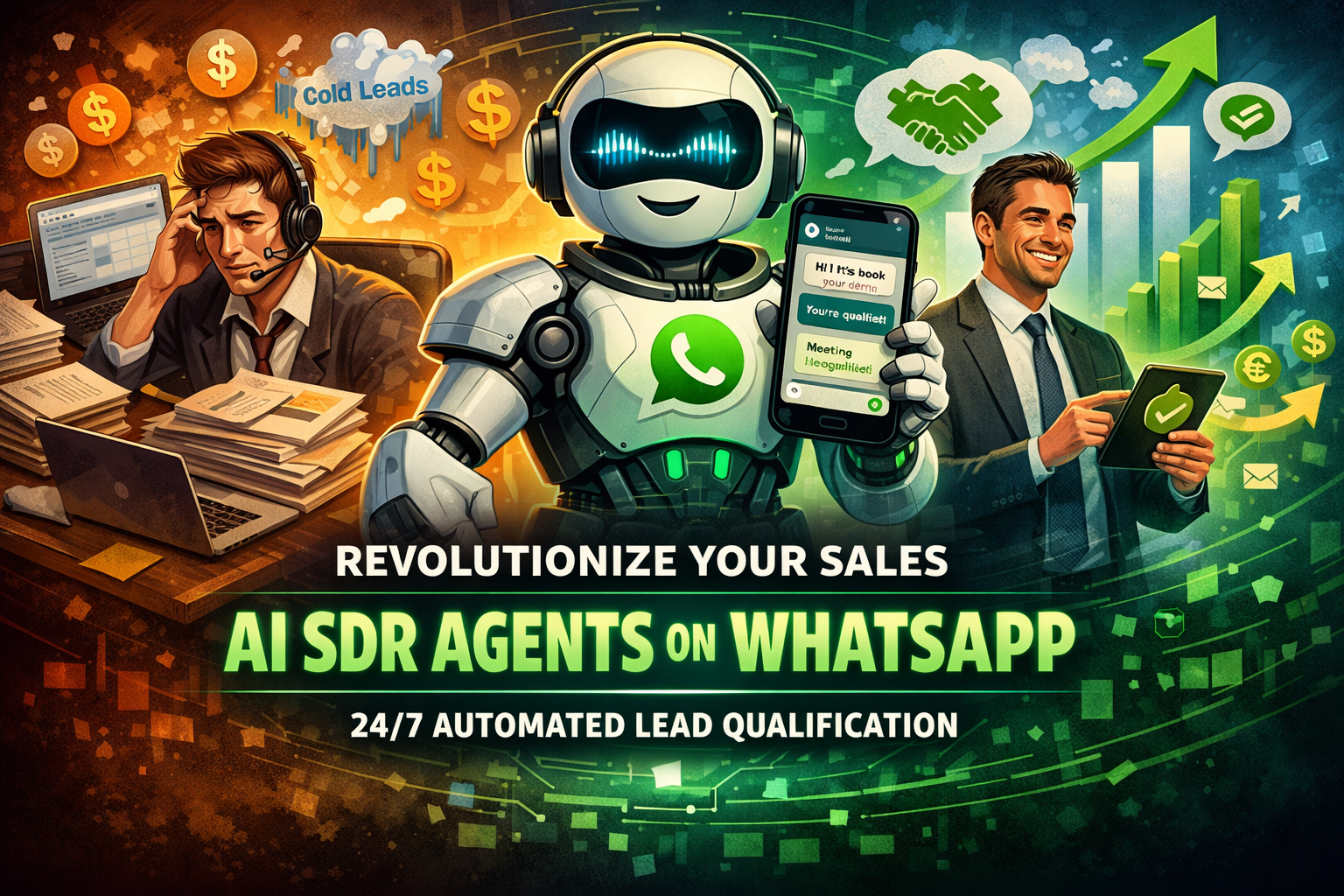
Customer support is easily one of the most popular applications. Small businesses are using virtual assistants powered by natural language processing to answer frequently asked questions, schedule appointments, log complaints, and even qualify leads before handing them off to a human salesperson. The practical outcome is a significant reduction in the time the team spends answering the same questions over and over, freeing up energy for tasks that actually require human judgment. And customers, in turn, get an immediate response even outside business hours, which improves the experience in a direct and measurable way.
Another area where AI automation is making a real difference is document triage and organization. Accounting firms, clinics, real estate agencies, and other businesses that deal with high volumes of paperwork are using tools that read documents, extract relevant information, and organize everything automatically. What used to take hours of manual work now happens in minutes, with an error rate lower than any manual process. This is not science fiction. These are tools available today, at prices accessible to businesses of any size.
In sales and marketing, AI is already showing up in lead scoring, content draft creation, meeting summaries, and contact personalization — things that were previously reserved for companies with dedicated teams. In finance and accounting, it helps with data extraction from invoices, expense categorization, and detection of unusual transactions, flagging what needs human review. In HR, it is common to see AI supporting resume screening, interview scheduling, and onboarding document preparation during busy hiring periods. The common thread across all these use cases is that the technology is not replacing people — it is taking over the repetitive, low-value tasks so that people can focus on what actually matters for business growth.
The AI risks nobody tells you about when you are excited about the technology
It is easy to get pumped about success stories. But AI risks are real, and they hit smaller businesses especially hard, since they typically have fewer resources to detect and fix problems before they become full-blown crises. Most small businesses do not have a dedicated AI security team, formal vendor evaluation processes, or the budget to recover from a serious data breach. That means the consequences of uncontrolled usage are disproportionate to the size of the business.
One of the most underestimated risks is shadow AI, which is basically employees using AI tools without the company knowing or having approved them. It might seem harmless — after all, the person is just trying to be productive, right? But the problem starts when sensitive customer data, financial information, or contracts get plugged into external platforms with zero security or privacy controls. The employee does not have bad intentions, but the damage can be equivalent to a deliberate security breach.
Picture a small health clinic with about 25 employees. An assistant starts using a free chatbot to summarize patient notes at the end of the day, pasting full consultation details to save time. The tool delivers quick, useful summaries, and within two months several colleagues are doing the same thing. Nobody in leadership knows about it. But those entries include names, conditions, and treatment details — sensitive health data leaving the clinic’s controlled environment for weeks. When an audit catches it, the cost of remediation, notifications, and potential penalties far exceeds any time the tool ever saved. The scenario is hypothetical, but the pattern is common: shadow AI rarely comes from bad intentions. It comes from people trying to work better in an environment without clear guidance.
Another risk that deserves attention is over-reliance on AI-generated responses without human review. Systems based on natural language processing are impressive, but they make mistakes. They can produce incorrect information with a level of confidence that seems completely justified. If a small business puts a chatbot in front of customers with no review process or escalation path to a human, it is accepting the risk that wrong answers will be delivered as absolute truths. Depending on the industry, that can lead to legal issues, lost customers, and reputational damage that takes a long time to repair.
There are also AI risks related to compliance with data protection laws. In the United States, regulations like the California Consumer Privacy Act and various state-level privacy laws set clear rules about how personal data must be collected, stored, and processed. When a company adopts AI tools without checking how those tools handle user data, it could be out of compliance without even knowing it. And penalties do not always scale down with company size. A small business can face the same fines and sanctions as a large corporation, making this kind of oversight especially risky for those with thinner margins to absorb surprises.


AI governance: how to protect your business without creating unnecessary red tape
When people hear AI governance, they often picture a complex process full of committees and documents that only make sense in companies with hundreds of employees. But governance, in practice, is simply having clarity about how AI is used in your business — who can use it, what data can be processed, and what happens when something goes wrong. For a small business, this does not have to be a monumental project. It can start with something simple: an internal AI usage policy that makes clear which platforms are authorized, which categories of data must never be entered into those tools, and who is responsible for monitoring usage.
A healthy adoption usually follows a similar path. It is governed before it is expanded. It starts with one or two high-value use cases, rather than a full-scale rollout all at once. It uses enterprise-grade tools with proper data handling controls, not free consumer versions repurposed for work. And it is reviewed regularly, keeping pace with the constantly evolving AI landscape. A solid practical model includes a written acceptable use policy, a single person responsible for governance, approved tools integrated into the existing IT environment, employee training on what can and cannot be entered, basic data flow monitoring, and a clear process for people to request new tools — preventing them from being pushed toward shadow AI.
An important piece of this structure is creating an evaluation process before adopting any new AI tool. Before rolling out a platform to the team, it is worth answering a few basic questions: Where is the data that gets entered stored? Does the vendor have a privacy policy compatible with applicable data protection laws? Is there any clause that allows the data to be used for model training? These questions seem simple, but most companies never even ask them. And they are exactly what determines whether adopting a tool is safe or a silent risk waiting to surface at the worst possible time.
A quick AI readiness checklist
Before scaling AI automation, it is worth running through a few key questions. Most businesses find at least a few gaps, and addressing them upfront costs far less than fixing things after an incident:
- Do employees know which AI tools are approved?
- Is there a written acceptable use policy that covers AI?
- Have people been trained on what data should never be entered?
- Are the tools integrated into the IT environment or sitting as standalone accounts?
- Is there visibility into the data flowing in and out of these tools?
- Has AI usage been mapped against applicable data protection laws?
- Do incident response plans account for AI-related exposures?
Effective governance also includes ongoing monitoring. Creating a policy and forgetting about it is not enough. The world of AI automation moves fast — tools change, teams grow, and new needs emerge. A periodic review of what is being used, how it is being used, and whether the results align with the original plan is what keeps the company in control of the technology, not the other way around. For smaller businesses, this can be something as simple as a quarterly meeting to review which AI tools are active and whether they still make sense for the business goals. 🛡️
Adopting AI responsibly does not mean slowing down. It means building a solid foundation to grow without unpleasant surprises along the way.
The small businesses that are pulling ahead are not necessarily the ones that adopted the most tools. They are the ones that adopted the right tools, with awareness of the AI risks involved and with a minimum level of governance to make sure the technology works for the business, not against it. And that is an advantage any company can build, regardless of size or available budget. 💡