Automation has always been one of technology’s biggest promises for business, but what’s happening in 2026 goes way beyond just pressing a button and letting the machine do its thing.
Artificial intelligence has fully entered the equation and changed the game in ways a lot of people are still trying to wrap their heads around.
It’s no longer about creating fixed rules for predictable tasks. What companies are discovering now is that you can build workflows that interpret context, make simple decisions, move information between systems, and still free up teams to focus on what actually matters: thinking, creating, and building relationships.
The difference between automating for the sake of automating and working with real efficiency is exactly that. Any process can be automated, but not every automation solves a real problem. When AI enters business processes, it brings a layer of intelligence that turns raw data into useful actions — not just tasks running on autopilot.
Areas like sales, customer service, marketing, finance, operations, HR, and IT are already feeling this impact in practice. And the most interesting part is that this integration between AI and automation doesn’t require turning the entire company upside down. You can start small, measure the results, and expand what works. 🚀
Throughout this article, you’ll understand how this model works, which areas benefit the most, and what to consider before putting anything into production.
What changed with AI in workflows
For years, traditional automation worked really well for repetitive, well-defined tasks — like sending a confirmation email after a purchase or generating a report every Monday at 8 a.m. That kind of automation still exists and is still useful, but it has a clear limit: when the context changes, it simply stops working or delivers the wrong result. There’s no judgment, no adaptation, no reading of the situation. It just follows the script, right or wrong.
The logic behind traditional automation usually follows a pretty straightforward path: trigger, rule, and action. Something happens, the system checks if it matches a predefined rule, and executes the programmed action. AI-powered automation, on the other hand, adds a new layer to that process: information input, interpretation by the AI, decision or recommendation, and only then the automated action. That extra step of interpretation is what makes all the difference when the situation calls for understanding context rather than just following fixed instructions.
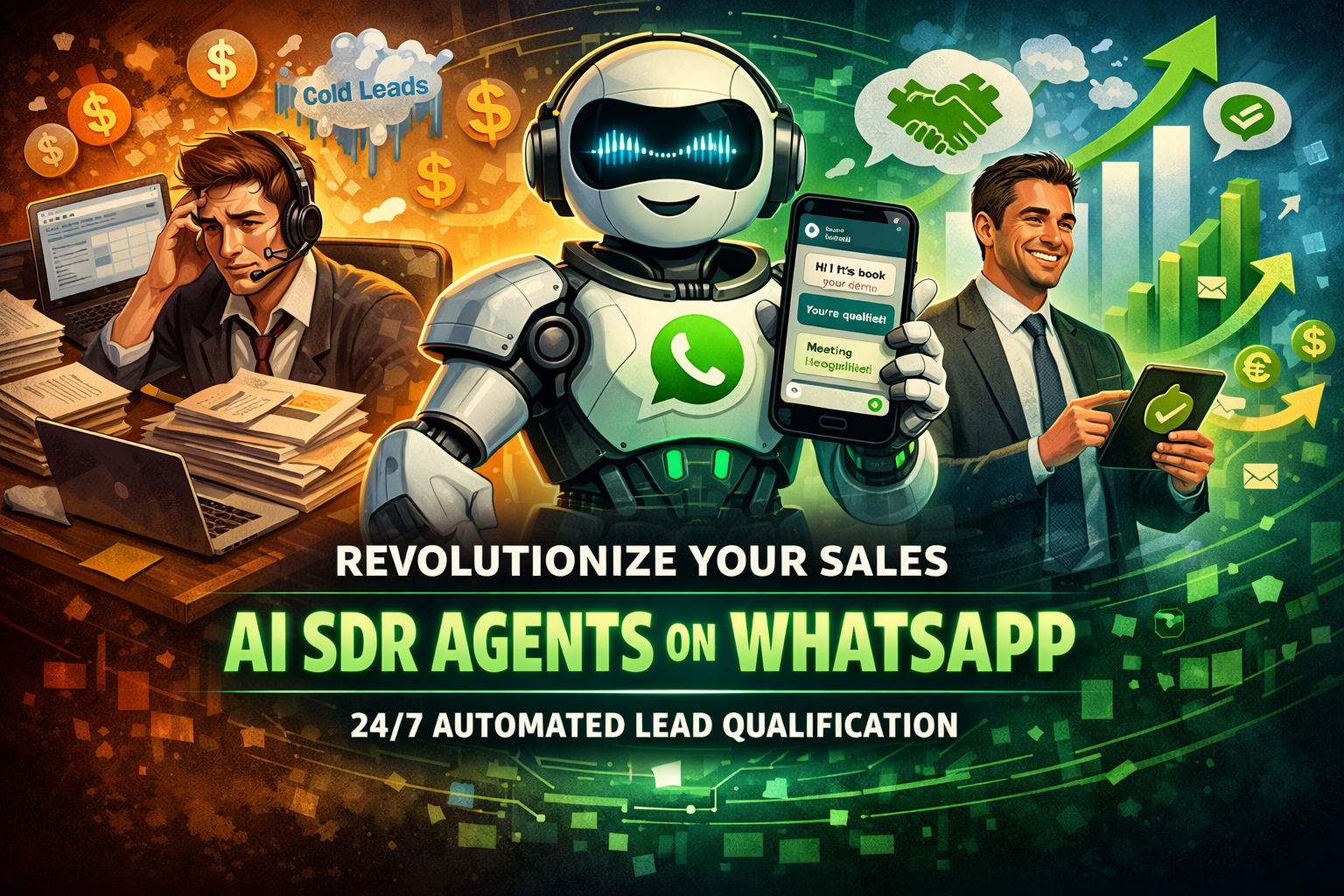
With artificial intelligence at the center of workflows, that scenario has changed significantly. Today, an AI-powered system can analyze a customer’s history, understand the tone of an incoming message, identify a purchase intent, and trigger a personalized response — all in seconds, without direct human intervention. This isn’t science fiction; it’s what companies of all sizes are already applying through CRM tools, customer service platforms, and management systems. The intelligence doesn’t replace the team — it amplifies what the team already does well.
The real leap is precisely in this ability to interpret before acting. A language model integrated into a sales workflow, for instance, can automatically classify leads based on behavior, suggest the best time for a follow-up, and even draft a personalized outreach message for the rep to review. Efficiency here doesn’t come just from speed — it comes from the quality of the action delivered. Less rework, fewer mistakes, better results.
Which areas benefit the most from this integration
When it comes to integrating AI with automation, some areas come out ahead because they already deal with large volumes of data and repetitive interactions that, at the same time, require some level of personalization. Customer service is a classic example. Chatbots powered by advanced language models already handle a good portion of common questions without escalating to a human, and when they do need to escalate, they do it with the full context of the conversation. The result is faster, more consistent service that frees up the team to handle the cases that truly need a human touch.
Sales with less paperwork and more conversation
Sales teams tend to spend a huge amount of time on administrative work that has very little to do with actually selling. Updating CRM records, researching account information, prepping for meetings, creating follow-up tasks, and putting together reports are activities that eat up precious hours. AI-powered automation can take over a good chunk of that — analyzing data from a new lead, filling in the relevant fields in the system, creating follow-up activities, and notifying the right rep at the right time. The sales team gets to do what it does best: talk to people and close deals.
Marketing that’s more strategic and less operational
In marketing, artificial intelligence is changing how campaigns are planned and executed. Audience segmentation, creating copy variations for A/B testing, real-time performance analysis, and automatic budget reallocation across channels are tasks that used to take hours of manual work and now happen continuously and automatically. The marketing team gets time back to think about strategy, craft narratives, and understand their audience on a deeper level, while AI handles the operational details.
Finance, HR, and operations on intelligent autopilot
In finance and HR, the impact is equally significant. Bank reconciliations, report generation, resume screening, interview scheduling, and even onboarding new employees are being optimized with AI-based automation. What used to take days of bureaucratic work now happens in hours or minutes, with far less room for error. And most importantly, professionals in these areas get time back for activities that truly require human judgment — like people management, strategic analysis, and decision-making in complex scenarios. 🎯
Connecting data scattered across the company
One of the biggest wins from AI-powered automation shows up when it can access information from multiple systems at the same time. The reality for most companies is that data lives in different places: CRM platforms, ERP systems, marketing tools, customer service software, financial applications, document repositories — the list goes on. Without integration, employees end up becoming the manual bridge between these systems, copying and pasting information back and forth all day long.
When AI connects these workflows, that repetitive data shuffling drops dramatically. A single event can kick off an entire coordinated sequence of actions across different platforms. Picture something like this: a customer request comes in, the AI classifies the ticket, updates the CRM, assigns the task to the right team, fires off a notification, and schedules a follow-up — all without anyone needing to manually touch each step. Instead of waiting for each step to be completed by a person, the process moves on its own and much faster.
Better decisions with AI support
Automation isn’t just about executing tasks. It can also help people better understand the information they have in front of them. AI can summarize large volumes of data, spot patterns that would otherwise go unnoticed, analyze customer behavior, flag unusual activity, prepare reports, and even generate practical recommendations. All of that serves as raw material for better-informed decisions.
The important point here is that the final call still stays with the right person — especially when the stakes of getting it wrong are high. AI delivers the big picture, points out possible paths, and organizes the information, but human judgment stays in the driver’s seat when the topic is sensitive. This combination of the machine’s analytical power and the experience of someone who knows the business is what creates real value. It’s not about replacing human decisions — it’s about making them more informed and faster.
How to put this into practice without overcomplicating things
One of the biggest mistakes companies make when talking about AI-powered automation is thinking they need a full-blown digital transformation right out of the gate. Swapping out every system, hiring an expensive consulting firm, building a specialized engineering team, and redesigning every business process at once. That rarely works, because it creates internal resistance, burns through resources that could be used more efficiently, and often delivers results that are tough to measure. The smarter approach is the opposite: start with one specific process, preferably one that already has high volume and measurable outcomes.
Identifying the right process is half the battle. Look for workflows that are repetitive, time-consuming, well-defined, data-driven, frequently executed, and easy to measure. Questions like which task eats up the most team time without adding strategic value or where do manual errors cause the most rework are great starting points. Once the process is identified, the next step is choosing a tool that integrates easily with what the company already has in place, without requiring a complete infrastructure rewrite. Platforms like Make, Zapier with AI modules, Microsoft Power Automate, and native CRM and ERP solutions already offer this kind of functionality in an accessible way with a reasonable learning curve.
After implementation, the measurement phase is what determines whether the automation is actually generating efficiency or just moving where the problem hides. Track concrete metrics: average process execution time, hours saved for the team, response time, error rate, conversion rate, volume of interactions that required human intervention, and satisfaction from both the team and the customer when applicable. With data in hand, it becomes much easier to decide whether to expand to other processes, adjust the current flow, or simply maintain what’s already working. The intelligence here needs to be human, too — knowing when to stop optimizing and when a process is already good enough is a valuable skill. 💡


What to consider before automating anything
Before connecting tools and activating workflows, there’s a question that needs an honest answer: does this process even make sense the way it currently works? Automating a poorly designed process doesn’t fix the problem — it just makes the problem happen faster. This is one of the most common traps when companies get excited about AI-powered automation and skip the step of critically reviewing the current flow. Before any technical configuration, it’s worth checking whether the steps in the process are necessary, whether the sequence makes sense, and whether the incoming data is clean and organized enough for an AI to work well with it.
Data quality, by the way, deserves special attention. AI systems depend on reliable information to deliver good results. Incomplete, duplicated, or inconsistent data drastically reduces the quality of automated actions, no matter how advanced the tool you choose. It’s worth investing time in organizing the foundation before flipping on any automation. It’s that old saying, updated for the times: garbage in, garbage out — only now at accelerated speed.
Another important point is governance and permissions. When AI starts making decisions within business processes — like approving credit, classifying a customer, or triggering a communication — it’s essential to define who’s responsible when something goes wrong. Creating audit trails, setting clear boundaries for what the automation can decide on its own, defining which information the AI can access, and ensuring there’s always a path for human escalation are practices that protect the company and build trust in the system. Transparency around AI usage is also becoming an expected standard among customers and business partners.
Finally, the human factor. No integration between AI and automation works well if the team using the system doesn’t understand what’s going on. Training, clear communication about what changes in each person’s day-to-day, and space for feedback are essential parts of any successful rollout. Tools evolve fast, but it’s the people who determine whether the technology will truly transform how the company operates or just become another underused system on the monthly subscription list. Real efficiency starts when technology and the team are moving in the same direction. 🤝
The road to 2026 and beyond
The big opportunity with AI-powered automation isn’t simply about replacing manual tasks. It’s about rethinking how business processes are built so that information flows more smoothly, employees spend less time on busywork, and organizations can respond faster to market demands. It’s a shift in mindset just as much as it’s a shift in tools.
Companies that manage to combine reliable data, connected systems, artificial intelligence, automation, and human oversight will build much leaner and more agile operating models in 2026. And the best part: this journey doesn’t have to happen in one giant leap. Small, well-measured steps, expanded based on real results, tend to go further than big projects that only ever existed on paper. Working smarter has never been more possible, and the time to start is now. ✨