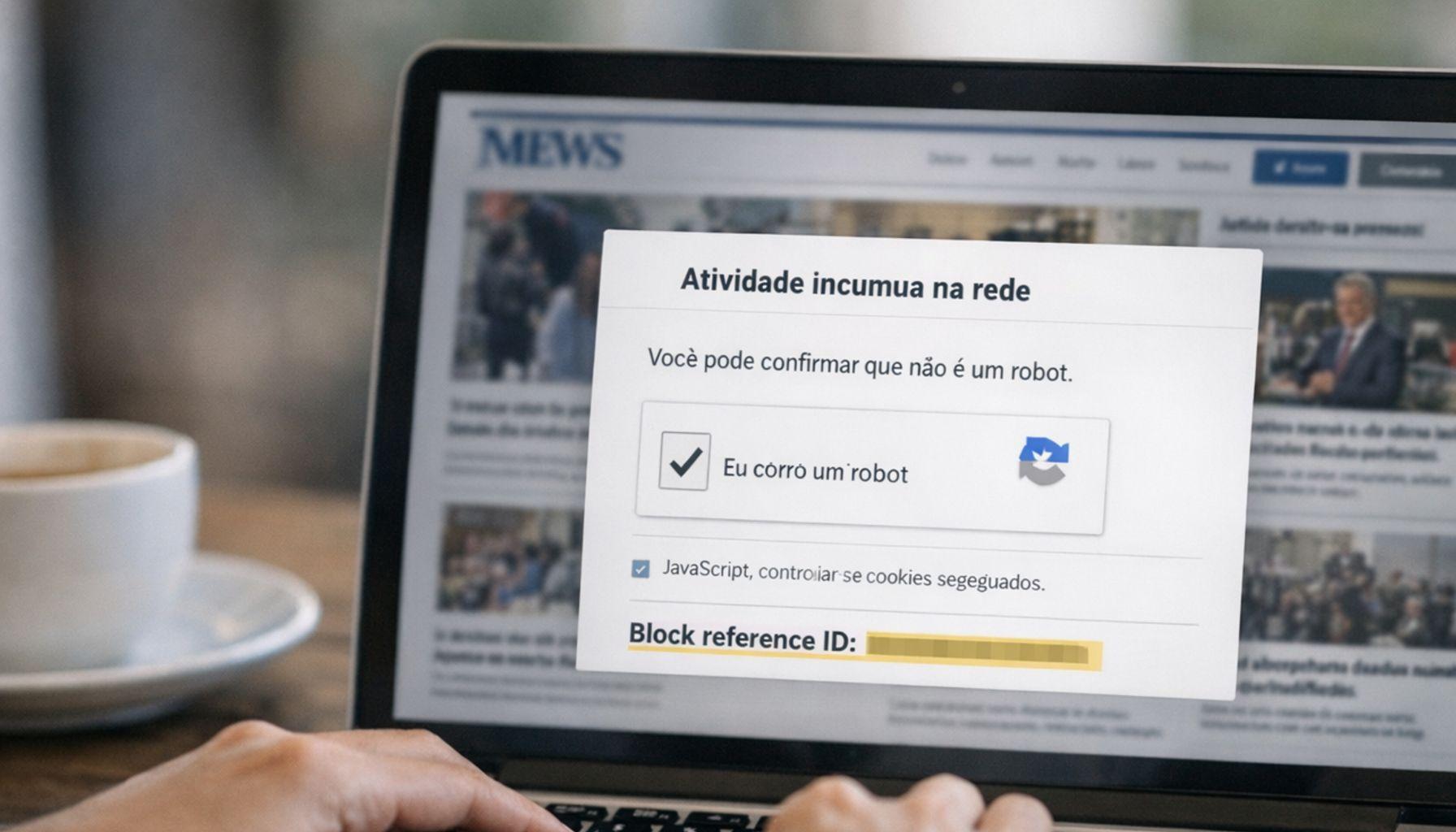
Robot detects unusual activity in the browser with JavaScript and cookies
If you tried to access a Bloomberg article and ran into a screen asking you to prove you are not a robot, relax: it is not persecution or a bug. This kind of block appears when the site’s system detects a usage pattern that falls outside the norm and might look like automated traffic. Instead of just letting everything through, the server asks for a quick confirmation to make sure there is a human on the other side. In the original case, the message is straightforward: unusual activity was detected on your network and, to continue, you need to tick a box confirming you are not a bot.
Behind this simple request, there is a bigger picture. Large news portals like Bloomberg get millions of hits a day. In the middle of this sea of requests, there is everything: regular readers, search engine crawlers, monitoring tools and, of course, malicious scripts trying to scrape data, overload servers or probe for vulnerabilities. To protect themselves, these sites use detection systems that analyze browsing behavior in real time. When something looks off, that familiar verification screen kicks in.
The warning usually comes with some technical guidelines. Bloomberg, for example, reinforces that your browser needs to have JavaScript and cookies enabled, and there cannot be any blocks preventing those resources from loading. Without that, the system cannot confirm if the traffic is legitimate. If the problem still persists, the user can contact the support team and provide a reference ID shown in the message. That ID helps the tech team locate the event in the logs and figure out what happened.
How unusual activity detection works
When the portal says unusual activity was detected on your network, that does not automatically mean you did something wrong. Many times, the alert is triggered by a combination of factors, such as:
- too many requests in a short time coming from the same IP;
- access coming from a VPN shared by thousands of people;
- browser plugins or extensions that change how the page loads;
- overly aggressive script blockers;
- automation tools hitting the site in the background.
Protection systems look at these signals and try to fit everything into a pattern. If the browsing looks very mechanical, with identical latencies, sudden changes in origin, or if it comes from infrastructure known for hosting bots, the risk level goes up. In those cases, the server prefers to hit the brakes, ask for a human check, and only then release the content.
On the page shown to the user, this appears in a very simplified way: check the box to show you are not a robot. Sometimes the challenge stops there. In other situations, the system may ask for a second step, like solving a small visual puzzle or typing in a code. It all serves the same purpose: separating genuine traffic from automated scripts that cannot easily pass this kind of validation.
Why JavaScript and cookies are required
One important point in the original message is the note about JavaScript and cookies. The text clearly instructs: check if your browser supports these features, if they are enabled and if nothing is blocking them from loading. This technical detail is essential so the site can:
- run verification scripts that check the browser’s behavior;
- store temporary information about your session;
- record that you already passed the challenge so you do not have to repeat it on every page;
- apply security rules based on signals that only exist on the client side.
Without JavaScript, most security tests simply do not happen. The server sees the access, but cannot collect interaction details or reliably record the result of a visual challenge, for example. Cookies, on the other hand, store small pieces of data that help distinguish a new visit from someone who has recently passed verification.
Practically speaking, if you disable JavaScript or completely block cookies, the site sees your browser as much more limited. That can cause display issues and also trigger the platform’s defensive mode, increasing the chance that you will hit that suspected-bot screen.
When it is time to contact support
In the case of a major portal like Bloomberg, the block message is not just technical explanation. It also opens a clear help channel: if you believe you received this alert by mistake, you can reach out to the support team and provide a reference ID displayed on the page. In the original example, the text highlights a line such as:
Block reference ID: 091d6dc3-1d9c-11f1-9b63-af4ef43c8723
This code is not a generic error; it is a marker created by the security system for that specific event. With it in hand, the team can check under what conditions the block occurred, which network the connection came from, which rules were triggered and whether anything out of the ordinary happened. It is like a support ticket number, but focused on traffic analysis.
In general, the page itself already points the way: there is a link to a form or feedback channel where you can send the ID, describe the problem and, if necessary, attach additional information. In that message, it helps to mention if you were using a VPN, corporate proxies, aggressive blocking plugins or legitimate automation like monitoring tools. All of that helps support better understand the context.
Terms of service and cookie policy
Another point that appears in the original message is the suggestion to read the terms of service and the cookie policy. Bloomberg, like other portals distributed through Google News, sends users to specific pages that explain:
- what rules apply to using the content;
- how browsing data is collected and processed;
- what types of cookies can be stored in the browser;
- in which situations access may be limited or blocked.
These documents spell out, for example, that large-scale automated access, unauthorized scraping or abusive use of the infrastructure can violate the terms. From there, it makes sense for the site to have active mechanisms in place to detect and limit this kind of behavior. The verification screen, in this context, works as an intermediate barrier between fully blocking and letting browsing flow with no filters.
At the same time, the cookie policy explains in more detail why certain files are stored in your browser, how long they stay there and how they may be used to personalize or protect your experience. That includes both technical cookies, needed for authentication and security checks, and those used for metrics and content preferences.
Network, automation and false positives
An important detail in the message is that it mentions unusual activity detected from the network, not just the device. That means that, in many situations, the system looks at the set of accesses coming from the same IP block. This is the case for:
- corporate networks with hundreds of people going out to the internet through the same public address;
- ISPs that use large-scale NAT for thousands of subscribers;
- public VPNs and proxy services heavily used around the world;
- cloud datacenters that run everything from legitimate automation to abusive bots.
When a lot of strange stuff happens at the same time from that base, the trust level drops. In the name of security and service stability, the site ends up pulling the handbrake and requiring extra verification steps. That is why sometimes a regular user on a shared network runs into the suspicion message without having done anything particularly wrong.


These false positives are a side effect of any pattern-based security system. The goal is always to minimize the impact on legitimate users, but between leaving everything wide open and suffering constant attacks, many portals choose to add this extra layer of checking, even at the risk of annoying a portion of the audience.
Subscription and content access
Right after the block message, the original text also mentions that readers can get the top global market news at their fingertips through a Bloomberg.com subscription. The idea there is to remind people that once access is regularized and the technical requirements are met, the portal offers a full experience with financial content, analysis and near real-time data.
This mix of security and subscription models is part of the package for many media outlets today. To ensure subscribers get a stable service with low latency and no infrastructure abuse, protection against bots and suspicious traffic is practically mandatory. Systems that detect unusual activity, ask for human confirmation and log everything under a reference ID are key pieces of this puzzle.
In the end, that screen saying the site needs to know whether you are a robot is not there just to make your life harder. It is the most visible part of an infrastructure that is trying to balance three things at once: security, performance and smooth access to content. If your browser cooperates, with JavaScript and cookies enabled, and if your usage pattern does not look like heavy automation, chances are the check will be quick and you will keep browsing almost without noticing what happened behind the scenes.
When the unusual activity message appears, the path usually comes down to three basic steps: check if the browser allows JavaScript and cookies, complete the challenge shown on the screen and, if the block persists for no obvious reason, contact support using the reference ID displayed on the page.