New event aims to connect farmers with agricultural technology startups from around the world
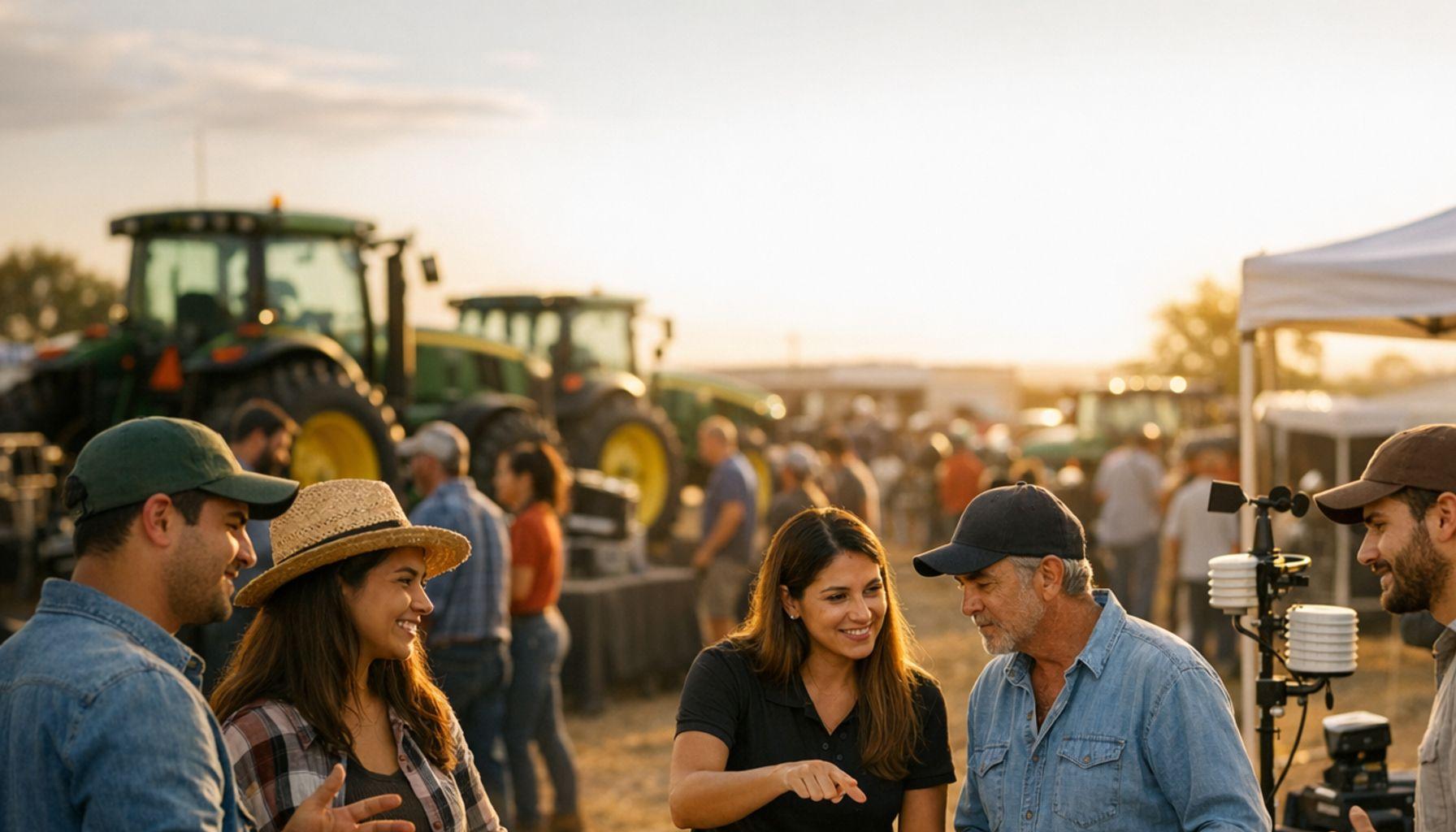
Ag Tech is transforming agriculture in ways that are hard to keep up with, and a new event is coming to show exactly how that plays out in practice. Idea Farming 2026 is an initiative that promises to be a game-changer by bringing together, in the same space, local agricultural producers and ag tech startups from different parts of the globe.
The concept is simple and straightforward: build real bridges between the people who grow food and the people who develop technology for the field. Ditching the stiff competition format with token prizes, the event bets on something far more tangible — partnerships, field trials, and real financial resources to accelerate solutions that actually make sense for large-scale agriculture. 🌱
Organized by the Logan County Economic Development Corporation (LCEDC) in partnership with the CSU Ag Innovation Center, the event takes place on April 2, 2026, from 9 a.m. to 4 p.m. at the Logan County Fairgrounds in Sterling, Colorado. The region is already a go-to when it comes to advanced agricultural production, and it sits strategically at the intersection of cutting-edge technology and large-scale farming. And the best part? Attendance is free, and the schedule is packed with panels, presentations, and plenty of networking for anyone who wants to stay at the forefront of ag innovation. 🚜
Why this farmer-startup meetup is unlike anything that has come before
The vast majority of industry events still follow the traditional playbook: long lectures, booths overflowing with printed materials, and that surface-level networking that rarely leads to anything real. Idea Farming 2026 was designed specifically to break that cycle.
According to Trae Miller, Executive Director of the LCEDC, the central goal is to have local agricultural producers present and actively participating in the decisions. The idea is for farmers and ranchers to connect with early-stage technology companies to help inform and directly participate in the development of solutions. This direct collaboration model has proven to be far more effective when the goal is to bring innovation inside the farm gate.
Technologies that are born in the lab but never go through a real field test tend to reach farmers with a laundry list of practical problems that could have been avoided with more dialogue from the very beginning. The event leans into that ongoing exchange, where the producer stops being just the end customer and becomes an active partner in developing solutions. That completely changes the dynamic, and the results tend to be much more solid and applicable.
Miller explained that the focus on Ag Tech came about because of the assets and strength of the region as an agricultural hub. In his words, the intention is to build meaningful relationships and real partnerships within the ag tech community and northeastern Colorado. Bringing the event into this environment creates a more organic atmosphere where conversations happen in a real agricultural production context, not in a convention center disconnected from the reality of the industry.
$40,000 in real resources for field trials — not symbolic prizes
One of the most significant changes compared to previous editions of the LCEDC pitch competition is how resources are distributed. Instead of awarding startups with token cash prizes, agricultural producers will allocate a total of $40,000 directly toward field trials and partnerships. This approach ensures the money lands exactly where it needs to: in the practical validation of technologies, side by side with the people who truly understand real-world production conditions.
The resource distribution is organized as follows:
- $15,000 earmarked for weed management projects, specifically related to Palmer amaranth, an invasive weed that severely impacts corn production and other crops in the region
- $15,000 directed toward solutions focused on beef cattle production
- $10,000 allocated after an open showcase featuring a variety of Ag Tech companies with diverse solutions
This model is especially relevant because large-scale agriculture operates on tight profit margins. The event website itself highlights that the goal is to help founders build solutions that deliver real value and justify investment in a crop production industry with thin margins. When resources go directly to field trials, startups gain real data to refine their solutions, and producers gain early access to technologies that can make a concrete difference in harvest outcomes.
Full day schedule: from weed management to Ag Tech investment
The Idea Farming 2026 lineup was built to be content-rich without losing the practicality the industry demands. Each session was designed so participants walk away with concrete information and connections they can put to use immediately. Here is the full schedule:
Morning sessions
- 8:30 to 9:00 a.m. — Check-in and registration
- 9:20 a.m. — Session on Palmer amaranth, the weed that represents one of the biggest challenges for corn production and other crops in the region
- 9:45 a.m. — Presentations from multiple companies with solutions focused on managing this pest
- 10:30 a.m. — Producer discussion panel and allocation of the first $15,000 for weed management field trials
Beef production session
- 11:00 a.m. — Start of the Beef Production on the Plains session, focused on technology solutions for cattle ranching
- 11:25 a.m. — Presentations from companies with technologies aimed at beef production
- 12:10 p.m. — Discussion panel and allocation of $15,000 for cattle production partnerships
Afternoon sessions
- 12:30 p.m. — Lunch, accompanied by product demonstrations and the chance to talk directly with vendors and startups on-site
- 1:30 p.m. — Open showcase featuring a range of Ag Tech companies, followed by allocation of the remaining $10,000
- 3:00 p.m. — Closing session on Investing in Ag Tech, a panel geared toward anyone who wants to better understand how agricultural startup funding works
For agricultural producers, the opportunity to be in direct contact with startup founders developing technologies specifically aimed at real-world farming challenges is something you simply won’t find in any other format. This is not a trade show of ready-made solutions — it is a co-creation space where the producer’s actual demand can shape the direction a technology takes.
International companies and Colorado startups sharing the same space
Another thing that makes Idea Farming 2026 stand out is the diversity of its participants. According to Trae Miller, companies representing multiple countries will be present at the event, alongside early-stage entities based in Colorado. This blend of global perspectives with local knowledge creates an incredibly rich environment for exchanging experiences and sparking partnerships that might never happen in a conventional setting.
For international startups, having direct access to producers operating in one of the most productive agricultural regions in the United States is a massive strategic opportunity. For local farmers and ranchers, discovering technologies being developed in other countries expands their horizon of possibilities and can give them a head start on trends that will eventually reach the North American market.
This internationalization of the event also reinforces the perception that northeastern Colorado is positioning itself as a hub for agricultural innovation with global reach. The combination of research infrastructure, large-scale production, and now a dedicated event to connect both worlds puts the region on a different level within the Ag Tech ecosystem.
Sustainability and innovation as pillars that go hand in hand
One of the most noteworthy aspects of the event is its commitment to sustainability as a structural pillar across the entire program. This is not about squeezing the topic into a standalone panel just to check a box. The innovation discussed at Idea Farming is directly tied to solutions that reduce environmental impact, optimize the use of natural resources, and make agricultural production more efficient without compromising future generations.
The event website itself highlights that the region is uniquely positioned at the intersection of advanced technology and large-scale production agriculture, including innovations frequently categorized under the umbrella of climate and sustainability. This positioning reflects a global trend that has been gaining momentum within Ag Tech, where investors and producers have already realized that sustainability and profitability go hand in hand.
The startups participating in the event bring proposals that connect technology and environmental responsibility. From smart sensor-based soil monitoring solutions to real-time climate data analytics platforms, what is at stake are tools that help agricultural producers make more precise decisions, use fewer inputs, and boost productivity consistently. This kind of approach has a direct impact not only on the producer’s bottom line but also on the health of the ecosystem surrounding their operations.


A model that could inspire other agricultural hubs around the world
The format adopted by Idea Farming 2026 has the potential to serve as a blueprint for other agricultural regions facing similar challenges. The logic of putting the producer at the center of decision-making about where to invest technology resources is something that is still relatively rare in the ag innovation ecosystem. In most cases, the ones deciding which technologies receive investment are venture capital funds or accelerators, which do not always have hands-on field experience.
By transferring that decision-making power to the people who actually work the land, the event creates a virtuous cycle. Startups receive immediate and qualified feedback, producers gain early access to promising technologies, and the ecosystem as a whole gets stronger. This is exactly the kind of synergy between the field and technology that Idea Farming 2026 wants to catalyze.
Producers who share data from their operations with startups create a continuous cycle of learning and improvement. The technologies become smarter, better adapted to local conditions, and the producers gain access to insights that were previously out of reach without an entire team of agronomists and data scientists.
How to attend Idea Farming 2026
Free access to the event is a clear signal that the goal is not to monetize the audience but rather to build a more robust and connected innovation ecosystem. Tickets can be claimed at no cost through the official event website at www.ideafarming.org. For more information, reach out directly to Trae Miller at Trae@Sterling-Logan.com or by phone at 970-521-7196.
Attendees are not just watching presentations — they are becoming part of a movement that wants to redefine how technology reaches the farm. For anyone in the Ag Tech world, whether you are a producer, investor, developer, or enthusiast, this is exactly the kind of space that accelerates connections and turns conversations into real projects. 🌾