A new home for climate innovation in the southern United States
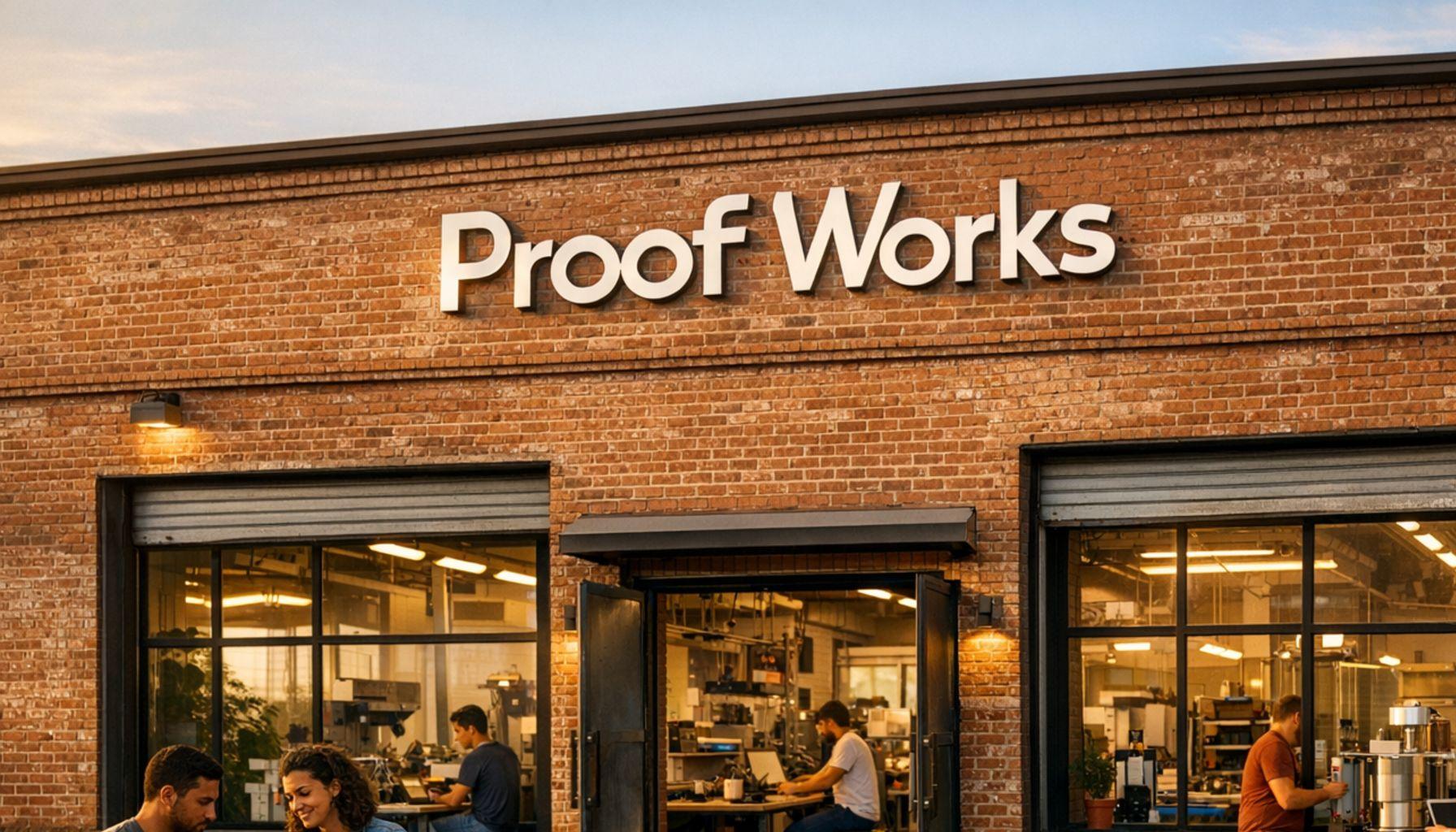
Startups focused on carbon management are about to get a pretty symbolic address in Baton Rouge, Louisiana. The former Tin Roof Brewing facility, which shut down operations in 2024 so its owners could pursue other ventures, will be repurposed and transformed into a technology incubator called Proof Works. The space, located at 1624 Wyoming St., will house labs, shared office space, and acceleration programs geared toward early-stage companies working in carbon capture, utilization, and monitoring, as well as industrial technology. The initiative is part of Louisiana’s FastSites program, which covers 19 industrial and commercial sites across the state and runs on a substantial $150 million revolving fund managed by Louisiana Economic Development (LED), aimed at developing business hubs and attracting investment. Governor Jeff Landry announced the first round of selected sites, which will collectively receive $140 million, at a press conference held on Tuesday. What makes this project especially interesting is the combination of strategic location, public and private support, and a sharply defined focus on a sector that has been gaining serious momentum worldwide 🌱.
The choice of Baton Rouge as the home for this incubator is no accident. The city is Louisiana’s capital and sits at the heart of a region historically tied to the petrochemical and energy industries. This proximity to major energy sector players creates a natural ecosystem for startups developing carbon management solutions, since potential customers, partners, and suppliers are literally in the neighborhood. On top of that, Louisiana has been investing heavily in public policies aimed at the energy transition, putting the state in a prime position to become a benchmark for clean technology in the United States. The industrial corridor stretching between Baton Rouge and New Orleans, for example, already hosts several large-scale carbon capture and storage projects, which further reinforces the relevance of this new incubator for the local and regional ecosystem.
Who is behind the project and how the collaboration works
The development of Proof Works is the result of a collaboration between four entities with complementary roles: the Greater Baton Rouge Economic Partnership (known as The Partnership), Louisiana Economic Development (LED), LSU’s FUEL program, and the Baton Rouge Area Foundation. Each of these organizations contributes a different piece of the puzzle, whether it is funding, political coordination, academic research, or philanthropic support. Once fully up and running, the incubator will be privately operated, which ensures agility in decision-making and the flexibility to adapt to the needs of its resident startups.
Lori Melancon, president and CEO of the Greater Baton Rouge Economic Partnership, noted that the incubator represents an important step in diversifying the region’s economy and empowering local entrepreneurs to build the industry of the future. According to her, the region’s industrial base has always driven opportunities, and now the goal is to build the infrastructure that ensures the next wave of innovation is created and scaled right there. Melancon also emphasized that supporting entrepreneurs in hard-tech and advanced prototyping expands what is possible in the region, helps retain top talent, and creates new pathways for high-impact, high-paying careers.
Leadership of Proof Works will be in the hands of Paul Barrial, who most recently served as director of member engagement at the Nexus Louisiana business incubator. In a statement, Barrial said this is an exciting chapter for entrepreneurship in the Baton Rouge region and Louisiana as a whole. He highlighted that the growing ecosystem will benefit not only from the new physical space but also from the cross-collaboration it will enable.
How Proof Works plans to operate in practice
Proof Works will not just be a physical space with coworking desks and free coffee. The vision goes well beyond that. The incubator plans to offer real laboratory infrastructure where startups can test prototypes, run experiments, and validate technologies before scaling their operations. This is a huge differentiator, because one of the biggest bottlenecks for early-stage companies in the carbon management space is access to the right equipment and facilities for technical development. Often, these fledgling startups have brilliant ideas and talented teams but get stuck because they cannot access the infrastructure needed to turn concepts into working products. Proof Works aims to solve exactly that problem, offering everything from lab benches to prototyping tools and specialized programming.
The incubator’s core goal is to help startups successfully navigate that critical moment where many tech companies stumble: the phase between product development and market entry. This period is often called the valley of death in the startup world and is typically caused by funding gaps that prevent companies from finishing their products and starting to generate revenue. Proof Works aims to be the bridge connecting a validated idea to a commercialized product.
Unlike other incubators and accelerator programs already operating in Baton Rouge, Proof Works will specialize in startups developing technology that involves tangible, complex hardware, with an emphasis on carbon management and industrial technology. That means we are talking about companies that need lab benches, testing equipment, and real physical space to build and iterate on their products, not just laptops and an internet connection. Several companies have already committed to using Proof Works for prototyping, product development, and testing, according to a statement from The Partnership.
The strategic location between LSU and downtown
The choice of the Wyoming Street address was not random. The former Tin Roof Brewery building sits between the LSU (Louisiana State University) campus and downtown Baton Rouge. This location puts resident startups in direct proximity to other key players in the region’s innovation ecosystem, including the university itself, IBM, and Louisiana Innovation.
Josh Fleig, LED’s chief innovation officer, pointed out that the proximity to LSU is critical, since the university is considered the wellspring of energy research in the state. And this connection is not just geographic. LSU’s FUEL program, which stands for Future Use of Energy in Louisiana, will play a central role in supplying Proof Works with its first tenants. FUEL is made up of more than 50 business and educational partners led by LSU, with a focus on finding solutions for energy use, particularly in carbon management.
FUEL’s Regional Innovation Engine, a program funded by the National Science Foundation (NSF), grants resources to groups researching and developing energy and technology solutions. The program received $15 million from the NSF in each of its first two years, with the potential to reach up to $160 million based on performance. FUEL also offers a proof-of-concept fund program that provides capital to startups to help them commercialize their technologies. These early program beneficiaries are the ones expected to fill Proof Works’ initial spaces.
As Fleig noted, there are countless ways to use carbon to create products that generate revenue, drive wealth, and create jobs in Louisiana. This pragmatic vision of turning carbon from an environmental problem into an economic opportunity sits at the heart of the incubator’s mission.
The broader context of carbon management and why it matters now
The global carbon management market is expanding rapidly, and the numbers help illustrate the urgency. Governments around the world are implementing increasingly strict regulations on greenhouse gas emissions, and companies across all sectors need to adapt quickly. This has created massive demand for technology solutions that help measure, reduce, and offset carbon emissions. Startups operating in this space are raising record levels of investment, and the sector already moves billions of dollars annually. The creation of a specialized incubator like Proof Works in Baton Rouge fits perfectly into this landscape, because it provides the ideal environment for new companies to develop and scale at a time when the market is hungry for effective, scalable solutions.
For Louisiana specifically, this movement represents an economic diversification opportunity that goes well beyond talking points. The state has always depended heavily on the oil and gas industry, and the transition to a low-carbon economy can be both a challenge and a monumental opportunity. By investing in innovation and creating spaces like Proof Works, Louisiana is signaling that it wants to be a leader in this transition, not just a spectator. The presence of existing energy infrastructure, a skilled industrial workforce, and now a support ecosystem for clean tech startups puts Baton Rouge in a compelling competitive position against more traditional innovation hubs like Austin or Denver.


Next steps and what to expect from Proof Works
Construction plans for converting the brewery into the Proof Works space are still being finalized, and a precise timeline has not yet been set, according to The Partnership. However, interest is already real: several startups have expressed interest in using the space, and the organization is exploring ways to open it as quickly as possible. That speed matters, because timing in the startup world makes all the difference. The sooner companies have access to labs and prototyping resources, the faster they can validate their solutions and pursue funding to scale.
The collaborative structure of Proof Works also deserves attention. The idea is that resident startups can share knowledge with one another, pool resources, and even develop joint projects. This open innovation model has proven extremely effective at incubators around the world because it accelerates the learning cycle and reduces operational costs for everyone involved. When companies working on environmental monitoring sensors are in the same hallway as teams focused on carbon capture solutions, the possibilities for synergy multiply naturally. That physical proximity, combined with smart curation of the profiles of startups accepted into the program, could turn Proof Works into a true climate innovation hub in the southern United States.
The project also serves as a concrete example of how urban spaces can be repurposed in smart ways. Turning a shuttered brewery into a climate tech incubator is the kind of innovation that goes beyond products or services and touches on the very way we think about urban and economic development. Instead of letting an idle industrial property deteriorate, the Baton Rouge community gains a hub for job creation, knowledge, and solutions to one of the biggest challenges of our generation. If everything goes as planned, Proof Works could become a replicable model for other cities looking to combine urban revitalization with sustainable technology development 🚀.