Brand Monitoring in Facebook Groups: The Problem Everyone Knows But Few Actually Solve
Brand monitoring in Facebook Groups has always been one of those tasks that eats up way too much time for way too little return.
Marketing, support, and sales teams know the drill: manually jumping into dozens of groups, scrolling through feeds, trying to spot relevant mentions, and still missing important conversations because you simply cannot be everywhere at once. The problem is not a lack of dedication — it is a lack of proper infrastructure to handle the sheer volume of information flowing through these spaces every single day. Facebook Groups remain extremely active environments, especially in specific market niches, and ignoring what happens inside them can be costly in terms of missed opportunities and crises that go undetected until it is too late.
That is exactly the gap Groups Watcher was built to fill.
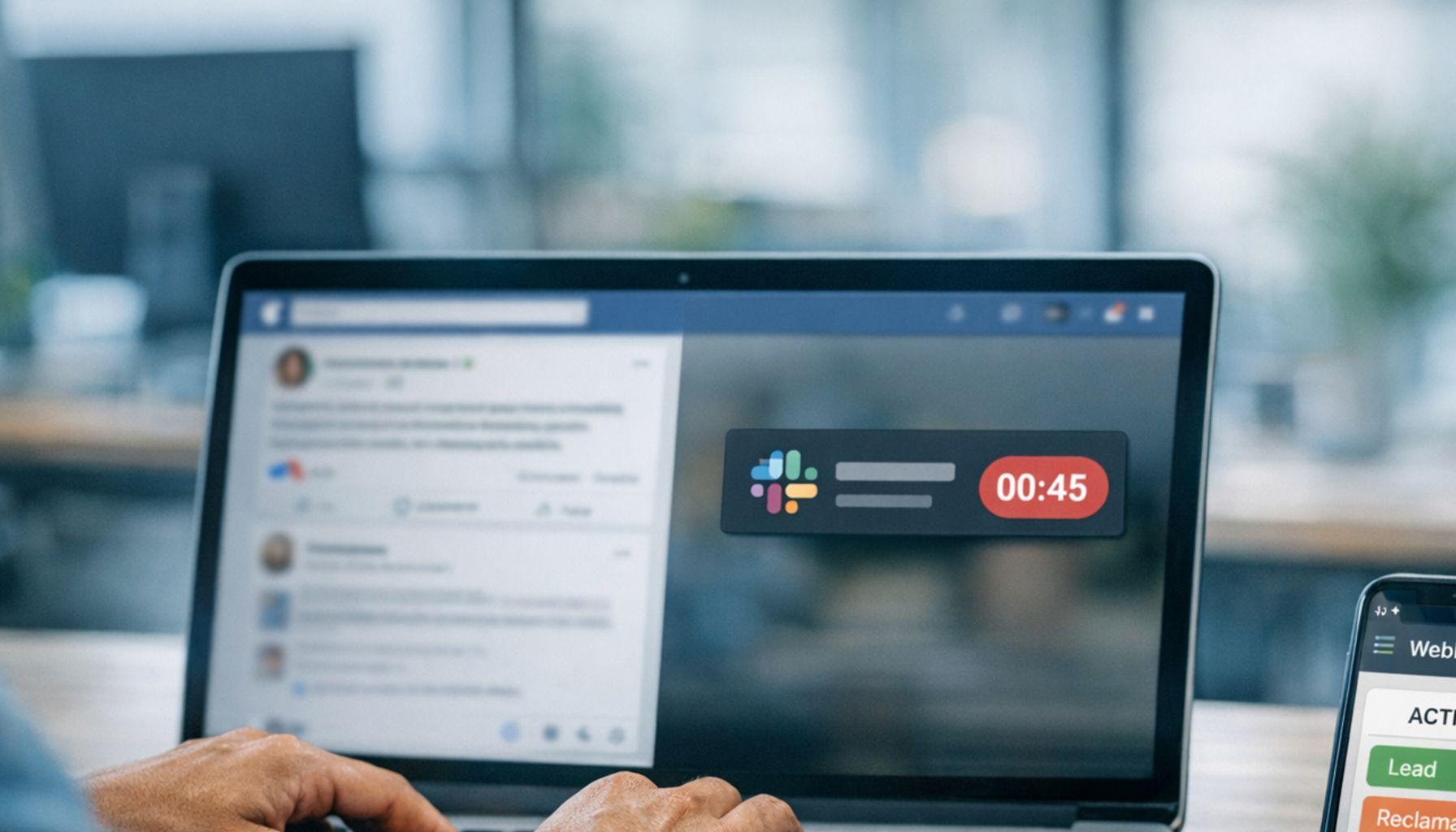
The platform connects what happens inside public and private Facebook Groups directly to the workflows teams already use every day — tools like Slack, Microsoft Teams, CRMs, and no-code platforms — delivering alerts in under 60 seconds after a new post appears in a monitored group. That is not some arbitrary number: that window of time makes all the difference when a mention of your brand, a recommendation request, or a complaint starts gaining engagement before anyone on your team even knows it exists. Speed of response has become a competitive advantage, and Groups Watcher was built on exactly that premise.
This changes how teams operate in a pretty significant way. Instead of treating group monitoring as a separate, manual research task, Groups Watcher turns every relevant post into an actionable notification, a CRM record, or an automation trigger — all within the tools the team already knows and uses. The result is a smoother operation with less repetitive work and much more context available at the moment it matters most. 🚀
The Real Problem with Brand Monitoring in Facebook Groups
Anyone who has tried to do brand monitoring manually in Facebook Groups knows the task sounds simple on paper but turns into an operational nightmare very quickly. The dynamics of Facebook Groups are completely different from other social networks: posts do not follow a predictable chronological order, the algorithm decides what shows up for whom, and groups with thousands of members can generate hundreds of posts per day across wildly different topics. Filtering for what actually matters in that context, without a dedicated tool, requires a massive manual effort that is nearly impossible to sustain on teams juggling other priorities at the same time.
Beyond volume, there is the problem of fragmentation. A company that sells software, for example, might have relevant mentions happening simultaneously in entrepreneurship groups, tech groups, competitor support groups, and even regional small business groups. Keeping up with all of those spaces at the same time, manually, is simply not feasible without assigning someone to do it full-time — and even then, the results tend to be inconsistent. Posts that stay visible for a few hours before getting pushed down by the algorithm may never be found by someone doing this monitoring reactively and sporadically.
The hidden cost of this process goes beyond the time spent. When a negative mention goes unnoticed for hours or days, it has already accumulated comments, shares, and its own narrative that is much harder to turn around after the fact. Similarly, a sales opportunity — a qualified lead who publicly asked which tool to use, or someone requesting recommendations in a group with 50,000 members — may have already found a competitor before your team even knew the conversation existed. This is the kind of loss that never shows up in any report but quietly accumulates over time.
The Context Behind the Launch of Groups Watcher
To understand why a platform like Groups Watcher exists, it helps to look back at what happened with automation in Facebook Groups over the past few years. There was a time when it was possible to use group apps and API integrations to connect group activity directly to CRMs, Slack channels, and automation platforms. Companies that relied on this flow could monitor mentions and route information automatically with relative ease. But then Facebook removed those group apps, and the API-based methods that used to work simply stopped being viable in the same way.
That change left a lot of businesses stranded without the infrastructure they had already built into their processes. Teams that had workflows set up to capture group posts and turn them into automated actions — like creating leads in HubSpot or triggering notifications in Teams — had to resort to improvised workarounds or simply went back to manual monitoring. It was in this vacuum that Groups Watcher positioned itself, offering a managed monitoring model that replaces the old integrations with a webhook-based flow. The platform watches configured groups and sends new posts to the client’s preferred webhook destination, keeping the connection between what happens in the groups and the rest of the business’s operational stack.
This detail matters because it shows that Groups Watcher is not just another generic social listening tool. It was born to solve a specific problem created by a platform change, and the architecture of the service reflects that directly. Instead of trying to replicate an API that no longer exists, the platform operates as an intermediary service that handles collection and delivers the data already filtered and ready for consumption by the team’s tools.
How Groups Watcher Works in Practice
Groups Watcher operates as a continuous monitoring layer that stays active in configured groups, identifying new posts and filtering those that match the keywords, terms, or patterns defined by the team. As soon as a relevant post is detected, the platform fires off a real-time alert with less than 60 seconds of latency, delivering the information directly to the channel where the team is already working. This eliminates the friction of having to access a separate platform to check what was found: the alert arrives where the work happens, whether that is Slack, Teams, or any other configured destination.
Setup is designed to be practical and fast. You can define multiple groups to monitor at the same time, create keyword-based filters to route alerts to different teams — like complaints going to support and purchase-intent mentions going straight to sales — and customize the notification format to include enough context so the person receiving the alert already knows what needs to happen without having to open Facebook to understand the situation. This layer of customization is what transforms monitoring from a reactive process into a smart, action-oriented workflow.
According to the platform’s documentation, users can also choose between different monitoring modes depending on their needs:
- Broad monitoring: captures all new posts in the group, ideal for teams that want full visibility into what is being discussed.
- Keyword tracking: filters posts containing specific terms related to the brand, product, or competitor.
- AI filtering: uses artificial intelligence to identify posts with higher contextual relevance, reducing noise and delivering more precise alerts for teams that prefer lower volume with higher quality.
What sets Groups Watcher apart from more generic social media monitoring solutions is its specific focus on Facebook Groups as a unique environment with its own characteristics. Groups are closed, conversational ecosystems, very different from the public Facebook feed or other platforms. Generic tools often struggle to monitor private groups or capture posts with the speed needed for the alert to still be useful. Groups Watcher was built specifically for this context, which is reflected in its low latency and the precision of its available filters.
Integrations That Fit Into Your Existing Workflow
One of the platform’s strongest points is its ecosystem of available integrations, because no monitoring tool can stand on its own within a professional operation. Groups Watcher connects natively with Slack and Microsoft Teams for real-time notifications, while also supporting Discord, Google Chat, and email as additional delivery channels. For more advanced automations, the platform offers connections to CRMs like HubSpot, Salesforce, and Pipedrive, as well as no-code tools like Zapier, Make, and n8n, allowing each team to build the flow that makes the most sense for their operation.
The Groups Watcher documentation also includes specific guidance for GoHighLevel users, with setup guides using inbound webhooks to integrate alerts directly into the platform’s workflows. This shows that the tool’s target audience extends beyond large tech companies and includes digital marketing agencies and consultants who already work with more specialized automation stacks.
This workflow automation capability is where the tool’s real value multiplies. Picture a scenario where a SaaS company monitors groups for digital entrepreneurs and sets up a specific alert for posts mentioning difficulties with the competitor tool it replaces. Each identified post automatically triggers a CRM record with the author’s name, the post content, and a direct link to the publication, and also creates a task for the sales consultant responsible for the corresponding region or segment. All of this happens within less than a minute after the post goes live, while the conversation is still fresh and the window of opportunity is open. Without automation, this process would take hours or simply never happen at all.
For teams already using no-code tools like Zapier, Make, or n8n, the possibilities become virtually unlimited. You can cross-reference Groups Watcher alerts with other data sources, automatically enrich the profile of the person who posted using data enrichment tools, trigger internal approval flows before any public response, or generate consolidated mention reports for weekly analysis — all without writing a single line of code. This democratizes access to a sophisticated level of brand monitoring that used to be reserved for companies with dedicated technical teams, putting that capability in the hands of marketing and sales teams who already know their way around the no-code ecosystem.
Use Cases That Go Beyond Brand Monitoring
While brand monitoring is the most obvious use case, the Groups Watcher documentation presents the platform as useful for a range of additional scenarios worth mentioning:
- Social listening: tracking the overall sentiment of communities around topics relevant to the business, identifying trends before they go mainstream.
- Lead discovery: capturing posts from people actively seeking recommendations, solutions, or vendors within groups with a qualified audience.
- Competitor monitoring: identifying mentions of competitors, product comparisons, and complaints that may represent positioning opportunities.
- Sentiment monitoring: tracking how perception of the brand evolves over time within specific communities.
Each of these scenarios benefits from the same real-time alert infrastructure and automation tool integrations, which means a team can set up multiple simultaneous flows, each optimized for a different objective, without needing separate tools for each function.
Why Alert Speed Changes Everything
The sub-60-second window is not just a technical differentiator — it represents a fundamental shift in the position a team occupies when it enters a conversation. When an alert arrives in real time, the company can be the first to answer a question, the first to offer help in a difficult situation, or the first to show up when someone is actively researching a solution. In high-activity groups, posts that do not get early engagement lose algorithmic visibility very quickly, which means arriving late is almost the same as not arriving at all. The speed of the alert directly determines the relevance window of the response.
From a crisis management and brand reputation standpoint, the difference between being alerted in 60 seconds and being alerted a few hours later can be the difference between containing a negative narrative before it gains traction and having to manage a situation that has already solidified with dozens of comments and shares. Facebook Groups have a very specific propagation dynamic: posts that generate early engagement tend to be shown to far more members by the algorithm, creating a snowball effect that is much harder to reverse once it has started. Reactive monitoring done in hour-long cycles is simply not compatible with that dynamic.


For support teams, speed has yet another direct impact: customer satisfaction. When someone posts a question or complaint in a public group and receives a response from the company in under two minutes, the perception it creates is that of a brand that is present, attentive, and genuinely cares about what is being said about it. That kind of experience is hard to replicate with manual monitoring and has disproportionate value in terms of loyalty and reputation. Groups Watcher delivers exactly that response capability without requiring someone to keep a Facebook tab open all day waiting for something to happen. 💡
An Operational Approach to Facebook Group Monitoring
What makes the Groups Watcher proposition particularly interesting is the mindset shift it represents. Traditionally, brand monitoring on social media is treated as a research activity: someone logs into a dashboard, checks reports, analyzes charts, and then decides what to do. The problem is that this model works well for retrospective analysis but is terrible for situations that require a fast response. Conversations in Facebook Groups do not wait for the next reporting cycle. They happen, gain engagement, and move on — with or without the brand’s participation.
Groups Watcher flips that logic by turning monitoring into something operational. Every relevant mention becomes a notification that reaches the right team, in the right channel, with enough context for the next action to happen immediately. It is not about knowing what happened last week — it is about knowing what is happening right now and having the infrastructure to respond before the window of opportunity closes. For growth, sales, and customer success teams, that difference is massive.
The platform also allows alerts to be routed into flows that log mentions, trigger automatic follow-ups, update CRM records, and direct discussions to shared collaboration channels. This means that beyond the immediate response, there is a structured history of everything that was captured — useful both for long-term analysis and for feeding content and positioning strategies based on real community data.
With real-time alerts, native integrations with the tools teams already use, and an approach specifically focused on the dynamics of Facebook Groups, Groups Watcher directly solves a problem that many teams have simply learned to live with — without realizing how much that gap is costing them in opportunities and reputation every single day.
About Groups Watcher
Groups Watcher is a Facebook Groups monitoring platform that helps companies receive real-time alerts from public and private groups. The managed service is designed for brand monitoring, social listening, lead discovery, and workflow automation, with alerts delivered through channels like Slack, Microsoft Teams, Discord, Google Chat, email, custom webhooks, Zapier, Make, n8n, and CRM systems. The platform’s stated goal is to deliver fast, relevant alerts from Facebook Groups so teams can respond faster to the conversations that truly matter for the business.