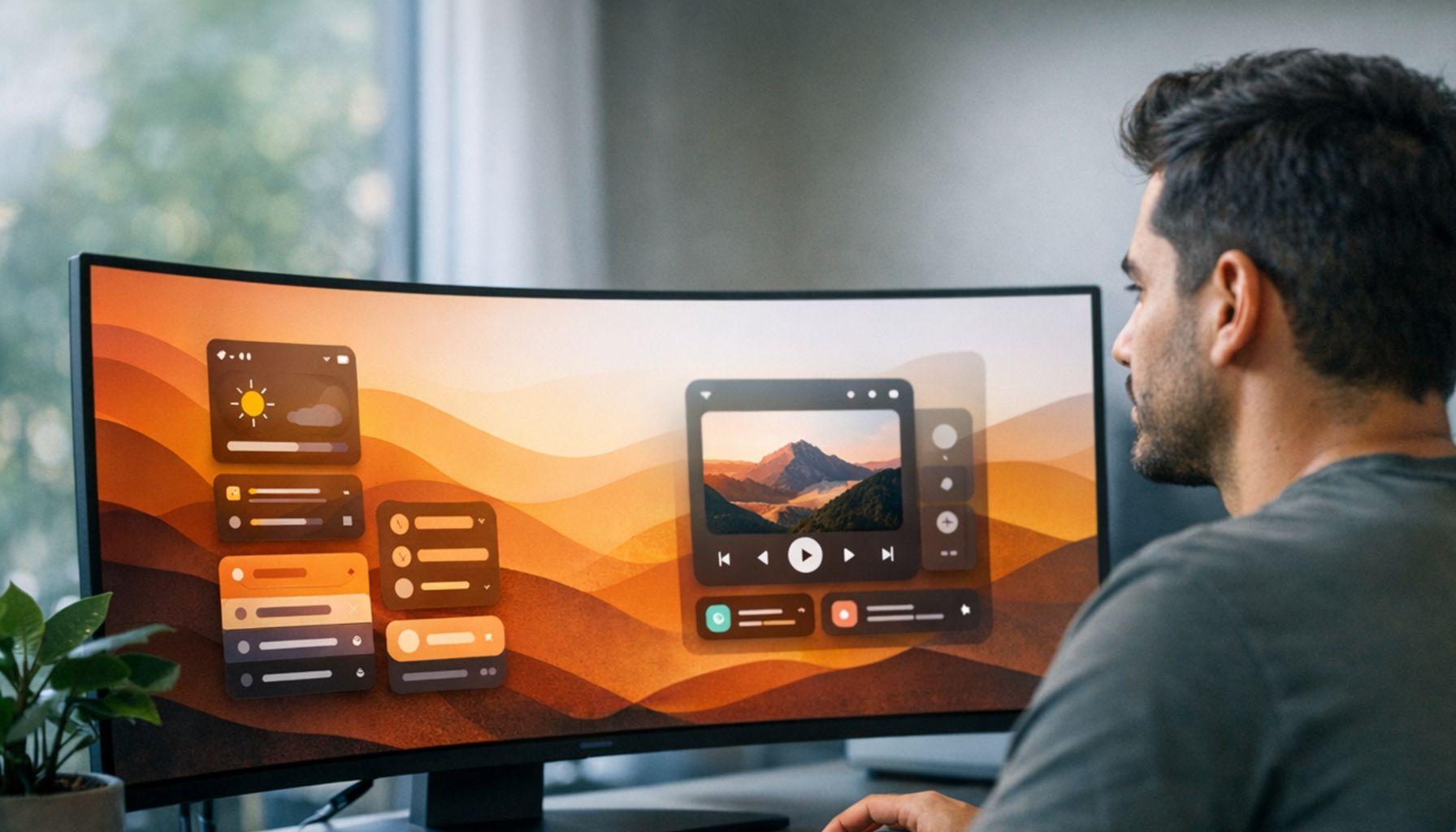
Google Just Changed the Future of UI and UX Design
Google just made a move that goes far beyond a simple visual update.
If you follow the world of design, you’ve probably noticed that something big is happening — and this time it’s no exaggeration to say we’re looking at a real game changer for anyone who works with or simply uses digital interfaces on a daily basis.
The Mountain View giant just signaled a major shift in how it thinks about and builds experiences for its products.
And this directly affects two areas that form the backbone of any digital product: UI, which handles everything you see, and UX, which determines how you feel while using it.
But what exactly changed? Why does this moment matter so much for designers, product teams, and even people who have never opened a file in Figma in their lives?
That’s what we’re going to break down here — straight to the point, no fluff, and grounded in reality. 🚀
Because understanding what Google is doing right now is, in practice, understanding where the future of interface design is headed.
Material You Grew Up — and Became Something Much Bigger
It all started with Material You, the design system launched by Google in 2021 that promised real personalization in Android interfaces. The core idea was simple but powerful: the interface adapts to the user, not the other way around. The system pulled colors from the wallpaper chosen by the user and applied them across the entire visual ecosystem of the device, creating a visually cohesive experience and — for the first time at scale — a genuinely personal one. That was already a clear signal that Google was rethinking the role of UI as something dynamic, living, and responsive to human context.
But what happened over the past few months went well beyond that. Google started integrating artificial intelligence deeply into the design layer of its products, which completely changed the conversation. We’re no longer just talking about color palettes that shift automatically. We’re talking about interfaces that learn usage patterns, reorganize visual priorities based on user behavior, and deliver different experiences to different people — all within the same product. This is a quiet revolution that few noticed right away, but it’s happening right in front of us.
The real turning point is the fact that Google started treating UX as an adaptive system rather than a fixed set of rules and components. For years, Material Design worked like a visual bible: it had clear rules, defined components, and a language that all of the company’s products followed in a fairly rigid way. Now, that rigidity is being replaced by fluidity. The guidelines still exist, but artificial intelligence is being used to fill the gaps between them — and that opens up massive room for user experience to become far more contextual, far more human, and at the same time far more scalable.
AI at the Core of the Design Process: What This Means in Practice
When Google announces it’s using artificial intelligence to help build and refine its interfaces, a lot of people assume the conversation is just about tools for designers — like Gemini helping generate component variations or suggesting layouts. But the conversation goes much deeper than that. What’s really at stake is the fundamental logic of how a UI is conceived and delivered. AI isn’t just speeding up designers’ work; it’s changing the very nature of what an interface can be.
A screen no longer has to look the same for everyone. It can reorganize, simplify, or expand based on who is using it, at what moment, on which device, and with what goal — all in real time. This capacity for continuous adaptation represents a paradigm shift in digital product development, because it transfers part of the personalization responsibility from the designer to the system itself.
In practice, this is already showing up in products like Google Search, Gmail, and Google Photos. Anyone who uses these apps frequently has already noticed that certain features appear differently depending on the context. Search, for example, started displaying AI-generated answers directly in the interface before even showing traditional links — a change that seems small visually but represents a massive transformation in the user journey. UX here is no longer linear: the path a user takes to reach their answer has changed radically, and that was a design decision before it was anything else.
Another point worth paying attention to is how Google is using AI to accelerate usability testing and design decisions at scale. Before, a UX team needed weeks to collect data, analyze behaviors, and propose changes to an interface. Now, with language models and behavioral analysis systems integrated into the creative process, that cycle is being compressed dramatically.
This has enormous implications for the market: smaller teams can make more informed decisions, and products reach end users more polished and with less friction. The future of data-driven design has always been a promise — and Google is making it a reality right now.
What Designers Need to Understand About This Shift
There’s a very real anxiety in the design market about the role of human professionals in a scenario where artificial intelligence is taking on increasingly complex functions within the creative process. But the move Google is making points in a different — and more interesting — direction than the replacement narrative floating around out there.
What’s becoming increasingly clear is that a designer’s value doesn’t lie in executing repetitive tasks or mastering specific tools. It lies in the ability to ask the right questions about the human experience and to translate complex answers into visual and functional solutions that truly make sense for people.
Google is, in practice, raising the level of abstraction at which designers need to work. If a UI professional used to spend hours adjusting spacing and choosing typefaces, that layer of work is now being partially automated. The space that opens up is for more strategic decisions: What is the user’s mental model? Where is the real friction in the journey? How can an interface communicate trust without saying a word? These are questions AI still can’t answer on its own — and they make all the difference between a product that works and one that people actually love to use.
On top of that, the concept of a design system is undergoing a deep overhaul because of these changes. Traditional design systems were static by nature: a set of documented components that everyone followed. What Google is building now points to systems that evolve with usage, that learn from collective user behavior, and that adapt to new contexts without requiring a complete overhaul every cycle.
For designers working with complex systems, this completely changes how they think about governance, documentation, and scalability — and the most valued skills in the market are shifting right along with it. 🎯
The Impact on Tools and Workflows
You can’t talk about this shift without mentioning how it’s directly spilling over into the tools design professionals use every day. Platforms like Figma, Sketch, and Adobe XD had already been incorporating AI-assisted features, but Google‘s move raises the bar significantly. When the biggest tech company in the world starts treating AI as a central piece of its interface-building process, the tools market has to respond at the same speed.
What we’re seeing is a transition from tools that help create components to tools that help think through experiences. The difference might seem subtle, but it’s huge. Creating a button with rounded corners and a perfect shadow is one thing. Knowing at which point in the journey that button needs to appear, with what text, and in what position on the screen to maximize user comprehension — that’s a completely different conversation. And it’s exactly this second conversation that AI is entering full force.
Workflows are also being impacted. The traditional sequence of research, wireframe, prototype, test, and iterate still exists, but the gaps between each stage are shrinking dramatically. With AI capable of generating functional prototypes from natural language descriptions, the time between having an idea and seeing it running on a screen has dropped from days to minutes in many scenarios. This doesn’t eliminate the need for critical thinking — on the contrary, it makes that thinking even more essential, because bad decisions are now also implemented faster.


Why This Matters Beyond Google
What Google does rarely stays contained within the Google ecosystem. Historically, the company’s design decisions have become a reference for the entire market — Material Design itself directly influenced how thousands of other products were built over the past decade. When Google decides that adaptive UI and AI-driven UX are the way forward, it doesn’t take long for that vision to start showing up in other companies’ decisions, in designer training programs, and in user expectations for any digital product they use. The ripple effect is already underway.
For smaller companies and startups, this scenario creates both opportunity and pressure. The opportunity lies in the fact that tools once exclusive to large corporations with massive teams are becoming accessible — it’s possible to build more sophisticated experiences with fewer human resources, which levels the playing field in interesting ways.
The pressure, on the other hand, comes from a higher bar: if users start expecting smarter UX and more fluid UI as the standard — because that’s what Google is delivering — any product that falls short of that expectation will feel that gap more intensely than before.
What to Expect in the Next Chapters
The future taking shape here is one where interfaces stop being merely visual and become truly relational — capable of communicating with users in richer, more subtle, and more effective ways. This isn’t science fiction or a distant projection: it’s already happening in the products that millions of people use every day, often without even consciously realizing it.
The trend is that in the coming months we’ll see even more generative AI integrations within design systems, not just from Google, but across the entire tech ecosystem. Apple, Microsoft, and Meta are already moving in this direction, each with their own approach. But the fact that Google took this step so publicly and consistently puts the company in a leadership position in this conversation — and sets the tone for what comes next.
The sooner designers, product teams, and companies understand what’s behind these changes, the better prepared they’ll be to build the experiences that will define the next few years of computing. The game has changed, and understanding the new rules is the first step to playing it well. 💡