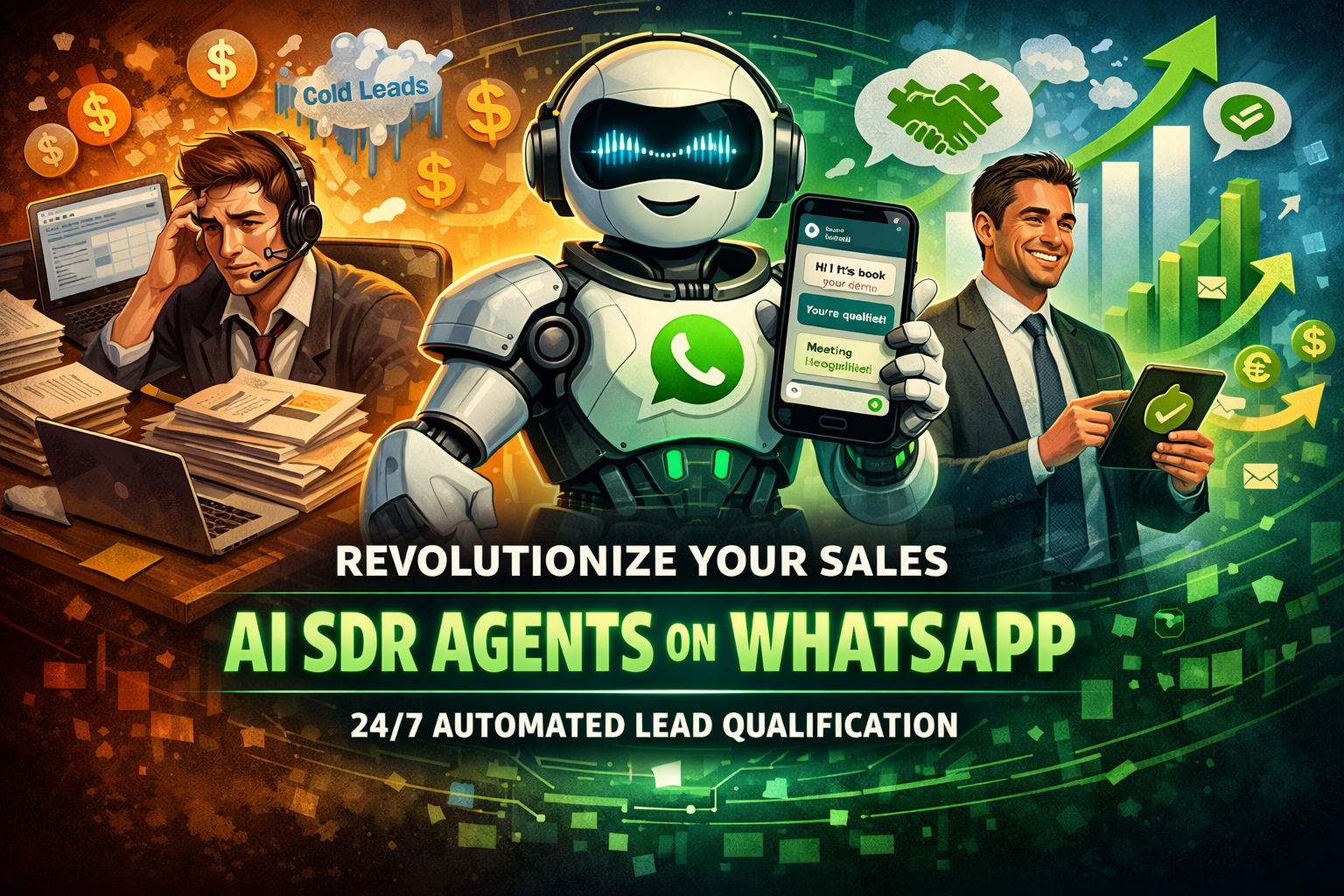
Growing fast is the goal of everyone who runs a business, but the reality is that the more a company expands, the more things start getting stuck along the way.
Processes that worked perfectly with a small team turn into chaos when demand doubles. Tasks that used to be knocked out in minutes start eating up hours, mistakes pop up where they shouldn’t, and the feeling that growth is actually working against operations becomes increasingly common among managers and entrepreneurs.
This is exactly where artificial intelligence and custom software come into play — not as a passing trend, but as a concrete answer for anyone who wants to grow without losing control. These technologies are no longer exclusive to large corporations with massive IT departments and have become part of everyday life for companies that simply spotted an opportunity to operate better.
Automation is no longer something only big companies with huge budgets talk about. Today, businesses of all sizes are using technology to do more with less effort and less room for error. And what makes it really interesting is that there is no one-size-fits-all formula — every operation has its own quirks, and that is precisely why generic solutions often fall short.
In this article, we are going to explore how these two forces — AI and tailor-made software — work together to transform the way companies operate and scale. 🚀
The Real Problem With Growing Without a Tech Foundation
When a company starts gaining traction, the natural instinct is to hire more people to handle the volume. And that makes sense — up to a point. But there comes a moment when simply adding more headcount does not fix the root problem, which is the lack of well-structured and automated processes to support operations at scale. Companies that grow without this technological foundation end up piling on inefficiencies, and every new hire starts solving a symptom instead of treating the cause.
The impact of this shows up in all kinds of ways during the daily grind: constant rework, information scattered across disconnected spreadsheets, fragmented internal communication, and decisions made based on outdated data. Each of these problems on its own already represents a real cost to the business, whether in time, money, or team energy. Together, they create a bottleneck that literally prevents the company from scaling consistently, even when the demand is there and the desire to grow is genuine.
This is the scenario where the conversation about automation and custom software really kicks in. Not as a magic bullet, but as a structured path to eliminate the friction that appears when operations grow beyond the capacity of manual control. Technology, when applied well, allows a company to scale its processes without necessarily scaling its problems along with them. And that is exactly what separates businesses that grow in a healthy way from those that grow and collapse.
Signs It Is Time to Invest in Technology
A lot of people take too long to realize the moment has come to seriously look at automation. Some signs are pretty clear, and it is worth keeping an eye on them in your day-to-day operations. When the team spends more time putting out fires than planning for the future, something is off. When you notice two or three employees doing the exact same repetitive task every single day, there is a massive opportunity for improvement sitting right there.
Another strong indicator is when mistakes keep happening at the same stages over and over again. That tells you the process relies too heavily on human attention at points that could be safely automated. And then there is the classic scenario: critical information that gets lost between one system and another, or that only exists inside one specific person’s head. If that person goes on vacation, operations grind to a halt. These are symptoms that the tech infrastructure needs an urgent upgrade.
How Artificial Intelligence Transforms Operations in Practice
Artificial intelligence plays a much more practical and accessible role than most people realize. When we talk about AI applied to business, we are not talking about robots or science fiction — we are talking about systems that learn from data, identify patterns, and make decisions autonomously on tasks that used to depend entirely on a person. This ranges from automatic email classification and chatbot customer service to demand forecasting, customer behavior analysis, and anomaly detection in financial processes.
A very concrete example is the use of AI in customer support teams. Instead of a human agent manually answering every repetitive question, an intelligent system can identify the pattern behind the request, pull the most appropriate answer based on historical data, and resolve the ticket in seconds — freeing up the team to handle cases that truly need a human touch. This does not mean replacing people. It means directing human effort to where it creates the most value, while the machine handles the operational volume with consistency and speed.
Another area where artificial intelligence is significantly changing the game is in data analysis for decision-making. Companies that used to take days to consolidate reports and understand what was happening in their operations now have access to real-time insights, with recommendations generated automatically by algorithms that process volumes of information impossible to analyze manually. This completely changes the speed at which a manager can act on an opportunity or a problem, and in competitive markets, that speed makes all the difference. 📊
AI Is Not Just for Tech Giants
There is a widespread myth that only companies on the scale of global giants can take advantage of artificial intelligence. That is simply not true anymore. With the rise of tools built on large language models and accessible automation platforms, even a small local shop can implement smart solutions that make a real difference in revenue.
A restaurant can use AI to predict which dishes will sell the most on certain days and adjust ingredient purchases accordingly. An online store can personalize product recommendations based on each visitor’s browsing history. A medical office can automate scheduling and reminders, reducing no-shows and optimizing the calendar. The point here is that the barrier to entry has dropped dramatically in recent years, and whoever figures that out first gets ahead.
Why Custom Software Makes a Difference in Scalability
Off-the-shelf tools have their value, but they are built to serve as many companies as possible at the same time, which means they were designed for the average — not for the specific. When a company has a particular workflow, a different customer journey, or operations with unique characteristics, forcing that context into a standard system creates workarounds that cost time, generate patchwork fixes, and limit growth potential. It is like trying to wear a size 9 shoe on a size 11 foot — technically it fits, but it is going to hurt at some point.
Custom software solves exactly that misalignment. It is built from the company’s reality, its processes, its required integrations, and its growth objectives. This means every feature exists because it makes sense for that specific operation, not because it came bundled in a contracted package. The practical result is a tool the team actually uses, one that fits into the existing workflow and can evolve alongside the business without requiring a complete system swap at every stage of growth.
Scalability is a central point here. Custom-built software can be designed from the ground up with architecture ready to grow, supporting more users, more data volume, and more integrations without needing to be rebuilt from scratch. This represents real savings in the medium and long term because it avoids the migration, rework, and adaptation costs that pop up when a company outgrows a generic tool. Investing in a custom system is, in practice, investing in the infrastructure of growth. 🛠️
User Experience as an Adoption Factor
One detail a lot of people forget when thinking about software is the experience of the person who will use the tool every single day. It does not matter how powerful a system is under the hood if the interface is confusing and the team gets lost trying to operate it. Custom software has the huge advantage of being designed based on how the people at that company already work, respecting the logic they already know.
When the interface aligns with the natural workflow, the learning curve drops sharply and adoption happens organically. People do not feel like they are fighting the system — they feel like it was made to help them. And this detail, which might seem small, is often what decides between a technology project that succeeds and one that becomes yet another abandoned piece of software burning money without generating value.
Intelligent Automation: When AI and Software Work Together
The combination of artificial intelligence and custom software is where things get really exciting. When you have a system built specifically for your context and you layer in AI capabilities on top of it, the result is automation that goes far beyond executing repetitive tasks. It starts to learn, adapt, and continuously optimize, creating a cycle of improvement that feeds on itself over time. The more the system operates, the better it understands your business patterns, and the more efficient it becomes.
Think about a custom inventory management system with integrated AI. It does not just log entries and exits — it learns from sales history, factors in seasonality, identifies which products have faster turnover during certain periods, and suggests restocking automatically before a problem even occurs. This eliminates both the manual monitoring work and the cost of getting the restocking timing wrong, which can mean lost sales or capital tied up in unnecessary inventory. It is automation with real intelligence applied to the specific context of the business.
This integration also has a direct impact on scalability. When processes are automated with intelligence, they grow alongside demand without requiring proportional manual intervention. A company that processes 100 orders a day with the same system can handle 1,000 without needing to multiply the team by 10. This completely changes the growth equation, making it possible to expand revenue without expanding operational costs at the same rate — which is exactly the model every entrepreneur is after when thinking about truly scaling up. 💡
Real-World Examples of Productivity Gains
It is worth bringing up a few scenarios that show how this combination works in practice. Imagine a logistics company that integrates AI into its routing system. The software learns from traffic patterns, delivery schedules, and customer availability windows, building optimized routes that save fuel and time. What used to require a dedicated planner now happens automatically — and even more accurately.


Or think about an office that deals with a massive volume of documents. With AI applied to the internal software, the system can read, classify, and extract relevant information from contracts and forms in seconds — something that would have consumed hours of manual work. The gain here is not just in time, it is in accuracy, because the machine does not get tired and does not lose focus after the hundredth document of the day.
What to Consider Before Implementing These Technologies
Before rushing out to hire software development or implement artificial intelligence solutions, it is worth taking a step back and getting a clear understanding of what actually needs to be solved. Mapping out internal processes is the most important starting point because without clarity on where the bottlenecks are and which stages are slowing operations down the most, any technology you implement runs the risk of automating the problem instead of solving it. Technology amplifies what already exists, so if the process is broken, the automated version of it will just be a broken process running at high speed.
Another important consideration is thinking about scalability from the very beginning. Many companies make the mistake of implementing solutions focused only on the current moment without considering how that system will perform when demand triples or when new products and services are added to the operation. Good custom software is born with this forward-looking vision, and the architecture decisions made at the start of a project have a direct impact on how much time and money will be needed to evolve the system down the road. Thinking about growth before you need it is what separates a successful implementation from one that turns into technical debt.
Finally, it is important to involve the people who will actually use the technology in the planning and implementation process. Systems that are imposed without considering the reality of the people who will operate them every day tend to have low adoption rates, which means the investment simply does not generate the expected return. When the team participates, when they understand the reasoning behind the changes, and when they see that the tool was designed to make their work easier, the outcome is completely different. Technology is the means, but people remain the central element of any successful operation. 🤝
Start Small and Grow With Consistency
A valuable tip for anyone starting this journey is to resist the temptation to transform everything at once. The urge to automate the entire company in a single project usually leads to frustration and high costs. The smarter path is to pick one specific process that can deliver quick and visible results, implement it well, gather the learnings, and then expand to other areas.
This gradual approach has a huge advantage: each small win builds confidence within the team and validates the investment before moving on to more complex stages. On top of that, it allows you to adjust your strategy as you learn what works best in your specific context. Growing with technology is a marathon, not a sprint, and those who understand that build much stronger foundations for the future.
The combination of automation, artificial intelligence, and custom software is no longer a competitive edge reserved for large enterprises. It is a real and accessible path for any business that wants to grow with efficiency, consistency, and control.