AI consulting is no longer a topic reserved for big corporations.
In 2026, small businesses are at the center of this transformation, and those who can help them put artificial intelligence to work for real are finding a hot market, full of opportunity and with very little qualified competition.
The problem is easy to understand: most SMBs already know they need AI. What they lack is knowing how to implement it in their day-to-day operations, without relying on internal teams that simply don’t exist.
That gap has created a massive space for a new type of professional and business — one that doesn’t just deliver strategy in a pretty slide deck, but actually gets the system up and running.
That’s exactly where hybrid business models come in — a combination of technical consulting and hands-on execution that’s gaining traction fast. According to business development research, AI consulting for small and medium-sized businesses is one of the fastest-growing ideas in 2026, precisely because these companies need practical help, not just strategic advice.
In this article, you’ll learn:
- Why this model is growing so fast in 2026
- How it works in practice
- What separates those who are succeeding from those who are spinning their wheels
Let’s dive in. 🚀
Why small businesses became the focus of AI consulting
For a long time, talking about AI consulting meant million-dollar projects, contracts with banks, insurance companies, or major retailers. That made sense back then, because implementation costs were high, models were complex, and the tools weren’t accessible to anyone without a dedicated tech team. But the landscape has changed completely — and it changed fast. With the rise of tools like ChatGPT, no-code automation platforms, and increasingly affordable APIs, the barrier to entry has dropped dramatically. What used to require a team of engineers can now be set up by a consultant with solid technical knowledge and a good understanding of the client’s business.
Small businesses caught on to this, but they ran into another problem: lack of time, lack of internal expertise, and most importantly, lack of someone who can translate AI’s potential into their actual day-to-day operations. A dental clinic owner doesn’t need to understand machine learning. They need someone to set up a system that answers patient questions, schedules appointments automatically, and sends recall reminders — without having to hire another employee for that. It’s that simple. And that’s exactly the space consultants working with hybrid business models are filling with great success.
The numbers back up this trend. Business guides like the one from Xero point out that startup costs for launching an AI consultancy remain low, since the work is knowledge-based, with rates typically ranging from $100 to $300 per hour. And when the model shifts to a retainer — meaning recurring monthly fees — the rates tend to go up, because the price is tied to measurable results for the client’s business.
The SMB market in the U.S. is massive. There are over 33 million small businesses active in the country, according to SBA data, and the vast majority still operate with manual, repetitive processes that eat up way too much time from people who could be focusing on growth. The combination of an enormous market, low digitization, and increasingly accessible AI tools creates a window of opportunity that won’t stay open for long without being filled. Those getting in now are catching the right wave at the right time. 🎯
What hybrid business models are and why they work
The concept of hybrid business models within AI consulting is more straightforward than it sounds. Instead of just delivering a diagnosis or an action plan, the professional or company also takes on the execution. That means they don’t just tell the client what needs to be done — they go in and make it happen. They configure the automation workflows, connect the tools, train the client’s team, and make sure everything is working before they step away. It’s a shift in approach that turns the consultant into an operational partner, and that carries a completely different value for the client.
In practice, AI automation agencies analyze the client’s workflows, identify where technology can save time or reduce costs, and then build the actual workflows using tools like Make.com, Zapier, or n8n. Instead of leaving the client holding a presentation full of charts, these services deliver systems that already work and require minimal ongoing maintenance. It’s that concrete delivery that generates the recurring revenue everyone wants.
The financial logic behind this model is also really interesting. Instead of charging only by the hour or for a fixed project, many professionals are structuring contracts with a combination of an initial setup fee and a recurring monthly retainer for maintenance and optimization. This creates predictable revenue, which is the dream of any services business. The client pays for the setup, which covers the heavy lifting of configuration, and then pays a smaller amount every month to ensure the systems keep running, get adjusted as the business grows, and receive new features over time. Everyone wins in that equation.
And the hybrid model isn’t limited to pure automation. It also shows up in formats like AI content studios, which combine generative tools with human editorial judgment to produce large volumes of marketing material faster and cheaper than traditional agencies. AI-powered video editing services use machine learning for repetitive tasks like cuts and captions, while humans handle the creative direction. Chatbot development combines no-code platforms with hands-on client training and data management. In all these cases, AI is the delivery engine — the thing that makes the service faster, more scalable, and more accessible — but the real business still runs on the relationship with the client.
Customized services are the major differentiator of this format. Unlike off-the-shelf solutions that promise to solve everything but rarely fit the reality of a specific business, the hybrid model allows the consultant to deeply understand how that company works and build a tailored solution. A pet shop has completely different needs from an accounting firm, which in turn is different from an online clothing store. Customization isn’t a luxury in this context — it’s what makes the difference between a system the client uses every day and one that gets forgotten after two weeks. 🐾
Automation that makes sense for those just starting out
One of the most common mistakes people make when entering the AI consulting market for small businesses is trying to implement overly complex solutions right out of the gate. The client gets overwhelmed, the process takes longer than it should, and expectations hit the floor before the system even goes live. The approach that’s actually working is starting with what hurts the most — identifying the processes that consume the most team time, generate the most errors, or depend on quick responses that nobody can deliver consistently — and tackling those points first with simple, effective automation.
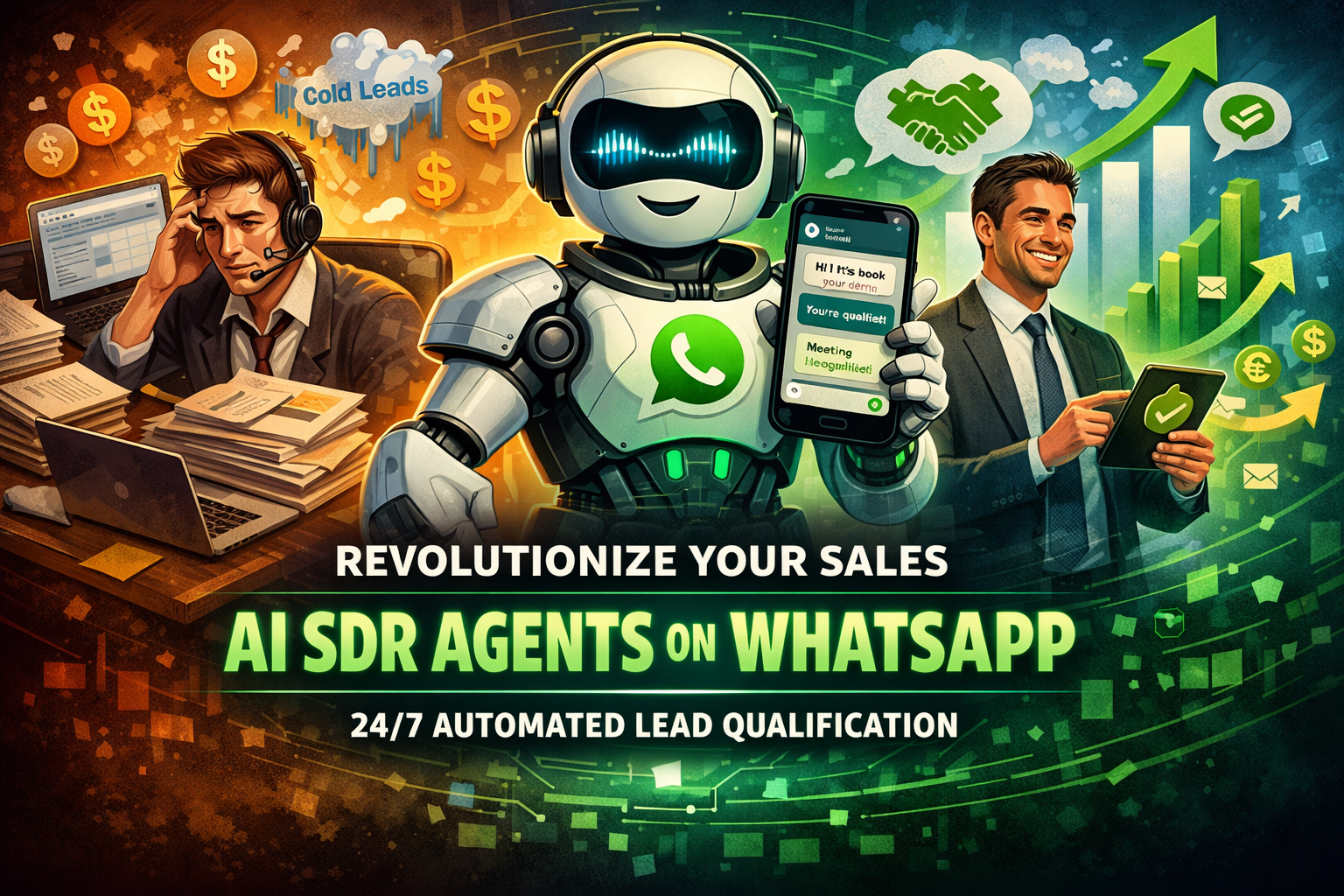
Customer support via messaging apps, lead qualification, sending proposals, scheduling, client follow-ups, basic reporting, social media content creation — these are tasks that most small businesses still do by hand and that can be automated with accessible tools like n8n, Make, Typebot, and GPT via API. The learning curve to set up these tools is relatively low for anyone with a basic technical background, and the impact for the client is immediate and visible. When a small business owner sees the system responding to customers at 2 a.m. while they’re sleeping, the conversation about longer-term contracts gets a whole lot easier.
There’s even a number that helps sell this idea. Market analyses on AI businesses in 2026 show that automation services generate strong recurring revenue precisely because they build workflows that save hours every week. When a client saves 10 hours per week thanks to a well-built automation, the value proposition stops being abstract and becomes something immediate and measurable. It’s the difference between talking about technology and showing results in the bottom line.
What separates consultants who are growing from those who are spinning their wheels is exactly this ability to deliver fast, measurable results. There’s no point in promising digital transformation in 12 months if the client can’t see value in 30 days. The best professionals in this space are working with short implementation sprints, showing clear impact metrics — like time saved, leads answered outside business hours, or reduction in errors from manual processes — and using those results as a foundation to expand the scope of work. It’s a strategy that builds trust in a concrete way, not just with fancy words in a presentation. 💡
Pricing is evolving: the results-based model
An important shift in this market is how pricing is being structured. Consulting guides for 2026 point out that results-based pricing models and hybrid models are gaining ground in AI services. Instead of simply charging by the hour, more and more professionals are aligning their fees with measurable value delivered, whenever that’s possible to track.
This evolution reflects a broader market reality. Small businesses are willing to pay premium rates for services that demonstrably reduce operational costs or open new revenue streams. When the consultant can clearly state how much the client saved or how much additional revenue they generated thanks to the implemented system, the negotiation shifts to a completely different level. The focus moves away from the cost of the service and toward the return on investment — which is a much more comfortable conversation for everyone. 📈


What sets apart those who are succeeding in this market
Having technical knowledge is necessary but not sufficient. The professionals standing out in AI consulting for small businesses combine technical competence with a skill many people underestimate — the ability to listen to the client’s business and understand what they actually need, not what seems most sophisticated or trendy. That takes empathy, patience, and very clear communication. Talking about tokens, embeddings, and LLM pipelines might impress people at a tech conference, but it doesn’t help at all when you’re sitting across from a business owner who just wants to know if they can serve more customers without hiring more staff.
Another thing that makes a huge difference is the focus on customized services with clear documentation. Delivering a system that works is great. Delivering a system that works and that the client can at least minimally understand — with a simple guide, an explainer video, or at least a flowchart showing what happens where — that’s what drives contract renewals and referrals. Most consultants deliver the system and disappear. Those who stick around, provide guidance, make adjustments, and teach the team how to use it — those are the ones who turn a one-off project into a long-term partnership, which is where the recurring revenue and financial stability of the business really live.
Here’s a detail many people overlook. An automation agency managing multiple clients at different stages, a content studio juggling several contracts at once, a chatbot service onboarding new clients every month — they all hit the same wall when client management depends on memory rather than organized systems. Ironically, those who sell automation to others need to be the first to automate their own operations. Maintaining solid relationship tracking, consistent follow-up, and oversight of each project is what keeps the business from falling apart right during the growth phase.
Reputation in this market also builds very organically. A small business that saw results tells another, which tells another, and the cycle feeds itself. The SMB niche is smaller and more connected than it looks. A strong delivery in a specific segment — like clinics, real estate agencies, or small e-commerce shops — can turn into a recognized specialization and a steady stream of clients coming through referrals. That drastically reduces the cost of acquiring new contracts and lets the consultant focus more and more on delivery quality rather than prospecting. It’s a virtuous cycle that starts with a single job well done. ✅
The pattern behind the fastest-growing business ideas
If there’s one clear lesson from the business ideas that are booming in 2026, it’s that the most successful models are neither purely technological nor purely service-based. They’re smart combinations that use technology to amplify human expertise. A freelance writer offering AI-assisted content at scale, a digital marketing pro using AI for faster analytics and reporting, a virtual assistant leveraging AI to process and summarize documents — they all blend the machine’s capability with human judgment and care in the client relationship.
At the end of the day, the technology is the tool, not the star of the show. It makes the service faster, more scalable, and more accessible, but what sustains the business long-term is always the trust built with the people who hire you. Understanding that is what separates those who merely ride the AI wave from those who build something that lasts. And looking at the size of the small business market that’s still barely digitized, it’s safe to say this wave is just getting started. 🌊