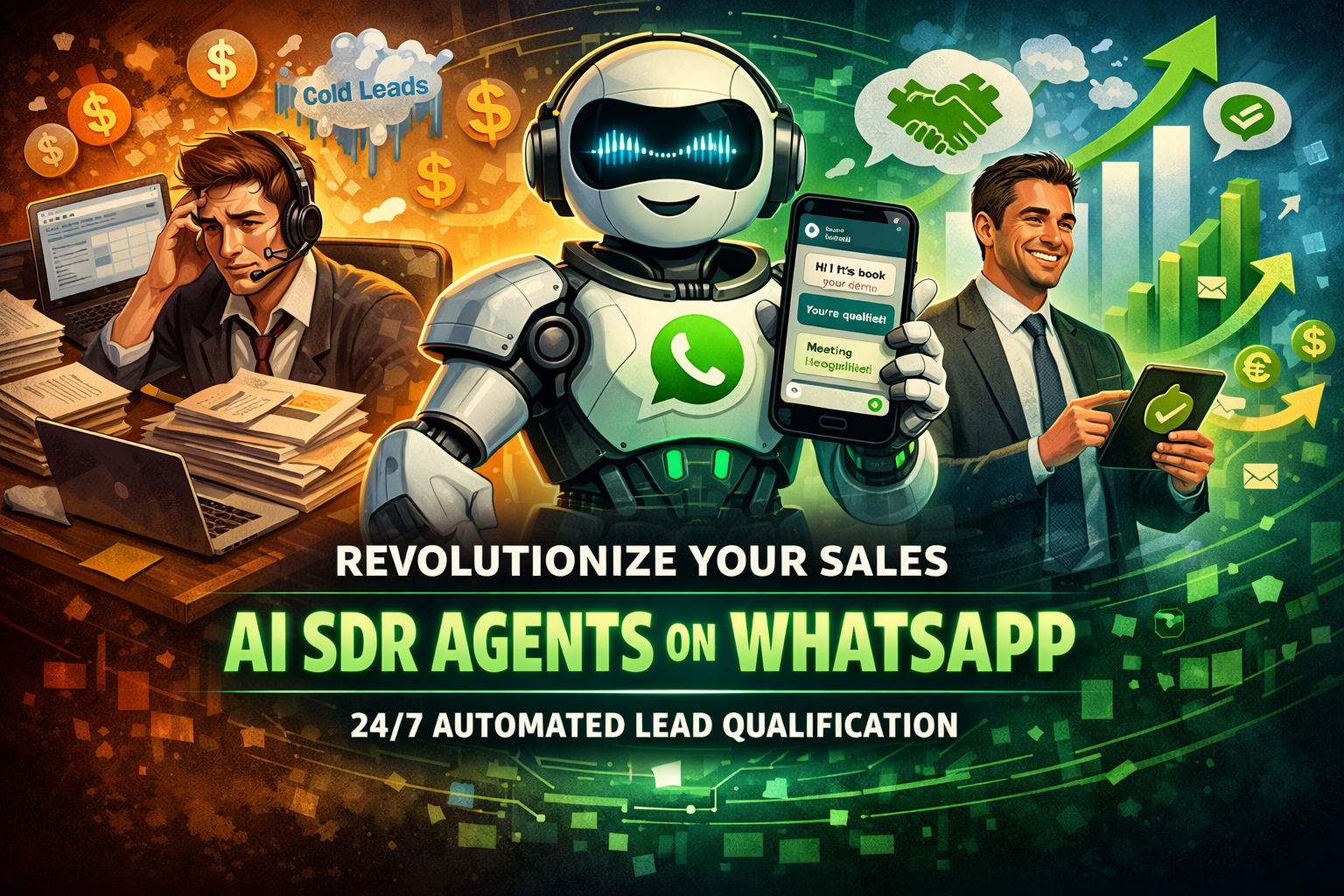
AI for Business Optimization: Efficiency and Strategic Growth
Artificial Intelligence is no longer just a topic for research labs — it has become a must-have agenda item in boardrooms around the world.
And for good reason.
Companies of all sizes are realizing that AI isn’t just a cool piece of technology, but a real tool for transformation — one that can change the way we work, make decisions, and grow.
From the factory floor to strategic planning, artificial intelligence is showing up in places we couldn’t have imagined just a few years ago.
But what’s driving this rapid adoption?
It basically comes down to three words: speed, precision, and scale.
With AI, processes that used to take days now happen in minutes. Decisions that relied on gut feeling are now backed by hard data. And opportunities that once flew under the radar are becoming much easier to spot.
In this article, you’ll learn how artificial intelligence is being used to optimize operations, drive growth, and redefine business strategies — with practical examples and a clear look at what’s coming next. 🚀
How AI Is Changing the Way Businesses Operate
When we talk about business optimization, the first step is to look inward — at the processes that happen every single day inside a company. And that’s exactly where artificial intelligence starts showing its value in the most concrete and immediate way. Repetitive tasks that used to eat up hours of your team’s time are now automated with precision and consistency. This doesn’t mean replacing people — it means freeing up the human team to focus on what truly matters: thinking, creating, and making better decisions.
A clear example of this is in the finance department. AI-powered systems can process thousands of invoices, reconcile payments, and flag inconsistencies in a matter of minutes — something that would take days if done manually. The same applies to customer service, where intelligent chatbots can now resolve complex questions, escalate issues to human agents only when necessary, and continuously learn from each interaction to become more efficient over time. This kind of operational efficiency has a direct impact on costs and customer experience — two areas every business wants to improve.
In the industrial sector, the picture is even more impressive. Sensors connected to machine learning algorithms can predict equipment failures before they happen, reducing unplanned downtime and maintenance costs. This is what the market calls predictive maintenance, and it’s already being implemented by manufacturing, energy, and logistics companies around the world. The result is a production chain that’s more stable, predictable, and — of course — more profitable. Artificial intelligence, in this context, goes from being a nice-to-have to a competitive necessity.
Intelligent automation in everyday team workflows
It’s worth pointing out that AI-driven automation goes far beyond robots on assembly lines. In offices, robotic process automation tools — known as RPA — are already integrated with artificial intelligence models to execute entire workflows without human intervention. Think about onboarding new employees, validating documents, automatically generating contracts, and even screening resumes during hiring processes. All of this is already happening with the help of AI across companies in various industries.
The most significant impact of intelligent automation is the reduction of human error. When a repetitive task is performed hundreds of times a day, the likelihood of mistakes naturally increases. With AI handling these activities, the margin of error drops dramatically, and professionals gain time to focus on tasks that require creativity, empathy, and critical thinking — skills that no machine can truly replicate.
Data as Fuel for Strategic Growth
One of the biggest assets any company has today is data — and most of them still don’t know what to do with the sheer volume of information they generate every day. This is where artificial intelligence steps in as a kind of interpretation engine, turning raw data into actionable insights that can guide strategic decisions with much stronger backing. It’s no longer about intuition or isolated experience — it’s about combining human knowledge with the analytical power of machines to reach faster and more accurate conclusions.
Companies that have adopted AI-based analytics platforms report a significant shift in how their leaders make decisions. Instead of waiting for the monthly report to understand what happened, managers now have access to real-time dashboards that show what’s happening right now — and, more importantly, what’s likely to happen in the coming weeks. This ability to pursue strategic growth driven by data completely changes the game, especially in volatile markets where response speed can be the difference between seizing an opportunity and losing it to a competitor.
In retail, for example, recommendation algorithms are already a core part of the shopping experience — and not just at e-commerce giants. Mid-size stores are using accessible AI tools to personalize offers, forecast demand, and dynamically adjust inventory. This reduces waste, increases conversion rates, and improves customer satisfaction. In marketing, predictive models identify which leads have the highest likelihood of converting, allowing teams to focus their efforts where the return is most likely. This is the kind of efficiency that artificial intelligence delivers when applied thoughtfully — and strategically.
The role of data in personalization at scale
One point that deserves special attention is AI’s ability to personalize experiences at a scale that would be impossible to achieve manually. Imagine a company with millions of customers trying to send the right message, at the right time, through the right channel to each individual person. Without artificial intelligence, that simply doesn’t happen. With it, marketing automation platforms can segment audiences based on behavior, purchase history, previous interactions, and even real-time browsing patterns.
This personalization at scale doesn’t just benefit the company — the customer wins too. Receiving relevant recommendations, offers that actually make sense, and service that seems to understand their needs creates a much more positive experience. And a positive experience, at the end of the day, translates into loyalty, repeat purchases, and word of mouth. In other words, artificial intelligence doesn’t just improve internal efficiency — it also strengthens the company’s relationship with who matters most: the end consumer.
Business Strategies Redesigned by AI
Adopting artificial intelligence isn’t simply a matter of installing new software and waiting for results to show up. The companies reaping the biggest rewards from this transformation are the ones that have rethought their business strategies on a broader level — integrating AI into the organizational culture, into decision-making processes, and into how they view their own business model. This requires a mindset shift from both leadership and operational teams, who need to see AI not as a threat but as a work partner.
One of the most effective strategies companies have been adopting is the creation of AI centers of excellence — internal structures dedicated to identifying opportunities for implementation, developing pilot projects, and scaling the initiatives that deliver results. This model allows business optimization to happen in an organized way, with clear governance and well-defined success metrics. It also makes it easier to spread knowledge internally, preventing artificial intelligence from being confined to a single department and instead making it part of the operation as a whole.
Another important strategic move is partnering with startups and specialized AI vendors, which allows companies to access cutting-edge technology without having to build everything from scratch. This collaborative ecosystem has accelerated adoption in sectors like healthcare, education, agriculture, and financial services, with each finding specific ways to use AI for competitive advantage. What’s clear is that the business strategies of the future — and the present — need to have artificial intelligence as a central pillar, not as a side project or an isolated innovation initiative.
Training and culture as the foundation of transformation
No digital transformation truly moves forward if the people aren’t prepared for it. That’s why investing in training is just as important as investing in the technology itself. Data literacy programs, workshops on AI tools, and even embedding professionals with technical backgrounds into business teams are all moves that make a real difference. The goal is to build a culture where artificial intelligence is seen as something accessible, useful, and integrated into daily routines — not as something distant or complicated.
Companies that invest in this kind of training see results that go beyond productivity gains. Team motivation increases, innovation starts happening more organically, and decision-making processes become more democratic because more people can access and interpret data independently. This combination of technology and human development is what sets apart the organizations that truly transform from those that simply adopt new tools without changing the way they work.
Challenges in Implementing AI in Business
As exciting as the landscape is, it’s important to acknowledge that implementing artificial intelligence in companies isn’t a path free of obstacles. There are real challenges that need to be addressed, ranging from technical issues to cultural and regulatory barriers.
One of the biggest challenges is data quality. AI fundamentally depends on clean, organized, and representative data to deliver reliable results. Many companies still work with fragmented, outdated, or poorly structured datasets, which directly compromises the performance of any artificial intelligence model. Before thinking about sophisticated algorithms, companies need to invest in data governance — and that includes collection, storage, processing, and access policies.
Another sensitive issue is ethics and privacy. With data protection regulations like GDPR in Europe and similar laws across other countries, companies must ensure that their use of AI respects legal boundaries and user rights. Transparency about how data is collected, processed, and used isn’t just a best practice — it’s an obligation. Companies that ignore this risk facing penalties, losing customer trust, and damaging their market reputation.


Internal resistance to change also comes up as a frequent challenge. Even when leadership is convinced of AI’s benefits, spreading that conviction across every level of the organization requires clear communication, patience, and demonstration of tangible results. Successful pilot projects with visible metrics and real impact on the daily work of teams tend to be the best way to break through that resistance and build genuine buy-in.
What to Expect Going Forward
The pace of artificial intelligence evolution shows no signs of slowing down. On the contrary, with advances in language models, neural networks, and processing capabilities, what seems futuristic today could be operational reality within two years. Companies that are already experimenting and learning with AI are building a competitive advantage that will be very hard to catch up to for those who’ve been sitting on the sidelines.
The strongest trend taking shape is generative AI applied to the corporate environment — tools capable of creating content, writing code, generating reports, and even proposing solutions to complex problems based on each business’s specific context. This is no longer science fiction. Companies like Microsoft, Google, and dozens of startups around the world are already delivering these capabilities in products that any team can use on a daily basis. The impact on efficiency and strategic growth for organizations that adopt these tools thoughtfully is set to be massive.
AI agents and the next wave of productivity
Beyond generative AI, a trend that’s gaining momentum fast is AI agents — autonomous systems capable of executing complex sequences of tasks without constant supervision. Unlike a chatbot that answers one-off questions, an AI agent can receive a broad objective — like organizing a digital marketing campaign or analyzing a quarterly financial report — and carry out all the necessary steps independently, pulling from databases, generating documents, and even making intermediate decisions along the way.
This evolution represents a significant leap in how companies can use artificial intelligence. It’s no longer just about automating isolated tasks, but about delegating entire workflows to intelligent systems that learn and adapt over time. For companies that are already mature in their AI adoption, agents represent the next frontier of productivity and innovation.
The human factor remains irreplaceable
The central point, however, stays the same: technology alone doesn’t transform anything. What makes the difference is how people and organizations choose to use it. Artificial intelligence offers an unprecedented set of capabilities — but it’s up to companies to clearly define which problems they want to solve, which goals they want to hit, and how they’ll integrate this technology into their operations in a sustainable and ethical way. Those who get this right will, without a doubt, be ahead of the curve. 💡
Creativity, empathy, moral judgment, and abstract thinking remain essentially human domains. Artificial intelligence amplifies these capabilities by freeing up time and providing richer information, but the final decision, the strategic direction, and the vision for the future still rest in the hands of those who lead and execute within organizations.
Artificial intelligence is no longer a bet on the future — it’s a decision for the present. And the companies that understand this sooner will see far more impressive results in the medium and long term.