Before You Let AI Run Your Business, Read This
Automation and artificial intelligence are everywhere these days. Yes, AI can be incredibly helpful, but it works best when it supports people — not when it tries to replace them.
There is no way around it: more and more entrepreneurs are eyeing these technologies to streamline processes, cut costs, and scale their businesses without having to grow their teams at the same rate. And it makes sense, right? The idea of handing off repetitive tasks to an AI while your team focuses on what really matters is tempting for anyone building a business from scratch or trying to take it to the next level.
While there are plenty of technology strategies becoming central to business operations, it is hard to find one gaining more momentum than automation. After all, few things are more appealing than outsourcing operations to an artificial intelligence that can handle the work for you.
But there is a detail a lot of people forget before hitting the automate everything button. Automation is not the same as an automatic solution. You cannot just flip a switch and expect everything to run flawlessly. Before rushing to implement tools, there is a whole set of strategic decisions that need to happen first — and skipping that step can get expensive, especially when it comes to customer experience. The good news is that when it is well thought out, automation can be one of the best allies your business has.
Here is what you need to know before getting started 👇
Identifying tasks that should stay in human hands
The first level of decision every founder needs to face is figuring out which tasks can and should be automated, and which ones need to remain managed by human team members. This separation is not trivial and requires an honest look at how your business actually operates.
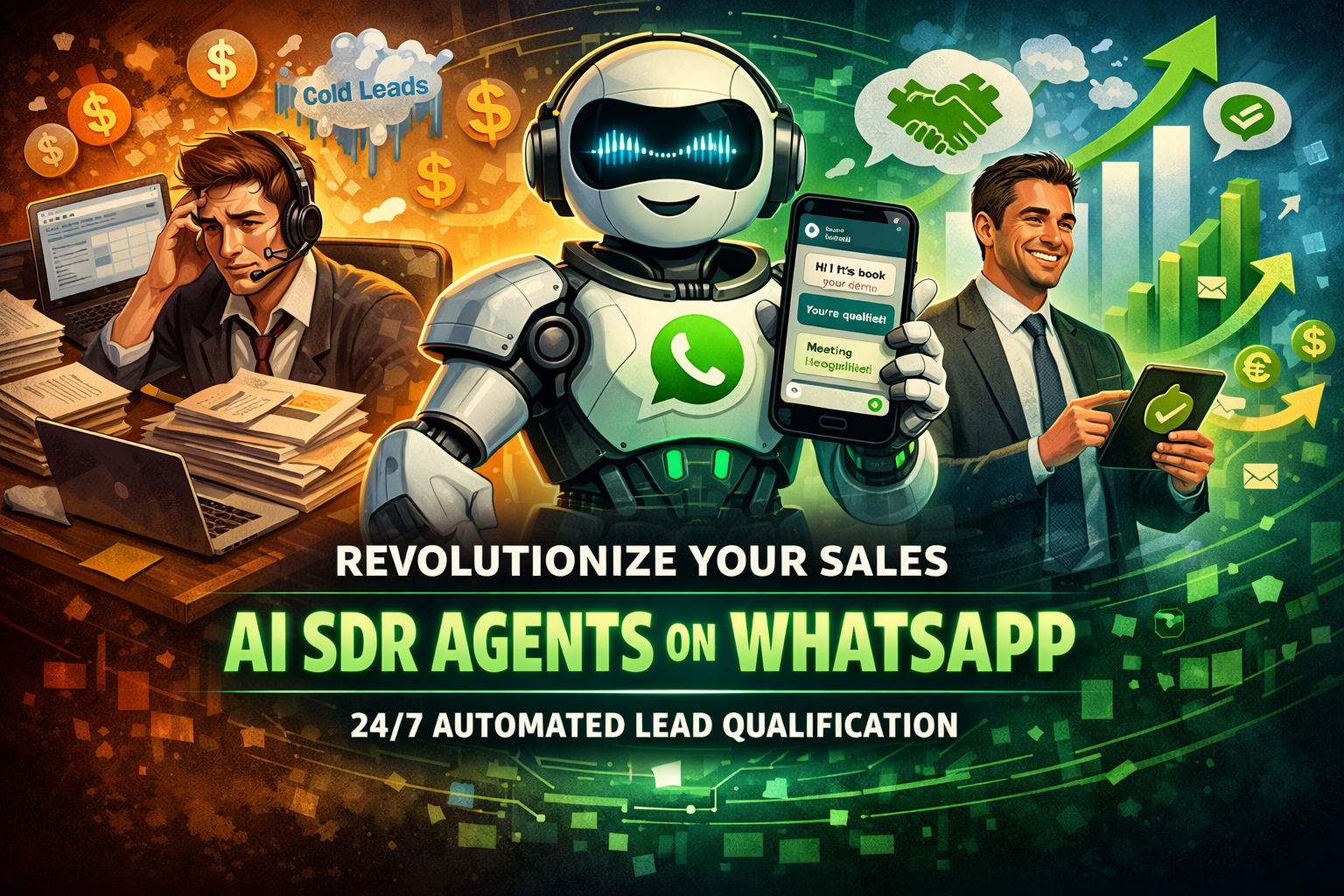
When we talk about automation, it is easy to picture robots doing everything while the company grows on autopilot. But reality is a little different, and understanding that from the start makes all the difference. Automation is essentially the ability to have systems execute repetitive, predictable, high-volume tasks without constant human intervention. This includes everything from triggering emails after someone fills out a form to automatic replies on messaging platforms, report generation, and even lead qualification based on behavior.
A practical example that illustrates this divide well shows up in social media use cases. AI can go a long way helping generate sentiment analysis and even brainstorming content ideas. However, humans still need to actually create the content — otherwise it will fail to connect with the target audience. Creativity, authentic voice, and the ability to read between the lines of what an audience wants to hear are still deeply human skills.
Entrepreneurs need to carefully consider the unique value that human decision-making and creativity bring to every role within the company. Automation is generally best suited for mundane, repetitive tasks — not for high-value strategic activities, creative work, or relationship-building.
The crucial point here is that automation only works well when the processes it will replicate are already well defined. If your customer service workflow, for example, is still being figured out as you go, automating it now will just scale the chaos — not the success. It is like hiring more employees to execute a process that still does not work properly. The result is more people doing the wrong thing faster, and that can directly hurt the customer experience you spent so long building.
That is why, before looking at any automation tool or artificial intelligence platform, the first step is to map out the processes you already have. Identify where the bottlenecks are, where your team loses the most time, where mistakes happen most frequently, and where the customer experience might be suffering due to slowness or lack of consistency. With a clear understanding of what should be automated and what should remain under human management, you avoid the risk of over-automating to the point of damaging your relationship with customers.
Define success metrics for automation
This is a step a lot of people skip and later regret. Remember: just because an automation looks like it will deliver incredible results does not mean it will actually deliver on that promise. Not all tools are created equal. By setting clear success benchmarks, you can track results more efficiently and make sure the tool is doing what you actually need it to do.
Artificial intelligence has become one of the most talked-about topics in the business world, and for good reason. The capabilities that current models offer are impressive: real-time analysis of massive data sets, content generation, personalized support at scale, purchase behavior prediction, and many other applications. For entrepreneurs, this represents a huge window of opportunity — especially for those who do not yet have a large team or the budget to compete with bigger players in the market.
A real-world case that shows how this works in practice comes from Cyrus Shirazi, founder and CEO of Haven, a full-service accounting provider for startups and small to mid-sized businesses. In a podcast interview, Shirazi explained how his team built a proprietary bot for use in Slack. The bot automatically sends a notification to team members after 15 minutes if they have not responded to a client. This automation tracks response times and sends those reminders to support the company goal of delivering exceptional, fast service to its clients.
In this case, clearly established standards for response times and customer experience outcomes gave the automation a purpose that guided both the implementation and the tracking of results. The bot did not replace anyone on the team. It simply made sure the human team met the service standard the company set out to deliver. That is automation working the way it should: as support, not as a substitute.
But there is a classic trap a lot of people fall into: treating AI as though it will solve problems that are actually strategy or business culture problems. No language model or automation system will make up for a lack of a clear value proposition, a product that does not deliver on its promises, or messaging that does not connect with the right audience. AI is a powerful tool, but it amplifies what already exists. If what exists is not working well, it will amplify the problems too.
When used strategically, though, artificial intelligence can completely transform a business operation. Entrepreneurs who integrate AI into their service workflows, for example, can offer fast, personalized responses to hundreds of customers at the same time while maintaining a quality standard that would be impossible to sustain with human effort alone. This directly impacts customer experience — customers start noticing more speed, more consistency, and more attention to their needs, even if part of that interaction is managed by an automated system.
Customer experience: the factor that cannot be fully automated
Here is one of the most important — and at the same time, most overlooked — points when it comes to automation: customer experience cannot be fully handed off to systems, at least not without consequences. There is a very clear line between what technology can do satisfactorily and what still requires human presence, empathy, and contextual judgment. Crossing that line without realizing it is one of the most common mistakes among entrepreneurs who are starting to use AI in their businesses.
Think about it: when a customer has a serious problem — a defective product, a delivery that never showed up, or an incorrect charge — they do not want to talk to a bot that keeps repeating the same menu options. They want to feel like someone is listening, that their problem matters, and that a real solution is being pursued. Automation can and should be part of that workflow — organizing the support queue, collecting initial information, and routing the customer to the right channel. But the moment the situation calls for sensitivity and creative problem-solving, a human needs to be available to step in.
The long-term success of any business is directly tied to how customers feel after every interaction. Market data consistently shows that customers who have had positive experiences tend to buy again, refer others, and tolerate occasional hiccups more easily. On the other hand, a single bad experience can be enough to lose a customer forever — especially in competitive markets where the next option is just a click away.
So when designing any automated workflow, the question that should guide every decision is: will this make my customer more satisfied, or will it frustrate them? If the answer is not clear, it is better to keep the human touch at that point in the process until you are confident the automation will add real value — and not just cut costs at the expense of relationship quality.
Automation works best when it supports people
This is perhaps the most important takeaway from everything we have discussed so far. Automation and artificial intelligence deliver their best results when they function as a support layer for people — not as an attempt to remove them from the equation. The businesses seeing the most success with these technologies are the ones that found the balance between technological efficiency and human presence.
The Haven example with the Slack bot shows exactly this. The technology does not serve the customer directly — it makes sure the human responsible for customer service is meeting the company quality standard. It is a smart, targeted use case with clear metrics. There is nothing magical about it — it is pure strategy backed by technology.


In the same way, using AI to generate sentiment analysis on social media does not mean your social media manager can take a vacation. It means they will walk into the planning meeting with concrete data about how the audience is feeling, and they can make more informed decisions about the type of content they will create. The creativity is still theirs. AI just provided the context.
Where to start in practice
With all of this in mind, the smartest path for entrepreneurs who want to use automation and artificial intelligence to drive their success is to start small and with intention. Pick a specific process that is already well defined, that takes up your team time, and that has clear quality criteria. Test the automation on that one process, monitor the results closely, collect customer feedback, and make adjustments before expanding to other areas of the business.
Here is a simple roadmap to organize that journey:
- Map your current processes — understand where the bottlenecks are and which repetitive tasks eat up the most of your team time.
- Separate the human from the mechanical — creative, strategic, and relationship-driven activities stay with people; predictable, high-volume tasks can be automated.
- Define metrics before you implement — know exactly what you expect from the automation in terms of response time, error reduction, or customer satisfaction.
- Start with a pilot project — automate a single process, monitor it closely, and only expand when you are confident in the results.
- Involve your team from the beginning — automation should not be seen as a threat, but as a way to free people up to work on activities that truly require creativity, judgment, and human connection.
When the team understands the role technology plays within the business and actively participates in the implementation, adoption is faster, adjustments are more accurate, and results show up more consistently.
It is also worth keeping an eye on the tools that are evolving rapidly in this space. AI-powered automation platforms — like the ones that combine CRM, customer service, and data analytics in a single environment — are becoming increasingly accessible for small and mid-sized businesses. The business technology market is growing at a rapid pace, and those who start experimenting now get ahead when these solutions become even more sophisticated.
The time to learn is now — with caution, strategy, and always with an eye on what the end customer will feel on the other side of the screen. Because at the end of the day, the best automation is the kind your customer does not even notice exists — they just notice the service is faster, more accurate, and more human than ever. 🚀