Billion-dollar investments, inference, and robotics: what happened in the AI world in June 2025
Artificial intelligence applications are taking over virtually every sector of the economy, and June 2025 arrived with developments that deserve serious attention.
Over the past few days, three major moves have dominated the conversation in the tech world.
The first is about money — where Capex is being directed and at what scale. The second is about who is actually making money when AI is put to work, the critical game of Inference. And the third, perhaps the most exciting, is about what AI is already doing in the real world, from industrial robotics to medical diagnostics. 🤖
The market is not waiting for anyone. Major companies are moving billions, closing strategic partnerships, and vertically integrating entire supply chains. And while all of that is happening at the top, AI is gradually making its way into everyday life — whether you are using a laptop, investing in stocks, or getting a medical exam.
Let’s break it all down. 👇
AI Capex is on a whole different level
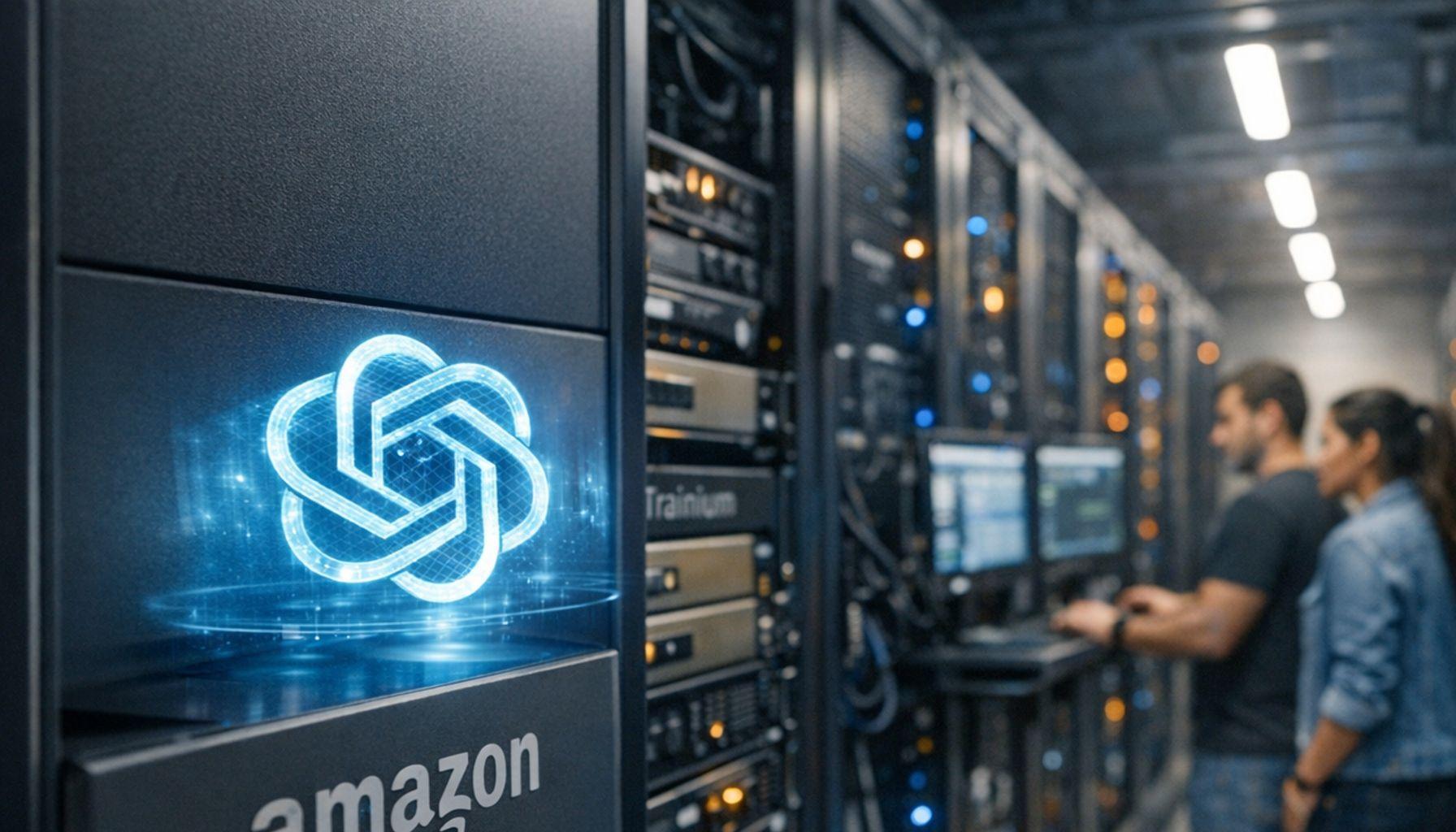
When you talk about Capex in the artificial intelligence space, the conversation quickly lands on numbers that sound absurd — but in practice, they have already become the new normal for the industry. In 2025, the so-called hyperscalers, which include Microsoft, Amazon, Alphabet, and Meta, are on track to spend roughly 725 billion dollars this year, with the vast majority of that amount going toward AI infrastructure. That includes data centers, cutting-edge chips, high-performance cooling systems, and entire supply chains built to keep up with the explosive demand for computing power.
The scale of this investment is unprecedented in the history of technology, and the pace shows no signs of slowing down. One economic indicator reinforces this optimism: the ISM manufacturing index hit 54% in May, the strongest level since 2022, signaling that the industrial economy behind this expansion is also holding firm.
But what really caught attention in recent weeks was a shift in how the money is being spent. The biggest players are no longer just renting computing capacity. They are funding their own end-to-end supply chains.
SoftBank goes all in on vertical integration
The most striking example is SoftBank, the Japanese technology investment conglomerate. The company announced a commitment of up to 75 billion euros to build AI data centers in France, its largest European investment to date. At the same time, SoftBank is preparing to launch a new company called Roze AI, still private, with the goal of deploying robots that speed up the construction of those very data centers.
Add to that the pending acquisition of the robotics division of Swiss industrial group ABB, a supermajority stake in Arm Holdings, which designs the chips used in billions of devices worldwide, and a stake in OpenAI. The result is that SoftBank is funding virtually every layer at once: the chips, the robots, the buildings, and the energy. The picture is almost poetic — robots building the homes for the AI that will command the robots.
IBM and the quantum computing bet
IBM is following a more focused version of the same playbook. The company announced an investment of more than 10 billion dollars in quantum computing over five years. And instead of waiting for a supply chain to mature, IBM decided to create its own quantum chip foundry — a subsidiary called Anderon, located in Albany, New York, in partnership with the U.S. Department of Commerce.
The stated goal is to achieve a fault-tolerant quantum computer, one capable of detecting and correcting its own errors, by 2029. That is the major milestone the scientific and tech communities have been chasing for years. For anyone watching the market, the message is clear: the biggest investors are vertically integrating the entire chain. This directly benefits component and infrastructure suppliers, who profit regardless of which final platform wins the race.
Inference: the new profit frontier in AI
For a long time, the entire conversation around artificial intelligence revolved around training models. How much does it cost to train? How many GPUs are needed? How many months of processing? But in 2025, the center of gravity has shifted. The real business now is inference — the moment when a trained model is put to actual work, answering questions, generating images, analyzing documents, and interacting with users in real time.
This is where the money really starts flowing, because every query to the model has a cost, and when that cost is multiplied by billions of daily requests, the numbers get staggering.
Snowflake shows that inference is already generating real revenue
The most relevant highlight on this front was Snowflake, the cloud-based data and analytics platform. With AI demand visibly high, the question investors kept asking was: who is actually capturing the economic value of this usage? Snowflake showed it has a strong answer.
Because the company charges customers based on platform usage volume, its revenue is a direct reflection of real AI activity. Last quarter, that activity surged. Product revenue grew 34%, representing the largest sequential dollar growth in the company’s history, and management raised guidance for the full year. The result? The stock jumped roughly 37%.
Two details deserve special attention beyond the headline number. First, Snowflake signed a new 6 billion dollar commitment with Amazon. That is a clear reminder that a software platform monetizing AI still pays the cloud for the computing power underneath — meaning the value splits between the application layer and infrastructure. Second, the company announced the acquisition of Natoma, a startup whose software manages how AI agents — programs capable of taking actions on their own — connect to a company’s data and tools. This is a strategic move to own the infrastructure for automated AI workflows.
AI getting closer to the user with RTX Spark
Inference is also migrating closer to the end user. During the Computex trade show, NVIDIA and Microsoft introduced RTX Spark, a processor that brings the kind of AI computing power that used to require an entire server rack into a thin Windows laptop. More AI running directly on the device means lower latency, reduced cost, and sensitive data staying local — no need to travel to the cloud.
NVIDIA’s entry into the PC chip segment is a significant strategic expansion. The chip was co-designed with Taiwanese company MediaTek, best known for the processors found in a large share of the world’s smartphones. This partnership validates MediaTek’s expansion beyond mobile and adds another important name to the AI-linked semiconductor ecosystem. The first machines powered by RTX Spark are expected to hit stores in the fall. 💡
Robotics and applications that are changing the real world
If there is one theme that is rapidly moving from concept to reality in 2025, it is the convergence of artificial intelligence and robotics. This is where AI stops being infrastructure and becomes a product in active use — and the latest developments span very different industries.
Robinhood opens the door for AI agents in financial markets
Robinhood, the retail-focused brokerage, took a step that few financial companies have had the courage to take. The company opened its platform to AI agents through a beta program called Agentic Trading. In practice, this means a bot built on models like Anthropic’s Claude or OpenAI’s ChatGPT can execute trades on behalf of the user within a separate, isolated account.
Options and crypto trading are expected to be added soon. Handing an AI agent the keys to an investment account, even in a controlled environment, is a major milestone for the platform’s 27 million customers. It is also a clear signal of how autonomous AI is rapidly moving from concept to available functionality in the market.
Industrial robotics gains momentum with NVIDIA and partners
In the physical world, things are heating up too. Aptiv, a global automotive and industrial technology supplier, expanded its partnership with NVIDIA on production-ready computing systems designed for robots and industrial systems. Meanwhile, Mitsubishi Electric, the Japanese electronics and automation conglomerate, partnered with the Chiba Institute of Technology, a Japanese university with a respected robotics research center, to develop humanoids, mobile robots, and drones for factories and infrastructure.


These are exactly the kind of cyclical industrial companies the market tends to undervalue, even as they add AI-driven revenue to their balance sheets. The trend of AI and robotics convergence is no longer speculation. It is a revenue line growing quarter after quarter for these players.
AI in healthcare: faster and more accurate diagnostics
In healthcare, Tempus AI, a company specializing in AI-powered precision medicine, brought two important updates during the annual meeting of the American Society of Clinical Oncology, or ASCO. The first was FDA approval of an expansion of its xT cancer genomic test. The second was the release of a study showing that its clinical decision support tool identified lung cancer patients who were missing important genetic tests, increasing testing rates by double-digit percentages.
Clinical decision-making is now happening at the bedside, informed by AI. This does not replace the doctor — it works as an extremely fast, data-driven second opinion, freeing healthcare professionals to focus on what truly requires human judgment, empathy, and broader clinical context. 🚀
What all of this means in practice
Looking at all these moves together, a few conclusions become pretty clear.
- Infrastructure: massive investments in data centers, custom chips, and proprietary supply chains are defining who leads the AI market in the years ahead. Hyperscalers are on track to spend around 725 billion dollars in 2025, and vertical integration is the dominant strategy.
- Inference: efficiency in running models has become the primary competitive battleground among tech companies. Snowflake is a clear example of how usage-based revenue reflects real AI demand.
- Robotics: the fusion of AI and physical systems is accelerating across sectors like healthcare, logistics, manufacturing, and even data center construction, with companies like SoftBank, Aptiv, and Mitsubishi Electric leading the charge.
- Applications: the impact of AI is reaching end users in tangible ways — from laptops with local AI processing to agents that execute financial trades and tools that help doctors save lives.
The opportunity is expanding across every layer of the stack at the same time, and that breadth is exactly the point. This is not about betting on a single company or technology, but about understanding how value is distributed along the entire chain — from chips and data centers to the software that ends up in users’ hands.
Economic indicators like the ISM manufacturing index and hyperscaler spending behavior remain the most reliable gauges for tracking whether this trend holds. So far, there are no cracks. Investment remains strong, adoption keeps accelerating, and the financial results from the companies involved are confirming that AI has moved beyond promise and become a real revenue engine.
What becomes clear when you look at all these moves together is that artificial intelligence is no longer a future topic. It is the present, and it is shaping business decisions, investment policies, and the design of products that billions of people will use in the coming years. Anyone who understands this dynamic — whether as a professional, an investor, or just a curious user — has a real advantage when it comes to navigating this landscape with more clarity and less noise. 🎯