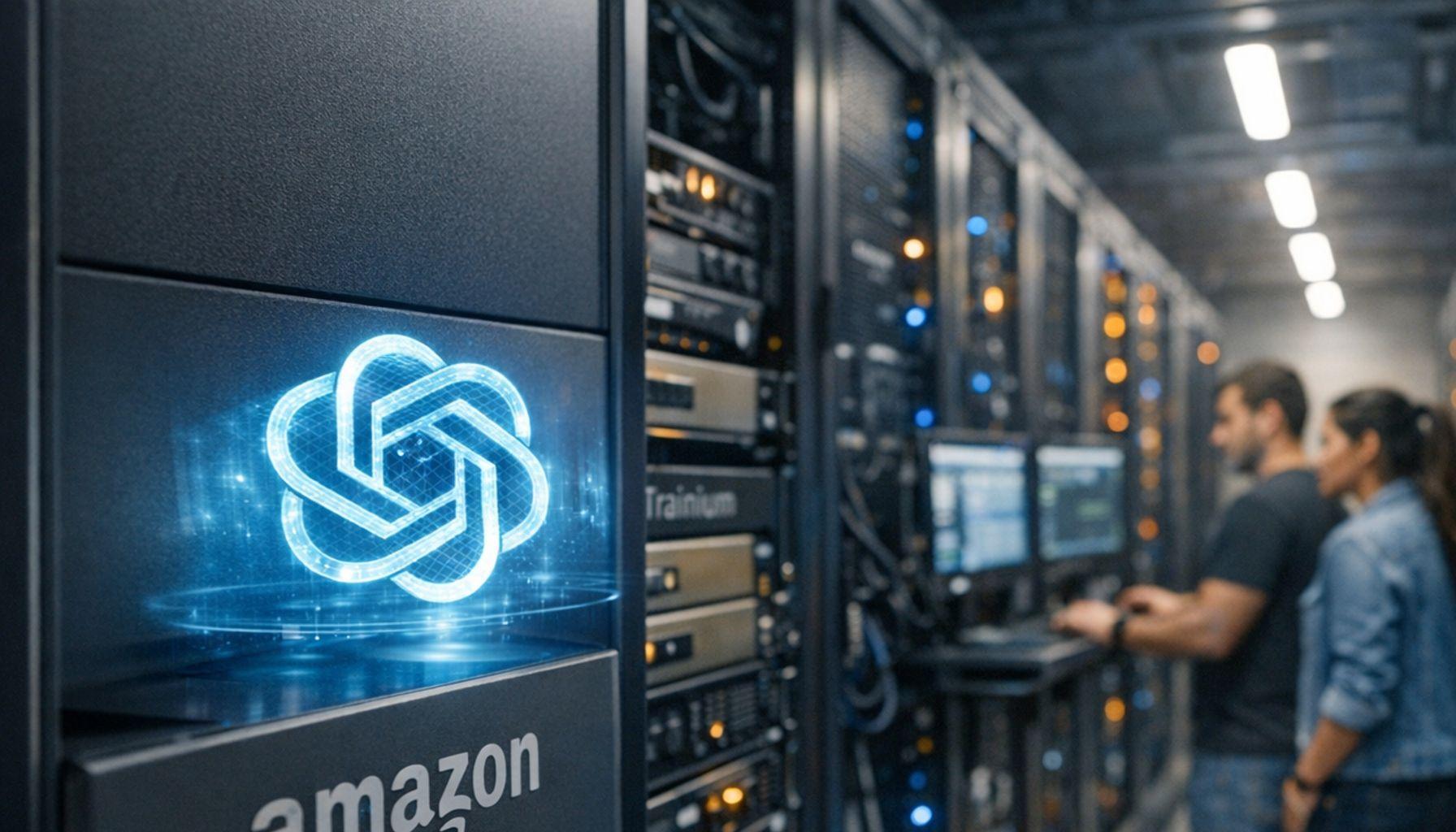
Artificial intelligence pushed chipmakers to the top of the S&P 500 and the entire market is paying attention
The stock market is on fire, and there is one sector stealing the spotlight from everyone else in 2024.
Artificial intelligence has become the fuel placing chipmakers at the absolute top of the S&P 500, and the numbers coming out are way too impressive to ignore. 🚀
The race for specialized hardware to power AI models has created demand the market simply did not expect at this speed. And what happens when demand explodes and the sector just keeps growing?
Investors rush into semiconductor stocks like there is no tomorrow, and the performance of this group is breaking historical records.
According to data reported by Bloomberg, the Philadelphia Stock Exchange Semiconductor index is on track for its best quarter ever, after surging an impressive 69% in just two months. The chip sector is, by far, the best performer in the S&P 500 this year, with a significant margin of outperformance over any other segment of the index. The gains have been so extreme and widespread that the group now dominates the top positions among the leading stocks of the benchmark.
But along with all this euphoria, one question is gaining more and more traction in financial market conversations: is all of this real growth, or are we looking at an artificial intelligence bubble about to burst? 🤔
What is behind the chipmaker explosion in 2024
To understand why chipmakers are dominating the S&P 500 in 2024, you need to step back and look at what happened with artificial intelligence over the past few years. The launch of large language models like GPT-4 and its competitors opened the corporate world’s eyes to a reality few had fully grasped: training and running these models requires an enormous amount of computing power, and that power comes from chips.
Not just any chips, but specialized GPUs, TPUs, and AI accelerators manufactured by a very small group of companies worldwide. This created a supply bottleneck amid demand that simply has not stopped growing, and the result has been a significant surge in stock prices for companies like NVIDIA, AMD, and others in the semiconductor space.
NVIDIA, which was already a well-respected company in the graphics and gaming market, became the absolute darling of Wall Street. Its stock accumulated gains that made the entire market stop and pay attention. The company crossed the 1 trillion dollar market cap mark in 2023, and in 2024 it kept breaking records. Demand for its H100 chips and the Hopper family is so high that companies like Microsoft, Google, Amazon, and Meta are waiting in line for units to expand their AI infrastructure.
This scenario of scarcity combined with rising demand is exactly the kind of situation that gets investors excited, and the performance of these stocks reflects that very clearly.
But NVIDIA is not the only one riding this wave. Companies like Broadcom, Marvell Technology, and even support equipment manufacturers, such as those producing cooling systems for data centers, are also being pulled upward by this tide. The entire hardware ecosystem for artificial intelligence is benefiting, and the Philadelphia Semiconductor index, which tracks the sector’s performance, has posted significant gains that have easily outpaced the S&P 500 as a whole.
It is the kind of movement analysts call a cascade effect: when a dominant technology creates an entire secondary market around it. 📈
The role of data centers and AI infrastructure
One point many people do not immediately realize is that the chipmaker explosion is not happening in isolation. It is being fueled by a massive cycle of investment in data center infrastructure around the world. Cloud computing companies like Amazon Web Services, Microsoft Azure, and Google Cloud are committing tens of billions of dollars per year to build and expand processing centers optimized for AI workloads.
Each new data center requires thousands of GPUs and specialized accelerators, generating a revenue chain that runs from chip manufacturers all the way to networking, storage, and energy companies. This infrastructure investment creates structural demand, not just speculative demand, and it is one of the main arguments from those who believe chipmaker growth has solid fundamentals behind it.
Sector performance and what the numbers reveal
When you lay the numbers on the table, the performance of chipmakers in the S&P 500 in 2024 is hard to ignore. As reported by Bloomberg, the semiconductor sector is the best-performing segment of the index this year by a wide margin, with the Philadelphia Semiconductor Index posting a 69% gain in two months, putting it on pace for its best quarter in history.
This performance gap compared to the rest of the market is not small. It is a chasm that catches the eye of any investor watching the market. To put things in perspective, in previous S&P 500 bull cycles, it has been rare for a single sector to sustain this level of outperformance for so long. The tech sector in general has always performed well, but chipmakers specifically are on a different level right now.
A significant portion of this performance is directly tied to the financial results these companies are delivering. NVIDIA, for example, reported earnings that beat analyst expectations for several consecutive quarters, and its revenue guidance continues to point upward. This gives the market a concrete narrative to support the stock appreciation: it is not just speculation, there are real results happening.
When a company delivers revenue growth of 100% or more compared to the prior year, as NVIDIA did in some quarters, it becomes very hard for skeptics to argue that stock prices are completely disconnected from reality. Artificial intelligence is generating real money for these companies, and the market is pricing that in.
The weight of institutional capital
Another point that deserves attention is the flow of institutional capital pouring into the sector. Pension funds, asset managers, and sovereign wealth funds around the world are increasing their positions in chipmakers, creating constant buying pressure on these stocks.
This institutional movement is different from the retail speculation that sometimes inflates assets irrationally. When major money managers put serious capital behind a thesis, they have typically done a deep analysis of the long-term potential. And the long-term potential of artificial intelligence as a market is something even the most conservative players are acknowledging.
The gains have been so extreme and widespread that semiconductor stocks are now heavily represented among the leading stocks of the S&P 500, something that underscores the magnitude of this movement and how concentrated it is around a single theme: AI. 💡
Real growth or bubble? The debate with no easy answer
This is the question dividing experts, analysts, and investors in 2024. Bloomberg itself highlights that the recent chipmaker surge is adding urgency to the debate over whether investors are buying into an artificial intelligence bubble that is about to burst.
On one side, there are those who say the chipmaker rally in the S&P 500 is fully justified by real demand growth for artificial intelligence and by the financial results the sector is delivering. On the other side, there are those who point to the valuation multiples of these companies and say the market is pricing in a perfect future with no room for mistakes or slowdowns.
The price-to-earnings ratio of some of these stocks has reached levels that have historically been associated with periods of excessive euphoria, and that raises a red flag for the more cautious investors.
The arguments in favor of sustained growth
Those who believe in real growth argue that artificial intelligence is a transformative technology on the same scale as the internet was in the 1990s, and that demand for AI infrastructure will keep growing for years, maybe decades.
They point to the investment plans of major tech companies, which are committing billions of dollars to data center expansion and specialized hardware acquisition. This spending pipeline represents guaranteed future revenue for chipmakers, providing a solid foundation for stock appreciation.
On top of that, the AI market is far from saturated. There are still massive verticals that have barely begun adopting artificial intelligence at scale:
- Healthcare: AI-assisted diagnostics, drug discovery, and medical image analysis
- Manufacturing: intelligent automation, predictive maintenance, and quality control
- Energy: power grid optimization, demand forecasting, and renewable energy management
- Logistics: route optimization, inventory management, and autonomous vehicles
- Financial services: fraud detection, risk analysis, and automated customer service
Each of these verticals represents billions of dollars in market potential for AI hardware suppliers, reinforcing the thesis that chipmaker growth may have a lot more runway ahead.
The skeptics’ arguments
The more skeptical voices remind us that financial market history is full of technologies that seemed inevitable and transformative but took much longer than expected to deliver real returns, and that the companies leading the initial hype were not always the ones that survived.
The dot-com bubble in the late 1990s is the most frequently cited example: the internet was real, the transformation was real, but valuations were completely out of control, and many investors suffered massive losses before the sector stabilized.


The difference, say the optimists, is that today’s chipmakers have real revenue and real profits, not just promises. But this debate is far from having a definitive winner, and anyone following the market will need to keep an eye on the coming quarters to understand where this movement is headed. 👀
The geopolitical and regulatory landscape that could change the game
Beyond market fundamentals, there is a layer of complexity many investors underestimate: semiconductor geopolitics. The technology rivalry between the United States and China has placed advanced chips at the center of a trade war with the potential to reshape the sector’s global supply chain.
Export restrictions imposed by the U.S. government on cutting-edge chips destined for China are already impacting the expansion plans of some companies. NVIDIA, for example, had to create specific, less powerful versions of its chips to continue selling in the Chinese market, which affects both revenue and profit margins in that region.
On the other hand, those same restrictions are accelerating investments in semiconductor manufacturing capacity in the United States and Europe, which could benefit companies like Intel and TSMC in the medium and long term. The American CHIPS Act, which allocates tens of billions of dollars in subsidies for domestic chip manufacturing, is a key piece of this puzzle and could directly influence the sector’s performance in the years ahead.
What to expect in the coming months
With artificial intelligence established as the primary driving force of the market in 2024, the coming months should bring new chapters to this story. Expectations around the financial results of major chipmakers remain high, and any disappointment in quarterly earnings could trigger significant volatility in these stocks.
The market is very sensitive to growth narratives right now, and a guidance below expectations could be enough to spark a correction, even if fundamentals remain solid. This is something investors with positions in the sector need to keep in mind when managing their portfolios.
Another factor that will heavily influence the performance of chipmakers in the S&P 500 is the global macroeconomic landscape. Monetary policy decisions in the United States, the geopolitical situation between the U.S. and China regarding advanced semiconductor export controls, and the overall performance of the American economy are all variables that could either amplify or slow the sector’s momentum.
What seems certain, regardless of how the market behaves in the short term, is that artificial intelligence is here to stay, and demand for specialized hardware will remain a reality for many years. The chipmakers dominating the S&P 500 right now are at the center of a technological transformation that is still in its early stages.
Whether history will repeat itself as a bubble or whether this will prove to be the beginning of a sustained growth cycle, only time will tell. But one thing is hard to deny: artificial intelligence has definitively changed the game in the stock market, and ignoring this movement would mean overlooking one of the most relevant economic phenomena of our generation. 🔥