Google and Marvell Could Team Up on AI Chips and Heat Up the Competition with Nvidia
Google is shaking up the AI chip market in ways few people saw coming. Alphabet, Google’s parent company, is in talks with Marvell Technologies to design new versions of its AI chips aimed at data centers, according to reports from The Information and Funda AI. Wall Street analysts already see the sale of AI accelerator chips as one of the fastest-growing business lines for Google stock.
The focus of this partnership is not about training AI models like Gemini. Instead, it is all about speeding up inference, which is basically the process of putting those models to work in the real world — answering questions, generating content, and processing tasks at scale. On top of that, Marvell would also be responsible for designing an optimized AI memory chip to work alongside Google’s processors.
So why does this matter so much? Because Nvidia has dominated this market for years, and any move that threatens that dominance becomes headline news in seconds. With its TPU processors gaining more ground in the cloud computing ecosystem, Google had already been building a solid alternative to Nvidia’s GPUs. Now, with Marvell potentially entering the game, the landscape gets even more interesting. 🚀
It is worth remembering that Nvidia is not standing still either. The company is developing its new AI inference chips using technology from Groq, which was showcased during the GTC 2026 keynote. In other words, the battle for inference dominance promises to be one of the fiercest fights in the industry over the coming years.
What Marvell Brings to the Table in This Partnership
Marvell Technologies is not exactly a name that shows up in tech headlines every day, but within the semiconductor industry it is widely respected. The company has a strong track record in developing custom chips for networking infrastructure and data storage, and more recently it has been betting heavily on ASICs, which are application-specific integrated circuits. This type of chip is purpose-built for a very particular function, making it far more efficient than general-purpose processors when it comes to handling repetitive, high-volume tasks — exactly what AI inference demands on a daily basis across major digital platforms.
Marvell manufactures semiconductor products for data centers, including server processors, AI accelerators, and networking and storage chips. The company also produces chips for telecom infrastructure, consumer devices, and automotive and industrial applications. This diversified portfolio gives Marvell a broad technical foundation to meet complex demands like those coming from Google.
When you put a language model to work answering millions of questions a day, like Google does with Gemini integrated into its search engine and other services, the computational demand is staggering. Every generated response consumes processing power, energy, and time. This is where ASICs shine: they do one thing, they do it really well, and they use less energy doing it. Marvell already supplies custom chips to other industry giants, including Amazon and Microsoft, which shows it has more than enough technical capability and experience to meet Google’s requirements at cloud computing scale.
Recently, Marvell and Nvidia also announced a strategic partnership for AI networking chips in data centers. As part of that deal, Nvidia invested 2 billion dollars in Marvell, which underscores the company’s relevance in the current semiconductor ecosystem. The partnership with Google, if it goes through, would represent another massive step toward cementing Marvell’s position as one of the top hardware suppliers for artificial intelligence. 💡
Multi-Sourcing Strategy: Diversify So You Don’t Depend
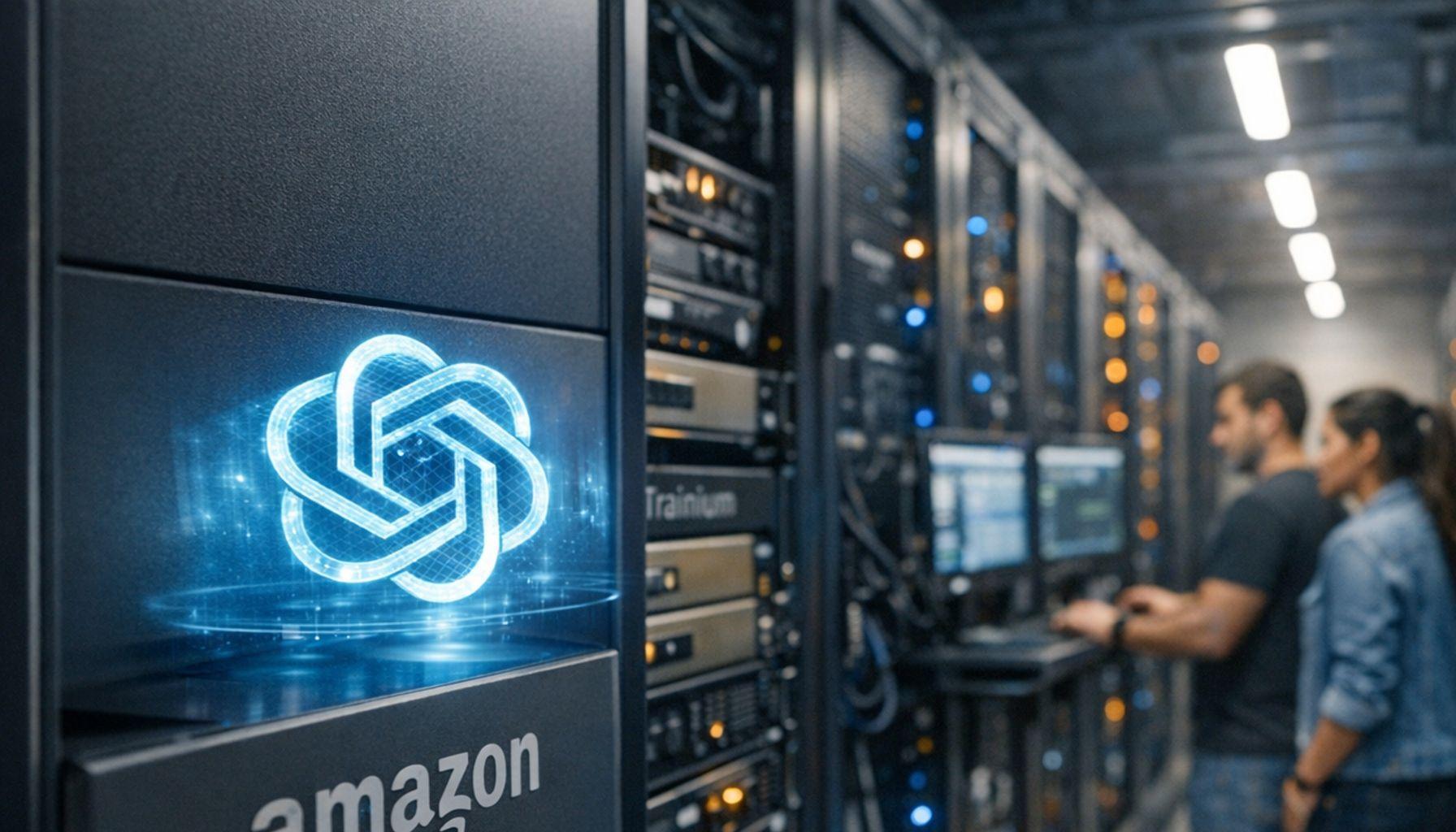
The big picture shows that tech giants are adopting a multi-sourcing approach to their AI chip partnerships. Nobody wants to be held hostage by a single supplier, no matter how dominant it might be. Marvell already makes custom data center processors for Amazon and Microsoft, but it faces competition in designing Amazon’s next-generation Trainium chips from Taiwan-based chip companies. At the same time, Broadcom is working to help Microsoft develop future versions of its AI chips called Maia.
However, Marvell is expected to hold on to a significant share of its business with both Amazon and Microsoft, even with this growing competition. The custom AI chip market is big enough to accommodate multiple players, and Marvell’s specialization in ASIC design gives it a competitive edge that is tough to replicate quickly.
Google is not betting on a single external supplier either. The company already has a solid partnership with Broadcom, which recently signed a long-term deal to develop the next generations of TPUs through 2031. Adding Marvell to this ecosystem means Google will have more flexibility to pick the best hardware for each type of workload, whether it is training, inference, or hybrid applications.
How This Move Fits Into Google’s Bigger Strategy
Google has been building its independence in AI hardware for more than a decade. TPUs, or Tensor Processing Units, were first introduced in 2016 and have gone through several generations of evolution since then. The company uses TPUs internally to power computing servers in its cloud data centers, and Google also makes them available to enterprise clients through Google Cloud. This initiative is not just an alternative to Nvidia’s GPUs — it is part of a larger vertical control strategy, where Google wants to own the hardware, the software, and the models running on its infrastructure.
But developing chips in-house comes with a steep cost, both financially and in terms of time. Silicon projects take years to go from design to production at scale, and the AI market is evolving at a speed that does not forgive delays. That is why partnering with specialized companies like Marvell makes so much sense within this framework. Instead of building everything from scratch internally, Google can co-develop chips specifically for inference, leveraging Marvell’s expertise in ASIC design and accelerating time to market.
One particularly ambitious front is Google’s plan to license its TPUs to AI model makers like Anthropic, Meta Platforms, and others. According to Wells Fargo estimates, Google could generate more than 10 billion dollars in high-margin intellectual property licensing fees in 2026 and 2027. This move would transform TPUs from a purely internal asset into a significant revenue stream — something few people predicted when Google first started investing in its own chips.
Another important piece of this strategy is the question of operational costs within cloud computing. AI inference at scale is expensive, and one of the most efficient ways to bring down that bill is to use specialized hardware that consumes less energy per operation. For a company that runs billions of queries every day, that efficiency gap translates into savings of hundreds of millions of dollars per year. In other words, the Marvell partnership is not just a tech play — it is also a business decision with a direct impact on Google Cloud’s operating margin.
What This Means for Nvidia
Nvidia is still, by far, the queen of AI chips. Its H100 and H200 series GPUs are the most sought-after chips on the planet right now, with wait lists stretching for months and prices reaching tens of thousands of dollars per unit. The company has built a robust software ecosystem around its GPUs over decades, especially with CUDA, the parallel computing platform that virtually the entire AI development chain relies on. That software lock-in is one of Nvidia’s greatest assets and one of the biggest challenges for anyone trying to compete with it.
Still, the landscape is shifting. More and more, large tech companies are investing in their own alternatives precisely to reduce their dependence on Nvidia and the costs that come with it. Beyond Google and its TPUs, Amazon has its Trainium and Inferentia chips, Microsoft is investing in custom chips for Azure, and Meta has also announced its own AI accelerator. This collective movement will not knock Nvidia off its throne overnight, but it will gradually chip away at its market share in specific segments — especially in inference, where custom ASICs have clear cost and efficiency advantages over GPUs.
Marvell’s entry as a Google partner in this context adds yet another layer of competitive pressure. If this partnership comes together and the resulting chips show competitive performance, other cloud computing players may also start looking at Marvell as an alternative supplier, which would further amplify the impact on Nvidia’s dominant position. 📉
The Numbers Behind the Race
To understand the scale of what is at stake, it is worth looking at the latest numbers. Google shares have risen about 9% in 2026, after gaining an impressive 65% the year before. The stock maintains a buy point at 349, within a cup-shaped base pattern. Nvidia shares, meanwhile, have advanced 8% over the same period, while Broadcom has gained 17% in 2026. But the big surprise belongs to Marvell, whose stock has surged 56% this year, reflecting market optimism about its growth in the AI chip segment.
On the day news about the potential Google partnership broke, Marvell shares climbed nearly 6%, reaching close to 148 dollars, while Google shares moved slightly, trading at 340.65 dollars before the market opened.
Google Cloud has posted impressive growth in recent quarters. The company’s cloud computing revenue jumped 47%, surpassing 16 billion dollars in the quarter ended in December — up from 34% growth recorded in the previous quarter. The cloud computing sales backlog grew 55%, hitting 240 billion dollars compared to the September quarter. These numbers show the surging demand for AI services and cloud infrastructure, which justifies the heavy investments in hardware.
Billion-Dollar Investments and Financial Results on the Radar
Google’s first-quarter results are expected on April 29, and the market will be watching closely to see how the company is managing its massive infrastructure investments. Google has projected capital spending for 2026 in the range of 175 to 185 billion dollars, a jump of roughly 97% over the prior year. This increase in investment has raised questions about the future of share buybacks, free cash flow generation, and return on investment.
On top of that, Google is holding its annual cloud computing event this week, kicking off on Wednesday. These kinds of events typically bring relevant announcements about new products and partnerships, and the potential formalization of a Marvell deal would be a standout highlight.


Alphabet is leveraging its artificial intelligence capabilities across every front: internet search, cloud computing, digital advertising, the Waymo autonomous vehicle unit, YouTube, Gmail, Workspace, and apps like Maps. Last year, Google unveiled its newest AI model, Gemini 3, reinforcing its commitment to leading the generative AI race.
Technical Indicators for Google Stock
For those who follow the financial markets, Google shares are showing pretty healthy technical indicators. The stock carries an Accumulation/Distribution rating of B-minus, which measures institutional buying and selling activity over the past 13 weeks. An A+ grade indicates heavy institutional buying, while E means heavy selling. A C grade is considered neutral. Additionally, the shares maintain an IBD Composite Rating of 96, which combines fundamental and technical metrics to help investors gauge the strength of a stock.
Google shares are on the IBD Leaderboard watchlist, alongside Broadcom. Marvell shares, on the other hand, appear on the IBD 50, while Nvidia and Broadcom show up on the IBD Big Cap 20. These placements on prominent watchlists confirm that all of these companies are firmly on the radar of the top institutional investors in the market. 🔍
The Future of the AI Chip Race
The global market for artificial intelligence chips is expanding rapidly, and projections indicate it could surpass 300 billion dollars by the end of the decade. Most of that growth is being driven precisely by the demand for inference, which scales proportionally with the number of users and applications consuming AI models on a daily basis. Services like virtual assistants, AI-powered search engines, content generation platforms, and enterprise productivity tools are all heavy inference consumers.
The AI chip race is far from having a definitive winner, and the market is still going to go through plenty of twists and turns before it settles down.
What is clear is that Google has no intention of sitting still while the world transforms around it. With TPUs evolving, the potential Marvell partnership taking shape, the long-term Broadcom deal locked in through 2031, and competitive pressure on Nvidia increasing every quarter, the AI chip ecosystem is more dynamic and contested than ever. The multi-sourcing strategy adopted by the tech giants shows that the future of AI hardware will be plural, with multiple suppliers and architectures competing for space in a market that simply will not stop growing.
For anyone keeping a close eye on the tech and cloud computing sector, this is exactly the kind of move that is well worth watching over the coming months. 👀