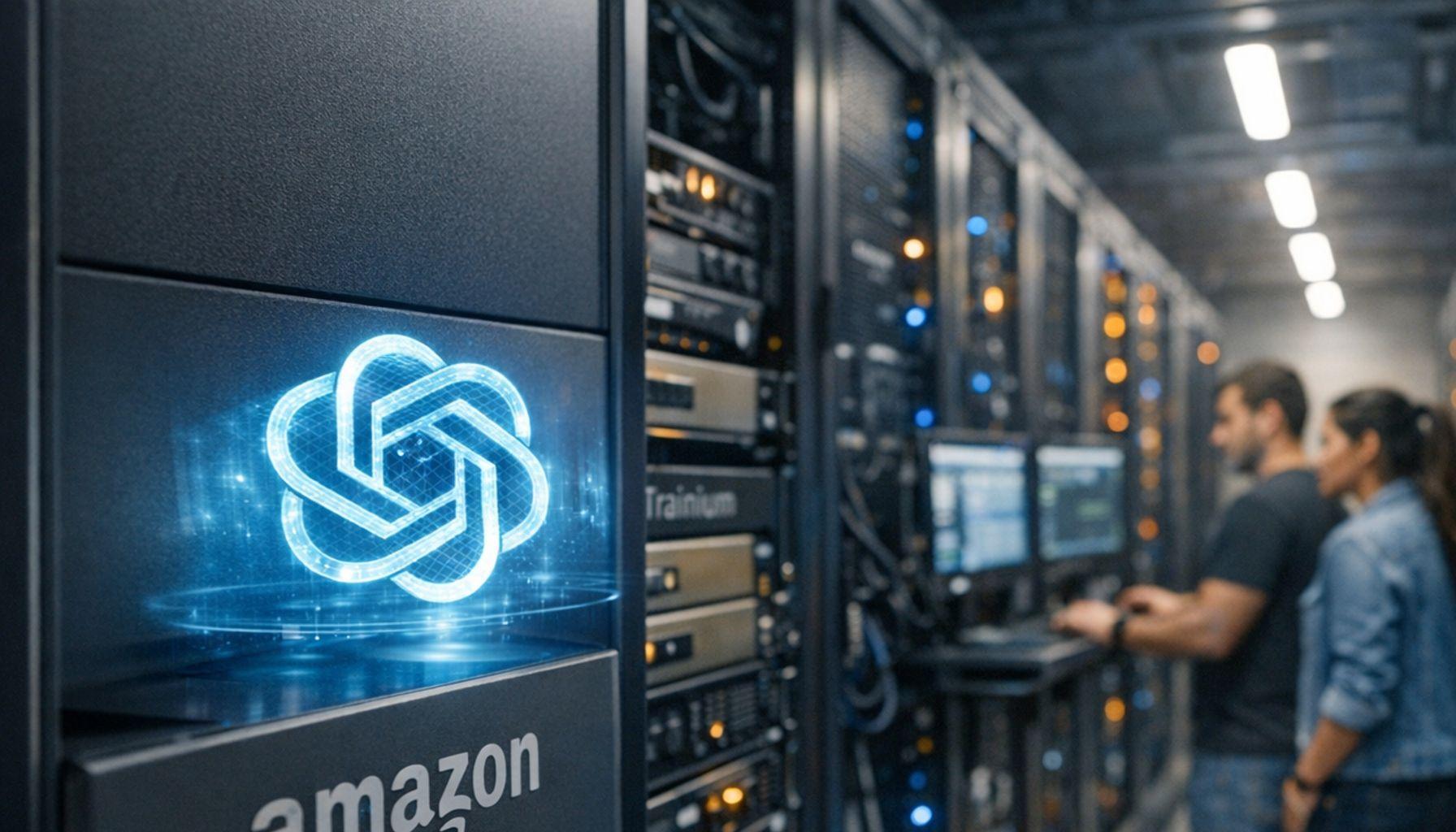
Residential Data Centers: How AI Infrastructure Could Reach Your Home in the Coming Years
Data centers are at the heart of one of the hottest debates in tech right now — and that is no exaggeration whatsoever. 🔥
They consume energy on a staggering scale, take up massive plots of land, and are already generating real political pushback in at least 14 U.S. states, which are exploring ways to block or pause new construction. The pressure is coming from local communities, environmentalists, and politicians who see these concrete-and-cable behemoths as a growing problem for infrastructure, water consumption, and regional power supply. In Maine, the state legislature actually passed a ban on data centers, although it failed to override the governor’s veto. This is not a small debate — it is a battle shaping the future of technology in the United States and, by extension, around the world.
But while resistance grows, the money keeps pouring in. The world’s biggest tech companies are expected to spend up to $1 trillion per year by 2027 on AI infrastructure, according to recent Wall Street estimates. And a McKinsey report goes even further, projecting that global data center spending could hit $7 trillion by 2030. That is a lot of money flowing into a sector facing pressure from all sides — and this contradiction between massive investment and public pushback is creating fertile ground for solutions that, until recently, seemed completely out of touch with reality.
And it is precisely within that tension that an idea emerges that sounds like science fiction but is already being tested in practice: what if part of that infrastructure could live in your house? PulteGroup, one of the largest homebuilders in the United States, is running pilot tests with Nvidia and California-based startup Span to install small data center nodes on the exterior walls of newly built homes. In the United Kingdom, startup Heata already installs servers in homes that process cloud computing tasks and, as a bonus, heat the residents’ water for free using the generated heat — a model backed by British Gas. In Finland, Microsoft is heating roughly 250,000 homes with waste heat from its data centers. The concept is real, it is in motion, and it raises questions that go far beyond technology — touching on sustainability, connectivity, security, regulation, and even your relationship with the neighbors. 😅
Why Traditional Data Centers Are in Crisis
To understand why the idea of residential data centers is gaining traction, you need to look at the problem from the perspective of those who build and operate the current infrastructure. A large-scale conventional data center can consume the same amount of electricity as an entire mid-sized city. We are not talking about a marginal impact — we are talking about enormous pressure on power grids that, in many U.S. states and European countries, are already running close to capacity. And with the explosion of generative AI, that demand only grows, because language models and image-processing systems require absurd amounts of computing power running continuously, 24 hours a day, seven days a week.
Beyond energy consumption, there is the water problem. Many data centers use evaporative cooling systems that consume millions of gallons of water per day. In regions already facing water scarcity — like the western United States — this has become a direct point of conflict with local communities. And speaking of communities, the impact on real estate is also real: large facilities occupy land that could be used for housing, agriculture, or environmental preservation, and they often show up with little transparency about what is actually being built there. It is easy to see why so many states are exploring legislative barriers to slow new construction.
Public opinion on AI has also been trending increasingly negative, adding an extra layer of political pressure on the sector. When communities protest — as happened in Austin, Texas, where advocacy groups and residents gathered in front of the state Capitol to challenge laws that make it easier to build data centers — it becomes clear the issue has moved beyond pure technology and become a first-order social concern.
The result of this equation is a sector that urgently needs to find alternative ways to grow without continuing to rely exclusively on the centralized model that has dominated the past few decades. And that is where decentralization enters the picture — not as some romantic notion of distributed technology, but as a practical and economic necessity.
How a Residential Data Center Actually Works
The PulteGroup proposal with Nvidia and Span involves installing compact processing modules — called fractional data center nodes — on the exterior walls of new homes. These modules function as nodes in a distributed AI and cloud computing network, contributing processing capacity for tasks that can range from language model inference to data analysis. The model is managed by third parties: Span owns the equipment, installs liquid-cooled Nvidia RTX PRO 6000 Blackwell GPUs in the homes, and then sells the computing capacity to hyperscalers and AI cloud providers. The homeowner receives a Span smart panel, battery backup, and reduced electricity and internet rates, paying a monthly fee of approximately $150 that covers those costs. Installation is free.
According to Arthur Ream, a professor of computer information systems at Bentley University, the economic argument is what deserves the most attention in this model. A 100 MW data center costs roughly $15 million per megawatt and takes three to five years to build. Span claims it can match that capacity by deploying XFRA nodes across 8,000 new homes in about six months, at a cost of $3 million per megawatt. Even factoring in a generous margin for marketing optimism, the difference in deployment speed and cost is significant.
The Heata model in the United Kingdom, on the other hand, solves a specific problem in an elegant way: heat. All processing equipment generates heat as a byproduct, and in traditional data centers that heat is simply discarded through cooling systems that consume even more energy. Heata installs a compact server connected to the home’s hot water cylinder, and the heat generated by processing warms the household water. The resident pays nothing for hot water, and Heata monetizes the processing capacity by selling computing power to companies that need to run cloud workloads. It is a concrete example of how sustainability can be built right into the business logic itself.
The Microsoft case in Finland scales this idea to an entirely different level. The company uses heat pumps to channel waste heat from its servers into the district heating system, benefiting roughly 250,000 residents. It is not exactly a data center inside a home — it is the data center’s heat reaching the home — but the principle is the same: turning an inevitable byproduct of computing into something useful for people.
Balaji Tammabattula, chief operating officer of BaRupOn, a U.S.-based energy and technology company building a data center campus in Liberty County, Texas, summed up the logic well: just as a home computer can contribute processing power to a distributed network, a house can host computing hardware that feeds into a larger data processing system.
What Works — and What Doesn’t Work Yet
Not every type of computing task can be run from a residential node. This is an important distinction that proponents of the model are quick to highlight. For batch processing, rendering, and research computing — tasks that do not require an instantaneous response — the home environment works surprisingly well, according to Tammabattula. But for high-density AI training or real-time workloads, residential limitations are much harder to overcome.
Gerald Ramdeen of Luxcore, a company developing next-generation optical networks and decentralized cloud infrastructure, reinforced this point. According to him, homes are not going to replace hyperscale data centers, especially for large AI training clusters that need dense power, high-speed networking, specialized cooling, and tightly controlled environments. The more realistic opportunity would be turning residences into professionally managed edge computing nodes, useful for AI inference, low-latency workloads, flexible and batch computing, cloud gaming, and certain heat-reuse applications.
Sean Farney, vice president of data center strategy for the Americas at JLL — a global professional services and commercial real estate firm that manages 4.4 GW of data center space across more than 340 sites worldwide — offered an interesting perspective on the natural evolution of this technology. He pointed out that your smartphone has more computing capacity than the first data center ever built, so while the idea of a residential data center has not taken off at scale yet, it will probably happen.
Farney did highlight, however, an important technical limitation: a residential 20-kilowatt generator is not even enough to power a single AI server cabinet. Current residential electrical infrastructure simply was not designed to sustain that kind of demand. Still, he believes that if the technology can solve these issues, homes could indeed overcome the scale advantages of traditional data centers.
The Financial Incentive for the Homeowner
The model follows a logic similar to earlier attempts at using idle home capacity for cryptocurrency mining or selling surplus energy from rooftop solar panels and electric vehicle credits. The difference is that the residential data center offers a more direct and tangible incentive: energy savings, free heating, or monthly income, without the homeowner needing to understand or manage anything technical. The equipment is owned by a third party, and the entire operation is handled remotely.
Cybersecurity and Physical Security: The Major Obstacles
If there is one issue that makes security experts skeptical about residential data centers, it is the question of data and equipment protection. Aimee Simpson, director of product marketing at Huntress, a global cybersecurity company, did not hold back on her concerns.
According to her, a collection of home-based micro data centers creates the need for a much more robust network security approach. While there are potential decentralization benefits — more sites mean more redundancies if a specific data center goes down — expanding the physical footprint makes security exponentially more complex. Every piece of hardware and software at each site would need to be secure and carefully monitored to prevent vulnerabilities.
Physical security, in turn, would be nearly impossible to guarantee. Simpson pointed out that there is a reason why mega data centers operated by companies like Amazon and Microsoft are surrounded by tall fences and guarded by security personnel 24 hours a day, 7 days a week. The idea that sensitive and confidential data would be processed and managed by servers potentially installed in someone’s garage is something that, according to her, would hardly make enterprise users comfortable.
Still, Simpson acknowledged that there are legitimate micro data center networks using tamper-proof physical containers. If those containers could be installed in homes, it could ease some of the security concerns.
Tammabattula added that connectivity quality varies enormously from home to home, creating reliability problems at scale. There are also regulatory and insurance questions surrounding the hosting of commercial equipment in residential properties that are far from being resolved.
Sustainability and Connectivity as Pillars of This Transformation
What ties all of these projects together is the realization that sustainability and connectivity are no longer separate concepts when we talk about AI infrastructure. Decentralizing data centers into the residential environment creates a direct link between computational consumption and people’s everyday lives — and that completely changes the dynamic of how energy efficiency is perceived and demanded.
When the server processing AI data is on the wall of your house and the heat it generates warms your water, energy waste becomes visible and unacceptable in a way it never was when everything was hidden in an industrial warehouse miles away. That proximity creates a natural incentive for both manufacturers and operators to pursue maximum efficiency from every watt consumed. The sustainability angle is strong: waste heat is reused instead of being dissipated at an enormous energy cost.


From a connectivity standpoint, the geographic distribution of processing infrastructure has concrete technical benefits. Latency is one of the major bottlenecks for AI in applications that need real-time responses — think autonomous vehicles, robot-assisted surgeries, or industrial systems that depend on millisecond-level decisions. When processing happens at distributed nodes that are physically closer to where data is generated and consumed, response times drop dramatically. This does not eliminate the need for large centralized data centers, but it creates a complementary infrastructure layer that could be decisive in enabling next-generation AI applications.
Not Everyone Is Convinced
Not all experts believe the residential model has a future. Sviat Dulianinov, chief strategy officer at Bright Machines, a San Francisco-based software and robotics company, was blunt: AI infrastructure is not crypto infrastructure, and data centers do not work in basements. According to him, modern AI runs in AI factories with thousands of GPUs working together, requiring complex engineering, precision manufacturing, and integrated supply chains. Computing will move closer to the edge, yes, but in standardized, professionally engineered systems — not in makeshift home data centers.
And then there is the neighbor issue. Jeff Lichtenstein, president of Echo Fine Properties in Palm Beach Gardens, Florida, fired off an observation that anyone who has ever lived in a community with a homeowners association will instantly understand: HOAs would absolutely lose it over this idea. According to him, the fights between data companies, city governments, and homeowners associations would make the most heated political debates look like child’s play. 😬
The Future Is Hybrid — and Closer Than It Seems
The truth is that nobody expects your ChatGPT or Claude queries to be processed by a server in someone’s utility closet anytime soon. The heaviest AI interactions will still need hyperscale data centers with robust infrastructure. But the residential model has real potential as a complementary layer of infrastructure — an edge computing network that handles inference, batch processing, rendering, and other tasks that do not require guaranteed uptime or ultra-low latency.
As Sean Farney put it: it is hard to compete with a hyperscaler because maintaining a super-distributed presence is operationally expensive, but it can be done — and the company that nails this model is looking at considerable upside.
Arthur Ream of Bentley University left a thought that might be the most provocative of all: the interesting question is not whether residential computing works, because it already works and is already happening. The question is whether the security, reliability, and regulation story holds up at gigawatt scale — or whether the industry has already quietly realized that the cheapest place to put AI’s operational risk is in someone else’s utility room.
The convergence of AI infrastructure, energy sustainability, and residential space could be one of the quietest yet most profound transformations that technology will bring to our daily lives in the coming years. The challenges are enormous — security, regulation, social acceptance, electrical limitations — but the capital is flowing, the tests are underway, and the first proofs of concept are already showing concrete results. The question now is whether the model will scale or whether it will run into the same resistance that traditional data centers already face, only this time inside neighborhoods rather than on the outskirts of cities. 🏠⚡