What is behind the University of Minnesota’s decision
The University of Minnesota Twin Cities, through its College of Design, has decided to go big on a field that has been reshaping the tech market in the United States and around the world. The school announced the creation of the first Bachelor of Science in UX Design in the entire state of Minnesota, with the first cohort set to begin in the fall 2025 semester. This is not a short course or a niche specialization, but a full four-year degree entirely dedicated to user experience. It is the kind of move that signals a structural shift in how American universities view the education of tech professionals.
McLean Donnelly, a UX design professor and the program coordinator, believes this is only the second degree of its kind among the 18 universities in the Big Ten conference, which already says a lot about how pioneering the initiative is. According to Donnelly, the university’s location makes the program even more distinctive.
The University of Minnesota Twin Cities is located in a state with a vibrant design ecosystem and the highest number of Fortune 500 companies per capita, Donnelly said. In his view, students there have unmatched opportunities to take on real-world challenges and connect with top industry leaders.
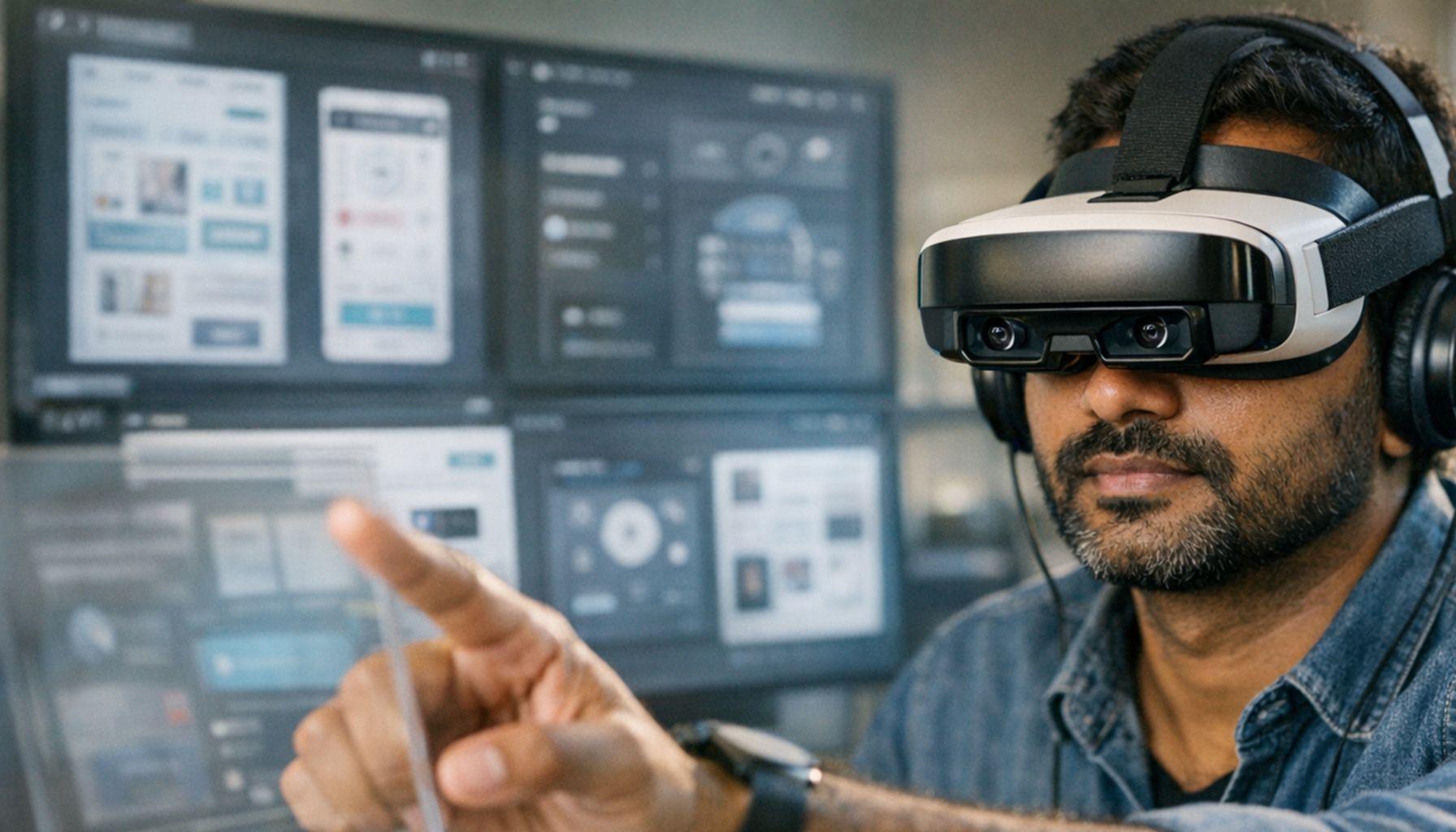
The program was designed to combine coursework in psychology, behavioral research, technology, and human-centered design. In practice, students will learn to think about how people interact with websites, apps, smart technologies, and digital products in everyday life, and how to make those interactions more intuitive, accessible, and enjoyable. This multidisciplinary approach is exactly what sets UX design apart from other traditional design fields. While graphic design focuses on aesthetics and software development handles the technical side, the user experience professional works at the intersection of those worlds, making sure everything works well for the person who matters most: the one actually using the product.
And the geographic context behind this decision is no accident. Minnesota has the highest number of Fortune 500 companies per capita in the United States, with giants such as Target, Best Buy, U.S. Bank, and Medtronic based in the region. These companies constantly need qualified professionals to improve their digital products and services, and until now there had been no undergraduate degree in the state devoted exclusively to that need. About 50 students have already secured spots in the first class, showing that demand for a tech career focused on experience design was already there and just needed a formal entry point.
Why UX design has become a priority in the tech market
In recent years, user experience has gone from a competitive advantage to a basic requirement for any digital product. Companies that ignore the quality of the interaction between their systems and their customers quickly lose ground to competitors that invest in it. A confusing app, a slow website, or a checkout process packed with unnecessary steps can mean millions of dollars in lost revenue.
Donnelly summed up that reality with a very direct observation: Behind every website, every app, anything you use, there is somebody designing that. And you are seeing more and more companies investing in it because it directly impacts the bottom line. If you go to a website on your phone and it does not work well, does not look good, how long do you stay there? Those are real dollars.
According to Donnelly, companies in tech, healthcare, retail, and finance are investing heavily in qualified designers to improve digital interactions, and UX roles are among the fastest-growing and best-paying jobs across design and technology. The University of Minnesota’s decision reflects exactly that environment, where the market is asking for well-prepared talent and educational institutions need to keep pace.
Another important point is that UX design is not limited to startups or Silicon Valley big tech companies. Hospitals, banks, insurance companies, retail chains, and even government agencies are investing heavily in improving how their systems are used by employees and customers. Medtronic, for example, one of the largest medical device companies in the world and headquartered in Minnesota, needs to make sure its equipment and software are highly intuitive, because any interaction error can have serious consequences in healthcare. That greatly expands the field for anyone pursuing a tech career focused on user experience.
From minor to major: formalizing a path that already existed in practice
One important detail in this story is that the bachelor’s degree in UX design did not come out of nowhere. Part of the motivation for creating the full program was the success of the UX minor already offered by the College of Design. Donnelly explained that students had been piecing together their UX education in an improvised way, combining the minor with independent studies and courses from other departments.
Now that we are the first UX design bachelor’s degree in Minnesota history, that gives students four years to learn. It is a real advantage on their resumes, Donnelly said.
The results of the minor were already visible in the job market. Donnelly mentioned that students who went through the UX program were already working full time at companies such as U.S. Bank, Best Buy, Target, and Medtronic. In other words, the demand for these professionals was not theoretical. Companies in the region were already hiring students even before a dedicated degree existed. With the bachelor’s program, the expectation is that this bridge between the university and the job market will become even stronger and more structured.
Real stories from people who have already followed this path
Eliana Smelansky and the transition to Experience Designer at Best Buy
One of the best examples of how Minnesota’s UX ecosystem is already working in practice is the path taken by Eliana Smelansky. She graduated from the University of Minnesota in 2022 with a degree in marketing from the Carlson School of Management and a minor in interdisciplinary design from the College of Design.
After an internship that turned into a job at Target in a merchandising role, Smelansky realized she wanted something more creative. Her solution was to complete a six-month UX/UI bootcamp at the University of Minnesota itself. Today, she works as an Experience Designer at Best Buy.
When she heard about the launch of the bachelor’s degree in UX design, Smelansky was excited. I was really excited when I saw this come up. I posted about it on LinkedIn and thought, if this had existed when I was in college, I definitely would have done it, she said.
Smelansky pointed out that much of her current work involves collaboration, concept creation during brainstorms, and presenting ideas to stakeholders and leaders. For her, having a program where students learn all of that in one integrated package, including how to work with stakeholders, how to collaborate to solve problems, and how to create designs that actually work, is extremely appealing for anyone trying to enter the field.
Nick Horst and the dream job in the gaming industry
Another story that shows the power of a UX education is that of Nick Horst, who graduated in 2025 with a degree in computer science from the University of Minnesota’s College of Science and Engineering. Horst added the UX minor to his studies, and that combination played a key role in helping him land his dream job.
I took a class with McLean and it kind of opened up my world to the intersection between technology and design, which is exactly where my work is now, Horst said.
After graduating last spring, Horst moved to Los Angeles to work at Respawn Entertainment, an Electronic Arts company and one of the biggest game studios in the world. His team works on Apex Legends, a title with global reach. The coolest part? Horst started playing Apex Legends when he was still in high school. It is one of those moments when life seems to come full circle 🎮
As a technical experience designer at Respawn, Horst explained that every time a new feature is launched, basically any element that appears on screen is something his team programs into the game. The job blends technical skills with design thinking, exactly the kind of profile the market values most.
Horst was emphatic when talking about the new bachelor’s degree: If I were a freshman today, I would 100 percent have chosen UX design as my only major or strongly considered it as part of a double major.
A degree for the future, not just the present
Donnelly also made a point of emphasizing that the bachelor’s degree in UX design is not preparing professionals only for today’s tools and technologies. In his view, the program is a strong option for people with some creativity, a sharp visual eye, and an interest in computer science. But the real value of the program goes beyond specific technical skills.
This course teaches you how to look at problems, find solutions, validate, prototype, present your work professionally, and receive feedback. It teaches you how to think. And even if technology changes, that will keep evolving and allow our students to grow along with it. It really is a forever degree, Donnelly said.


That perspective is especially relevant at a time when artificial intelligence is rapidly changing how digital products are created. Generative AI tools can already produce layouts, suggest navigation flows, and even generate interface code. But the ability to deeply understand human needs, conduct qualitative research, interpret behavioral data, and translate all of that into experiences that make sense for real people remains an essentially human skill. And that is exactly what a four-year program can develop in depth.
The impact of this innovation for anyone considering a tech career
For anyone thinking about pursuing a tech career, the launch of this bachelor’s degree is a clear sign that the field of user experience is maturing as a profession. For a long time, many UX professionals were self-taught or came from related areas such as psychology, communications, or computer science. That was not necessarily a bad thing, but it did create a gap in training, since each professional typically brought only one part of the knowledge needed to work in a fully rounded way. With a dedicated program, the University of Minnesota is creating a more structured and accessible path for anyone who wants to enter this market with a strong and broad foundation, covering everything from the basics of user research to the prototyping tools most widely used by the industry.
The innovation here is not just in the course content, but also in the timing. The American tech market is going through a period of reorganization, with companies reevaluating their teams and prioritizing professionals who can deliver real business value. And the UX design professional is right in that position, because their work directly affects metrics such as customer retention, sales conversion, and overall satisfaction with products and services. Having a formal degree in this field can make a difference when competing for roles at companies like those concentrated in Minnesota, but also in any other tech hub in the world. The diploma works as proof that the professional has gone through full training and is prepared for the real challenges of the market 🎓
What Brazil can learn from this move
For the Brazilian market, this news also brings some interesting reflections. Brazil still does not have many undergraduate options specifically in UX design, and most professionals in the field are trained through bootcamps, certificate programs, or graduate studies. The University of Minnesota’s move could serve as a reference point for Brazilian institutions to start thinking about similar programs, especially given that demand for user experience specialists is also growing there.
Companies such as Nubank, iFood, Magazine Luiza, and dozens of others are investing more and more in design teams, and the lack of qualified professionals is a constant complaint among recruiters in the field. The logic is the same one Donnelly described: when a banking app does not work properly on mobile, the customer switches to a competitor. When an ecommerce site has a confusing checkout process, the cart gets abandoned. The financial consequences of ignoring user experience are very real.
Anyone keeping an eye on a tech career focused on people and how they interact with the digital world is looking at a path with growing demand and real opportunities both in Brazil and abroad. And the fact that major universities like Minnesota are formalizing this field through full undergraduate programs only reinforces that UX design is not a passing trend. It is a discipline that is here to stay and will continue expanding in the years ahead.