AI-generated ads have already infiltrated US political campaigns and raised a massive red flag
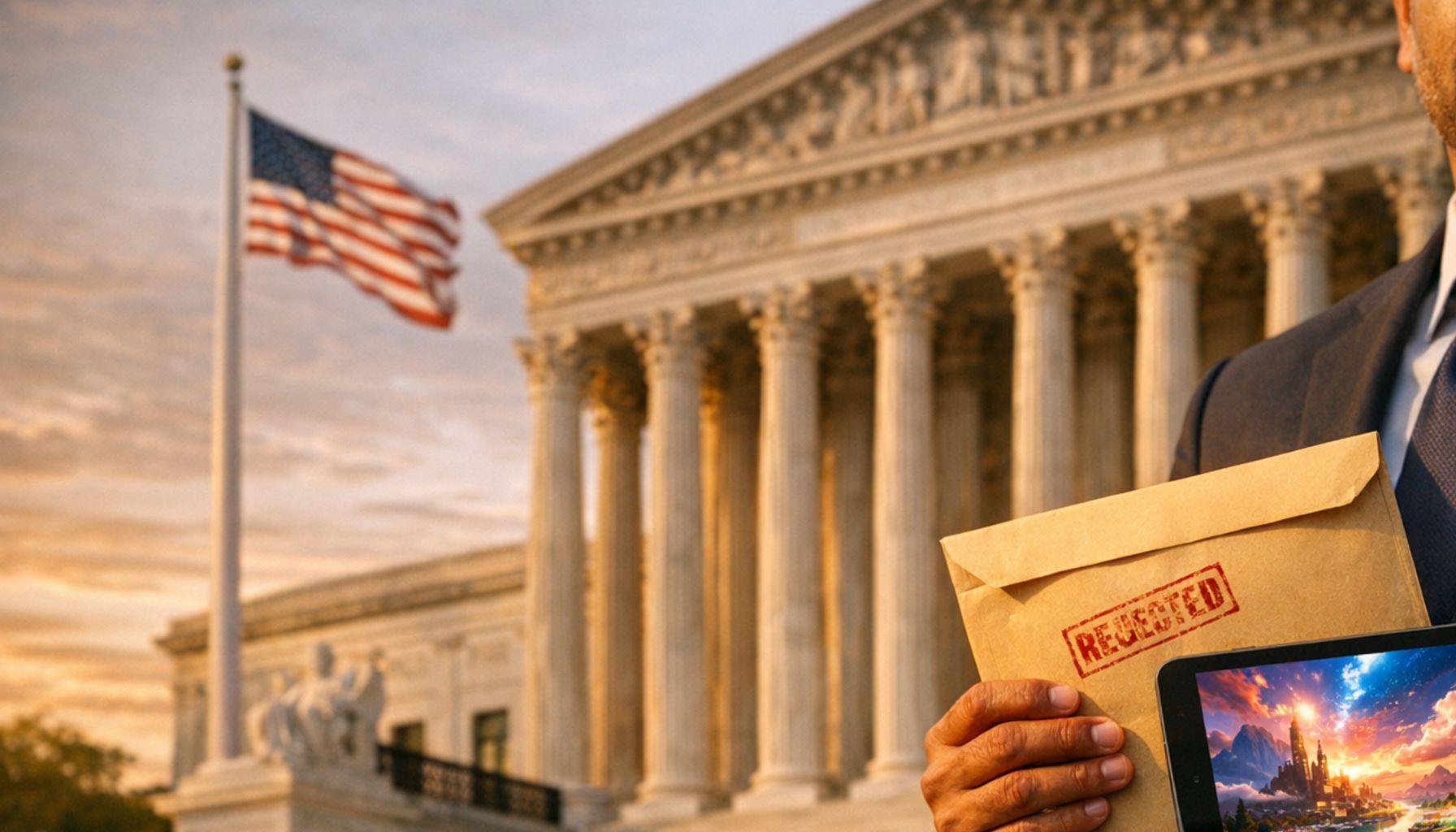
The 2026 midterm elections in the United States are still on the horizon, but the game has already changed. At least 15 ads with AI-generated content have circulated since November, and that number keeps growing as campaigns heat up. That volume might seem small at first glance, but it represents something much bigger than a simple statistic: it marks the consolidation of a new era in political communication, where the line between real and fabricated is becoming increasingly blurry and harder for the average voter to spot.
The technology is not on its way to political campaigns. It has already arrived, pulled up a chair, and is actively participating in the electoral process. And that is leaving a lot of people worried, for good reason.
From local school board races to governor and US Senate contests, AI is showing up in different formats and serving a wide range of purposes. In some cases, it is used to create creative and humorous visuals. In others, the path is much murkier, with ads mimicking the voices of real politicians saying things they never said or constructing entirely fabricated narratives.
What is at stake here goes beyond which party uses the technology better. The real question is: where are the ethical and legal boundaries for AI use in campaigns, and who is keeping watch? 🗳️
Real cases that are already stirring controversy
One of the most striking examples comes from Massachusetts. In the state governor race, Republican candidate Brian Shortsleeve and his campaign created an AI-generated radio ad that simulates the voice of Democratic Governor Maura Healey. In the audio, the supposed Healey says things she never actually said, including statements about the state economy. The detail that caught experts off guard is that the clip does not contain an explicit disclosure that it was generated by artificial intelligence. The caption only says it is what her radio ads would sound like if she were being honest.
The Shortsleeve campaign did not stop there. They also released AI-generated videos depicting Healey as the Grinch and another showing her with glowing red eyes in a sinister tone, none of which included explicit AI-use disclosures. Patrick Nelson, communications director for Shortsleeve, said the campaign uses the technology to educate voters in a creative, humorous, and fun way. According to him, the team’s policy is to disclose AI use only when a person’s depiction is not obviously artificial to a reasonable observer.
Healey’s campaign directed the press to a statement from the Massachusetts Democratic Party. Steve Kerrigan, the party chair, was blunt: he said Shortsleeve should stop lying to voters and admit he would be a rubber stamp for President Trump’s agenda.
Another case that generated significant buzz involved the National Republican Senatorial Committee, which released an AI-generated video showing James Talarico, a Democratic Senate candidate from Texas, reading real tweets about racial issues and transgender rights. Talarico’s spokesperson, JT Ennis, responded by saying that the Republican primary candidates are the ones actually scared of the Democrat. Talarico’s campaign declined further comment to NBC News.
At the local level, former New York Governor Andrew Cuomo‘s recent campaign for New York City mayor used AI in some ads, including one that depicted criminals supposedly endorsing current Mayor Zohran Mamdani. And in Texas, Representative Jasmine Crockett drew attention and plenty of criticism for using AI in her Senate campaign, while her image was also used in Republican AI-generated ads. 😬
How AI-generated ads are being used in campaigns
AI-generated ads in American political campaigns do not follow a single pattern, and it is precisely that diversity of applications that makes the phenomenon so complex to evaluate. There are cases where campaign teams use image generation tools to create impactful visuals at a fraction of the cost traditional production would require. These ads can be visually stunning, creative, and even funny, functioning as a legitimate form of modern political communication.
The problem starts when that same technology is aimed at distorting reality or creating false perceptions about candidates and political events.
Producing traditional political ads is not cheap. According to Media Culture, a media buying and marketing firm, costs can range from about a thousand dollars to exponentially higher figures, depending on factors like production costs, casting, post-production, and distribution. For smaller campaigns with fewer resources, and even for larger ones, AI-generated images and videos represent considerable savings.
Todd Belt, a professor at George Washington University and director of the school’s political management program, explained that the issue is not necessarily the size of the campaign itself. The point is whether the team hired an advertising agency operating on tight margins that needs to deliver material quickly or at reduced costs. AI solves both problems at the same time.
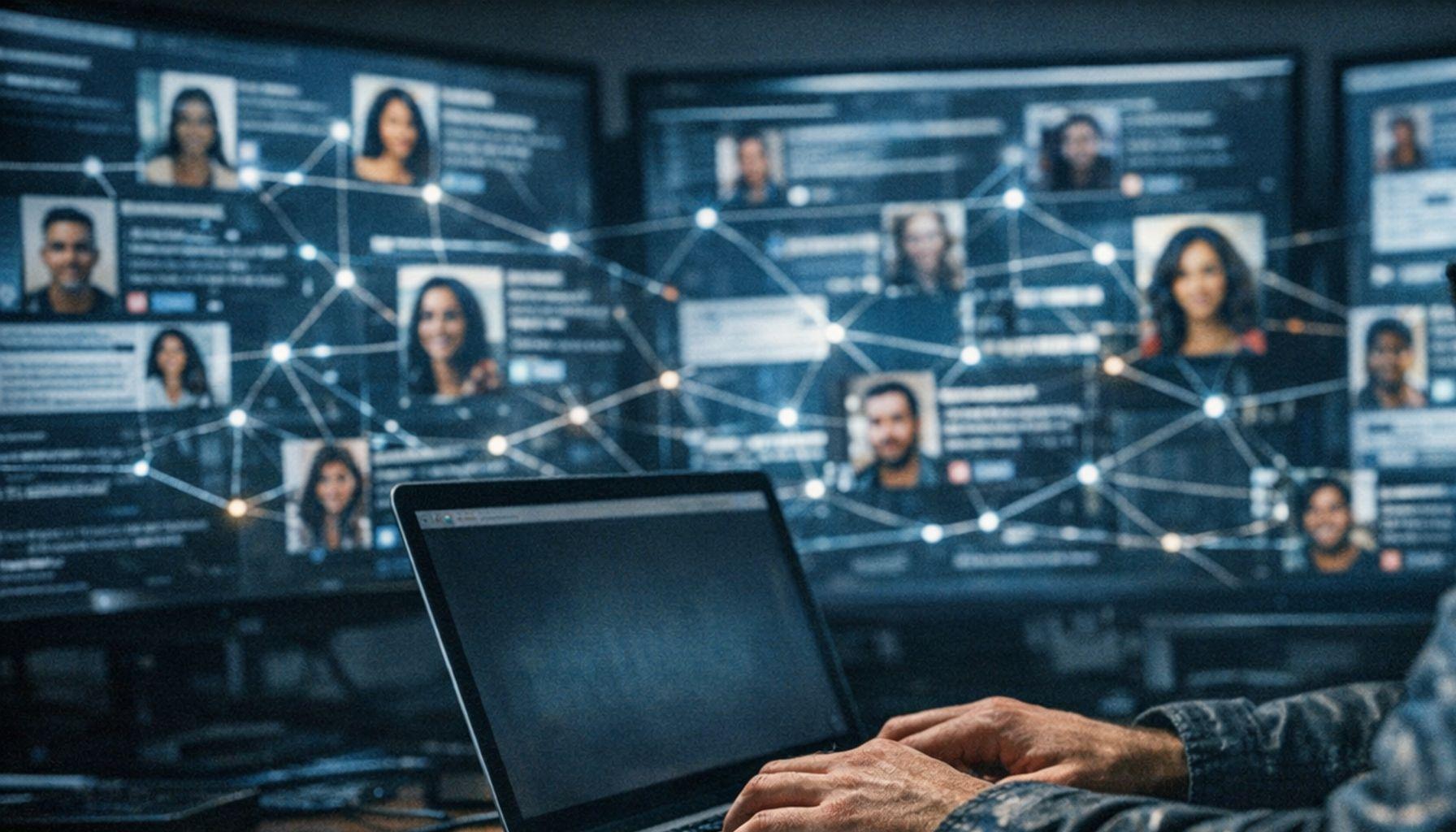
Among the most concerning formats recorded so far are ads that use voice cloning to simulate statements from real politicians that were never actually made. Imagine hearing a senator’s voice saying something they never claimed, with audio quality so convincing it would be virtually impossible to distinguish from the original without in-depth technical analysis. This type of content has already circulated in real races, like the Massachusetts case described above.
Another format gaining traction is synthetic video and imagery placing candidates in situations that never happened, often in embarrassing or compromising contexts. Unlike the crude traditional photo manipulations that anyone would quickly spot, materials produced with modern AI exhibit a level of realism that requires specialized detection tools to be safely challenged.
AI video generators have evolved impressively in recent years. What started as crude and sometimes bizarre clips now produces ultra-realistic media that demands very careful inspection to identify its synthetic origins. This creates an environment where disinformation no longer needs to be sophisticated in its distribution to be effective, because it is already sophisticated enough in its production.
The misinformation problem in a landscape without clear regulation
Misinformation has always existed in politics, but AI is completely changing the scale and speed at which it can be produced and distributed. What used to require a team of professionals, expensive equipment, and days of production can now be done by a single person with access to free or low-cost tools in a matter of minutes. That is the central point of the problem: the democratization of fake content production has reached a level that verification and oversight systems simply cannot keep up with yet, neither in speed nor in volume.
Mark Jablonowski, CEO of DSPolitical, a progressive advertising firm, was clear about the issue: whenever generative AI is used to create misleading messages or images, that is a bad thing, and he hopes everyone can agree on that premise. According to Jablonowski, the real problem arises when someone tries to be purposely deceptive or fabricates something that never existed.
Social media platforms, which are the main distribution channels for these AI-generated ads, have policies that prohibit, at least on paper, misleading content and unidentified synthetic materials. But enforcement of those rules is inconsistent, the volume of content is enormous, and the speed at which an ad can circulate before being removed is often enough to cause damage to public perception that is hard to undo.
There is also a significant structural problem: AI content detection tools are in a constant arms race with generation tools. As detectors become more accurate, generative models evolve to produce results that are even harder to identify. This creates a cycle that favors whoever is producing the fake content, because detection always operates with some lag behind generation.
For voters who do not have access to these tools and do not have the time or training to question every piece of content they consume, the practical result is constant exposure to materials that can shape opinions based on events that never actually happened. 🔍
Regulation: what exists today and what is still missing
The regulatory landscape around AI use in political campaigns is, to be honest, pretty fragmented. In the United States, regulation of AI in political ads happens primarily at the state level. Twenty-six states already have laws regulating the use of political deepfakes, which use AI to create deceptively realistic video or audio. These laws require disclosure of the technology’s use or prohibit its deployment within a certain period before elections, according to the National Conference of State Legislatures.
Some states are pushing even further in that direction. In Maine, the House passed a bill requiring disclosure of AI use in political ads. Vermont followed a similar path, with lawmakers approving a bill on disclosure of deceptive AI in political advertising. These initiatives show there is a growing movement at the state level to fill the void that exists at the federal level.
And it is at that federal level where the situation gets more complicated. AI regulation remains in a legislative limbo. In 2023, Senator Amy Klobuchar, a Democrat from Minnesota, and Representative Yvette Clarke, a Democrat from New York, introduced the REAL Political Advertisements Act, which would require disclosure of AI use in political ads. Neither bill made it to a vote in their respective chambers.
The Federal Election Commission (FEC), which oversees campaign finance, is still discussing how to adapt its regulations to specifically cover the use of artificial intelligence. This process is naturally slow, involving public comment periods and deliberations among commissioners with differing political views, on top of the technical complexity of regulating a technology that evolves far faster than traditional legislative cycles can keep up with.


For the 2026 elections, researchers and election law experts expect pressure for some form of federal regulation to increase significantly, especially if cases of abusive AI use in campaigns generate major public backlash. There is a growing consensus that self-regulation by platforms and campaigns themselves is not enough to guarantee the integrity of the electoral process. ⚖️
What to expect going forward
With the 2026 elections approaching, the use of AI-generated ads in American political campaigns is likely to grow substantially. Tool costs keep dropping, the quality of what they produce keeps improving, and the number of campaign teams with at least one member familiar with these technologies is already significant. That means the landscape we are seeing today, with 15 ads identified since November, is just the beginning of a curve that should accelerate sharply over the coming months.
Jablonowski believes AI-generated ads will ramp up as the midterms get closer. But he holds a moderately optimistic view: according to the DSPolitical CEO, the majority of campaigns on both sides of the political spectrum probably want to do the right thing. He acknowledges, however, that there will always be examples of people doing it the wrong way.
For voters, this presents a real and practical challenge: how do you consume political information in an environment where synthetic content is increasingly indistinguishable from the real thing? Some digital literacy initiatives are being developed by nonprofits and American universities to help everyday people identify signs of AI-generated content. But the reach of these initiatives is still limited, and the speed at which the technology evolves makes any training quickly outdated.
Todd Belt from George Washington University emphasizes that the determining factor is not the size of the campaign, but rather the operational conditions of whoever is producing the content. Agencies working on tight margins and short deadlines find AI to be a tempting solution, regardless of the ethical implications that may come later.
The potential impact of all this on the democratic process is one of the most relevant discussions happening right now at the intersection of technology and politics. AI-driven misinformation in campaigns is not just a technical or legal problem. It is an issue that directly affects the quality of the choices voters make and, as a result, the legitimacy of election outcomes.
Understanding what is happening now, before the 2026 election cycle hits peak intensity, is essential for journalists, researchers, lawmakers, and citizens to contribute to an informed debate about where to draw the line on AI use in democracy. Awareness that this problem exists is already an important starting point, even if it is not enough on its own. 🤖🗳️