AI, automation, and the new way to invest in technology
Artificial intelligence is no longer a distant promise — it has become a central piece of business strategy for large, midsize, and even old-school companies. The latest BMO Business Outlook report, focused on Midwest companies across the United States, paints a clear picture of this shift. In a region defined by heavy industry, large-scale agriculture, and advanced manufacturing, the conversation has moved well beyond testing new tools. Now it is about embedding technology right into the heart of operations. States like Illinois, Wisconsin, Minnesota, and Indiana, known for decades for their strong industrial base, are emerging as real-world laboratories for modernization driven by AI, automation, and a focus on long-term performance.
The study points to a clear change in behavior: after years of running proofs of concept, piloting isolated projects in a single department, and piling up PowerPoint decks, companies are moving into a stage of practical execution. Instead of disconnected technology initiatives, an integrated layer of artificial intelligence is starting to show up across daily production, logistics, customer service, and support routines. This applies to automated factory floors just as much as it does to offices using language models to speed up contract analysis, serve customers, and cut through internal bottlenecks. The tone of the report is one of pragmatism: less hype, more tangible results.
One important point is that this shift is not happening purely out of a love for innovation. The pressure is coming from all sides: a tight labor market, rising labor costs, increasingly complex supply chains, and customers demanding faster responses. In that mix, automation powered by artificial intelligence becomes a tool for maintaining productivity even when hiring cannot keep up with demand. The priority shifts to modernization of the existing base, not unchecked growth. Companies are trading the impulse to open new plants for a strategy that squeezes maximum performance out of the factories, teams, and systems they already have, using investment in digital technology as the central lever.
From the slide deck to the factory floor: when planning becomes real execution
One of the most interesting findings in the report is how the conversation around artificial intelligence is migrating from the strategic level down to the factory floor. For years, many boards and executive teams approved broad digital transformation plans, but a good chunk of those projects stalled in never-ending pilots with no path to scale. Now the picture looks different: Midwest companies are taking those same plans and turning them into clear implementation roadmaps, complete with well-defined performance targets, efficiency metrics, and timelines that tie investment budgets directly to expected returns in cost reduction or productivity gains.
Automation is no longer a standalone experiment — it is becoming part of broader industrial modernization programs that involve new hardware, sensors, networks, control systems, and of course, AI layers for decision-making. The BMO Business Outlook report highlights that this maturation process picked up speed as planning visibility improved in the current economic environment, giving business leaders more confidence to release budgets and move forward with projects that had been sitting on the shelf.
In practice, this means computer vision systems are already being used for quality inspection on production lines, replacing entirely manual checks with models trained to identify defects in real time. It also means collaborative robots are taking on repetitive and hazardous tasks, guided by algorithms that adjust movements based on operational data to reduce errors and rework. On the administrative side, language models process supplier data, contracts, and orders to flag risks, cross-check deadlines, and suggest alternatives. All of this connects to dashboards showing, in near real time, the impact of these artificial intelligence capabilities on business performance. The big difference is that this suite of solutions is being treated as part of the company’s main engine, not as a side innovation lab.
Another point the report emphasizes is the focus on integration between IT, operations, and finance teams. Instead of each department handling an isolated piece of the project, AI-driven automation initiatives only move forward when there is a clear value framework: where the investment goes, how much process modernization will be needed, and what the estimated gain in productivity or defect reduction looks like. This is fueling the rise of cross-functional teams that bring together engineers, data analysts, production specialists, and business folks, all looking at the same set of KPIs. The priority is no longer just installing a new piece of software — it is creating a smarter decision-making flow, supported by AI models that learn from the company’s own data over time.
AI and automation as an answer to the labor shortage
The human factor remains at the center of the discussion, but in a different way. Instead of betting that the talent shortage will resolve itself, Midwest companies are accepting that a tight labor market is a long-term reality — a structural constraint, in the report’s own words. In this environment, the combination of artificial intelligence and automation becomes a way to balance the equation: keep operations running, fulfill more orders, deliver higher quality standards, and at the same time, not rely on aggressive headcount expansion.
The report shows companies investing in systems that handle repetitive tasks, freeing people up for work that requires judgment, customer interaction, and specialized knowledge — things that models still cannot replicate with the same flexibility. Tony Sciarrino, head of BMO Commercial Bank in the U.S., summed up the logic well when he said that companies in the region are prioritizing AI, automation, and capital discipline to extend capacity, protect margins, and stay competitive. The focus, according to him, is not on expanding at any cost, but on putting capital and technology to work in ways that deliver measurable results.
A recurring example involves production lines that now operate with fewer manual interventions, thanks to sensors connected to AI algorithms that detect mechanical anomalies, regulate machine parameters, and predict downtime in advance. Instead of assembling large teams for continuous visual inspection, companies use models trained on historical failure data to suggest adjustments and pinpoint the best time for maintenance. This improves asset performance, reduces downtime, and eases the pressure to hire additional technicians. The same logic applies to distribution centers using AI-powered routing systems to cut unnecessary trips, optimize loads, and shorten delivery windows, extracting more value from the existing fleet.
At the same time, the study shows that workforce modernization involves reskilling and role evolution, not just replacement. Machine operators are transitioning into supervisors of automated cells, reading indicator dashboards and making decisions based on alerts generated by artificial intelligence. Customer service professionals use AI copilots to respond faster but remain in charge of the client relationship. Engineering teams that used to spend time generating manual reports now work alongside models that automate calculations, simulations, and scenario comparisons. Automation becomes a capacity multiplier, allowing the same team to accomplish more with less strain and a level of performance that would be hard to reach through human effort alone.
The national backdrop behind the regional strategy
It is impossible to understand what Midwest companies are doing without looking at the macroeconomic backdrop described by the BMO Business Outlook itself. The report acknowledges that the U.S. economy has meaningful tailwinds heading into 2026, including the business investment cycle driven by artificial intelligence. At the same time, risks remain elevated in areas like trade policy, inflationary dynamics, and geopolitical tensions. This balance between favorable winds and uncertainty is exactly what is pushing executives toward a disciplined approach: invest, yes, but with clear criteria.
In the capital markets, activity is starting to thaw unevenly. Credit demand is improving as rate cuts work their way through the system, but approval standards remain tight. Mergers and acquisitions activity is also gaining selective traction, with a spotlight on bolt-on acquisitions — smaller deals that complement a company’s portfolio without representing a big risk bet. Larger transactions, especially those backed by private equity funds, remain more cautious. This environment rewards companies that know exactly where to put their money and why, reinforcing the trend toward surgical investment in modernization and technology rather than unbridled expansion.
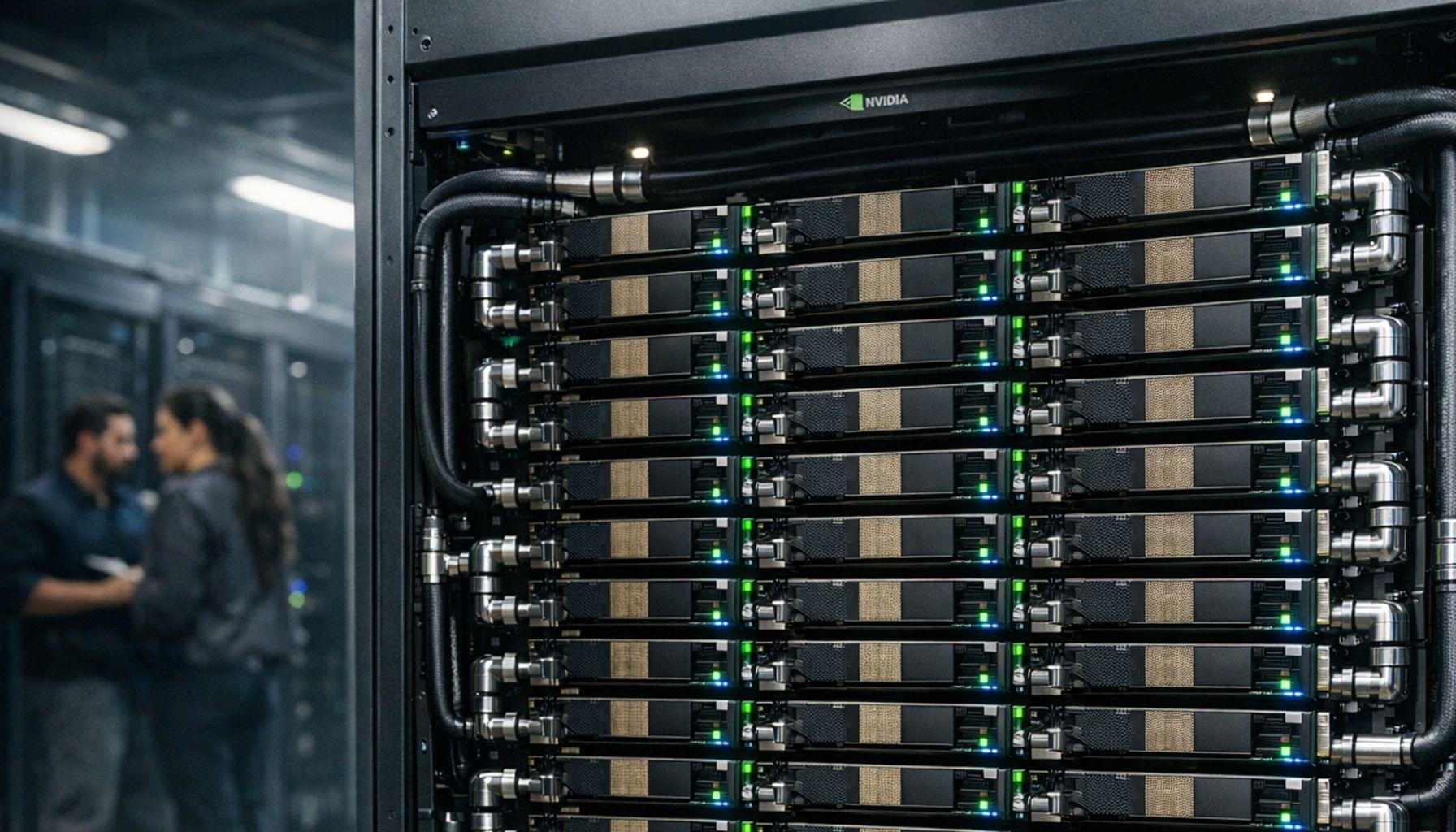
For the Midwest specifically, demand for AI-related infrastructure creates an additional layer of opportunity. Data centers, energy networks to support heavy compute loads, high-speed connectivity — all of this generates demand for component manufacturers, industrial materials suppliers, and technical service providers already operating in the region. The strength of the local manufacturing base connects directly to this wave of digital infrastructure, creating a cycle where traditional industry feeds and benefits from the growth of artificial intelligence.
Disciplined investment and performance gains through 2026
The game, as the report makes clear, is no longer about expanding at any cost — it is about deploying capital in a disciplined way to generate measurable results. It is not enough to say a company is betting on artificial intelligence; you need to show where the investment is going and how it directly impacts cash flow, productivity, and competitiveness. The companies furthest along in this movement treat technology modernization as a portfolio: they pick priority fronts, define stages, test at controlled scale, and only then expand across the full operation, always linking automation to specific performance goals like waste reduction, throughput increases, or lower error rates.
This discipline also shows up in how executives are evaluating vendors and platforms. Instead of adopting dozens of disconnected systems, there is growing interest in modular solutions that allow companies to layer in AI and automation components over time. The idea is to build a technology ecosystem that stays upgradeable without locking the company into a single static technology. This includes choosing tools with solid APIs, exportable data, and the ability to integrate sensors, machines, and management software. The report indicates that many CFOs only approve major capital outlays when they see this kind of long-term flexibility, because it reduces the risk of rapid obsolescence and increases the likelihood of sustaining consistent performance gains.


Another aspect worth noting is the prioritization of projects that improve so-called throughput — effective production capacity — and operational resilience. Spending that does not hit a high return on investment threshold is being deferred. This selectivity is a sign of maturity: companies understand that the economic environment demands protecting margins and cash flow, and that modernization only makes sense when it is anchored in concrete outcomes. No modernizing for the sake of modernizing.
What this transition means for the future of industry
The horizon outlined by the study’s analysts suggests that by mid-2026, the real competitive edge will come down to the ability to turn investment in modernization into concrete returns — not marketing announcements. Companies that manage to combine well-structured data, artificial intelligence models trained in the right context, and automation layers aligned with operational routines will operate with lower costs, shorter delivery cycles, and more consistent quality standards.
This is not a race to see who buys the most technology. It is a disciplined process of adoption, measurement, adjustment, and expansion. The U.S. Midwest is turning into a living laboratory for this transition, showing how traditional sectors can absolutely reinvent themselves and extract high performance from every dollar invested when they treat modernization as a business strategy, not just an IT project.
For anyone following the tech market, the BMO Business Outlook sends a direct message: 2026 is shaping up to be the year artificial intelligence moves out of slide decks and trend reports to become a visible, measurable part of everyday industrial life. The companies that get ahead in this execution game — with capital discipline, a focus on practical automation, and respect for labor market constraints — are likely to set the new standard for competitiveness in the years ahead. And the most interesting part is that this transformation is not happening in Silicon Valley startups, but in the heart of traditional American industry. 🏭