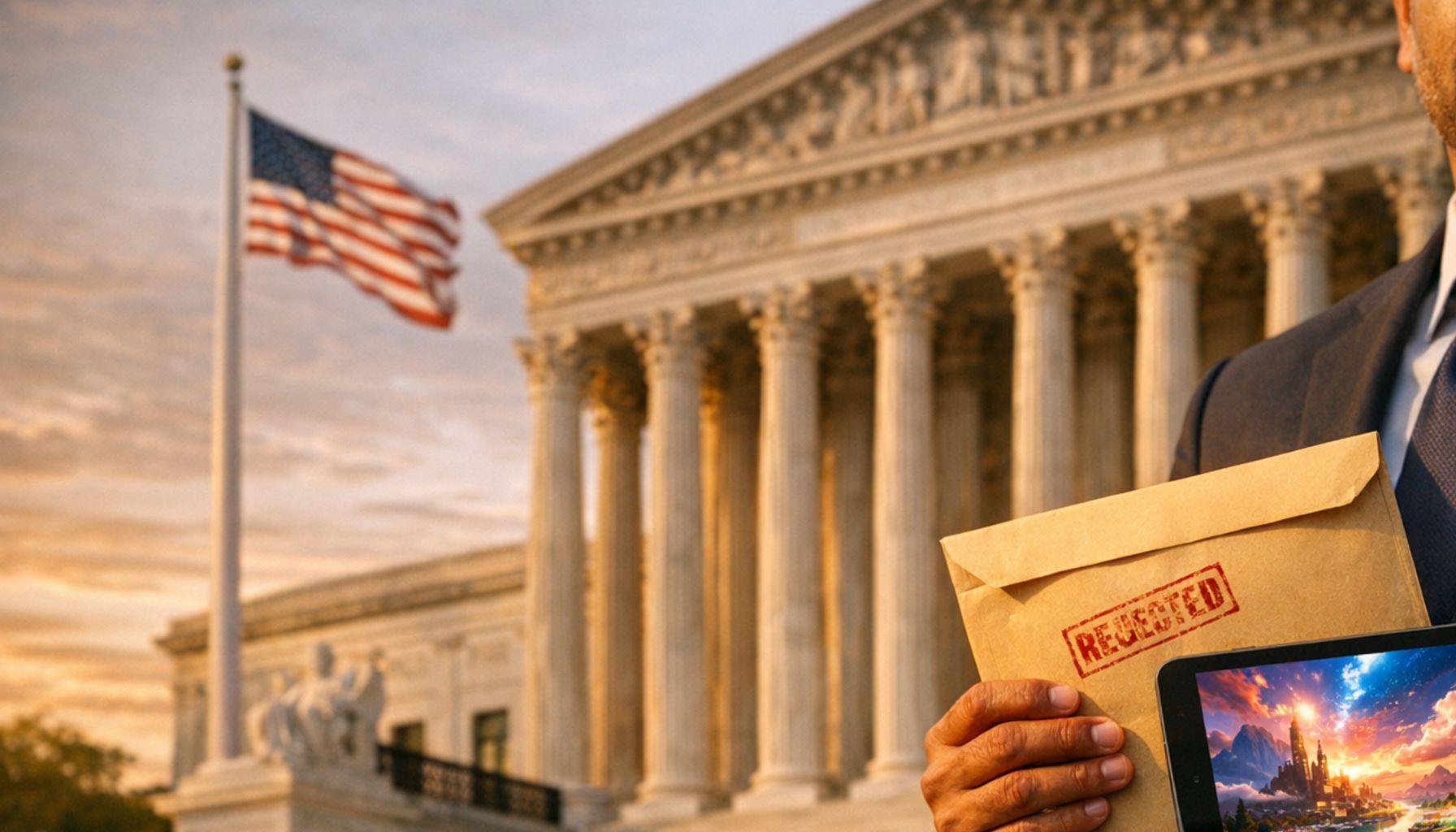
U.S. Congressional candidates use strategic posts and signals to attract A.I. and crypto industry money
The campaigns for the United States Congress in 2026 are arriving with an ingredient nobody expected to see with this much force in American election cycles. Candidates on both sides of the political spectrum have figured out that publicly positioning themselves on artificial intelligence and cryptocurrency works like a kind of password to unlock mountains of cash from the wealthiest tech industries on the planet. And we are not talking about modest donations or symbolic endorsements — we are talking about millions of dollars being transferred within weeks of a single strategic social media post or a well-placed opinion piece.
The mechanism is relatively simple to understand, even though its implications are enormous. Democratic and Republican candidates have started including strategic posts on platforms like X, carefully written op-eds, and themed sections on their official campaign websites that function as literal flashing beacons for so-called super PACs — those political action committees that, under American law, can inject unlimited amounts of money into electoral races. The artificial intelligence industry and the cryptocurrency sector have built billion-dollar structures specifically to identify and support candidates who show themselves favorable to a friendlier regulatory environment, and the speed at which this money moves surprises even the most seasoned political analysts in Washington.
Both industries entered 2026 with nearly $250 million combined to spend on politics and a clear battle plan to shape the regulatory landscape in their favor. Candidates know this and are acting accordingly — filling out industry questionnaires, writing social media posts, and sprinkling their websites with key phrases that echo corporate talking points. Talking about innovation, praising blockchain, advocating for clear rules and sensible regulation — these are the kinds of buzzwords that industry insiders instantly recognize as signals of support.
Real cases show how tech money is shaping elections
Perhaps the most emblematic example is Jesse Jackson Jr., the former Democratic congressman from Illinois who is attempting a political comeback. Jackson published a detailed opinion piece about how artificial intelligence could be used to ease the burden faced by unpaid caregivers in the United States — a topic that crosses social concerns with technological innovation in a pretty smart way. Within just two weeks of publication, the largest super PAC tied to the A.I. industry announced plans to spend no less than $1.1 million to help him get to Congress.
Worth remembering that Jackson Jr. has had serious legal troubles — he was imprisoned over a decade ago after pleading guilty to spending $750,000 in campaign funds on personal items. Still, in a statement, he justified his support for A.I. by saying that underserved communities cannot miss out on another major economic transformation. On his campaign website, he also expresses support for a framework to regulate cryptocurrencies responsibly and even filled out a crypto industry questionnaire on Christmas Eve last year.
In Texas, the story repeats itself with Republican Jessica Steinmann. She took an even more direct approach and created sections entirely dedicated to A.I. and cryptocurrency on her official campaign website, making it clear her term would be favorable to these industries. The result was a combined investment of more than $1.2 million from the crypto and A.I. industries to help her win her Republican primary on Tuesday. Steinmann spokesperson Mike Thom defended the prominence of these issues on her site, calling A.I. and crypto two of the most consequential industries for the future and stating that any campaign not talking about these subjects is disconnected from voters and the American economy.
Another Democratic candidate in Illinois, Melissa Bean, chose the social media route and published a post on X defending innovation in A.I. combined with what she called smart guardrails — a subtle way of saying she supports the technology but recognizes the need for some level of regulation. The main A.I.-linked super PAC began spending another $1.1 million to support her in this month’s primary. Bean declined to comment.
This pattern is no coincidence, and it is not limited to a handful of isolated races. It repeats itself in electoral contests across the country. Another Democratic candidate in Illinois used the top position on her website’s issues list — above even jobs and cost of living — to express her belief in blockchain-based assets, while the crypto industry spent $1.7 million to oppose one of her rivals. A Republican candidate in Texas, attorney Chris Gober, who has actually worked for Elon Musk, placed a section about American dominance in A.I. on his policy page, right after defending the Constitution. The result? Nearly $750,000 spent by the A.I. super PAC on his behalf, helping him dominate his Republican primary without a runoff.
A deal with the devil? Critics are not holding back
Good governance and political transparency advocates are dismayed by what they see as public prostration in exchange for money. Tiffany Muller, president of End Citizens United, a liberal group that seeks to limit the influence of money in politics, summed up the situation bluntly: campaign websites that once served to communicate to voters what a candidate believes in have now become a signaling apparatus for wealthy special interests.
Muller called the phenomenon a distortion of democracy. According to her, these industry-aligned super PACs now play an enormous role in deciding who gets to run, who gets to compete, and who gets to win — and what they expect in return is a return on investment. The claim is heavy, but the numbers back up the argument.
The case of Congressman Al Green, a Texas Democrat who sits on the House Financial Services Committee and has opposed crypto industry priorities, illustrates well how this money can be used both to support allies and punish adversaries. Fairshake, the crypto industry’s main super PAC — which started the year with an impressive $193 million in its war chest — directed $1.5 million to try to elect Green’s opponent in the Democratic primary, County Judge Christian Menefee. Green ended up behind Menefee in the voting, but since neither reached 50%, the race heads to a runoff in May.
Green accused Menefee of having made a deal with the devil for filling out a crypto industry questionnaire in January — on which he received an A grade. In an interview, Menefee said he saw blockchain as a potential solution for record-keeping problems he had encountered in local government and that he was absolutely not aware of the crypto industry’s enormous political financial firepower. When the spending showed up, he said he was just as surprised as everyone else.
Behind the scenes of the A.I. and crypto super PACs
To understand the scale of what is happening, you need to know the structures behind these investments. The largest pro-A.I. super PAC, called Leading the Future, is primarily funded by $25 million from venture capital firm Andreessen Horowitz and $12.5 million each from Greg Brockman, co-founder of OpenAI, and his wife Anna. The Brockmans and Marc Andreessen are also among the top donors to President Trump’s super PAC. The group operates with separate affiliated super PACs for Republicans, called American Mission, and for Democrats, called Think Big.
Josh Vlasto and Zac Moffatt, the Democratic and Republican strategists who run Leading the Future, said that as more candidates step forward to champion this balanced, pro-innovation approach, the group will be at their side as a committed supporter. An important detail is that Vlasto serves as strategist for both Leading the Future and as spokesperson for Fairshake, the crypto industry’s main super PAC — an overlap that highlights the intimate connection between the political strategies of these two industries.
The A.I. industry’s efforts are modeled, in part, on what the crypto industry did in 2024, when it spent heavily in primaries and general elections for both parties. In some races that cycle, the crypto industry sought to punish candidates seen as skeptical, like Katie Porter in a California Senate race. In others, it spent big to send new allies to Capitol Hill.
But not all of the A.I. industry is aligned. A second network of A.I.-funded super PACs has emerged under the name Public First, whose nonprofit arm is backed by Anthropic, a rival artificial intelligence startup. Anthropic’s leadership has advocated for stricter regulation than much of the sector and warned about misuse of the technology. The two A.I. groups have even clashed head-on in a House race in New York, and the super PAC with Anthropic ties revealed it was spending nearly $1 million to oppose Jesse Jackson Jr. — essentially canceling out the investment from the super PAC with OpenAI ties. It is A.I. versus A.I. in the political arena 🤖
In another recent contest, one of the super PACs affiliated with Public First spent $1.6 million to help Representative Valerie Foushee, a North Carolina Democrat, narrowly fend off a progressive challenger in the primary who had called for a moratorium on data centers. The support came shortly after Foushee was named in late 2025 by Democratic leader Hakeem Jeffries as co-chair of a new House Democratic Commission on A.I. and the Innovation Economy — a role that made her a key player in future regulatory battles.
The weight of regulation in the political and tech game
To understand why so much money is involved in these campaigns, you need to look at the broader context of what is happening in Washington. Both artificial intelligence and cryptocurrency are living through an absolutely critical moment in terms of regulation. The American Congress has dozens of bills on the table that could define the future of these industries for decades, from rules about how language models can be trained and used to complete frameworks for the taxation and oversight of digital assets. Every vote in the Senate or the House of Representatives can mean billions of dollars in revenue or losses for companies in the sector, which explains the almost unlimited willingness of these companies to fund candidates aligned with their interests.
The regulation question is particularly sensitive because it involves a delicate balance between protecting consumers and not stifling innovation. In the A.I. field, there are legitimate concerns about algorithmic bias, data privacy, labor market impact, and national security. In the cryptocurrency universe, debates revolve around protection against fraud, money laundering, financial stability, and the role digital assets should play in the traditional banking system.
Colin McLaren, head of government relations at the Solana Policy Institute, a nonprofit group aligned with the crypto industry, defended the dynamic by saying that the fact that candidates want to develop a strong relationship with the industry is simply how politics has worked for quite some time. He argued that the industry is using this as a gateway, but that it has built genuine champions who are not just there for the money — they are there because the technology matters and because they went through a real awakening on the issue.
The expensive battle in Illinois and the ironic attacks
In the Jesse Jackson Jr. race in Illinois, the situation has become especially complex and, for many, ironic. The A.I. industry is spending on behalf of Jackson at the same time the main crypto super PAC is bombarding the district with attacks against one of his opponents, Robert Peters, a Democratic state senator who voted in favor of state legislation the crypto industry opposed.
One of the campaign mailers sent out accuses Peters of being a fighter for corporate interests and calls him a corporate pawn — even though the material is funded precisely by the crypto industry. The irony did not go unnoticed. In an interview, Peters called the attacks outrageous and criticized Jackson’s not-so-subtle solicitations toward tech money.
Peters was straight to the point: the reason someone sends that kind of signal is because they are desperate enough to be bought by A.I. and crypto. He added that he hoped the fact that major Trump donors were funding attacks against him in a Democratic primary would end up generating a backlash among voters. If someone is willing to sell themselves to A.I., Peters said, they are willing to sell themselves to people who have a deep relationship with the Trump administration.


A precedent that goes beyond the United States
The idea of soliciting super PAC support by posting about seemingly specific topics is not exactly new. Four years ago, crypto financier Sam Bankman-Fried — who would later be convicted of fraud and saw his exchange FTX collapse into bankruptcy — spent heavily in primaries. At the time, he and his associates directed spending under the guise of supporting candidates who promised to prioritize pandemic preparedness. Many candidates did indeed start publicly promoting the pandemic preparedness theme, including Jonathan Jackson, Jesse Jackson Jr.’s brother, who posted extensively about the topic just days before a Bankman-Fried-funded super PAC spent more than $500,000 on his behalf. Jonathan Jackson is now a member of Congress.
What makes the 2026 cycle different is the scale and sophistication of the operation. After the Texas primaries, Leading the Future celebrated its supported candidates’ victories in an internal memo that said it was building the bench of A.I. champions in Congress for the coming decades. That language reveals the long-term ambition — this is not just about winning one election, but about creating a permanent caucus of industry-friendly lawmakers.
What this means for the future of tech and politics
There is an important side effect in this dynamic that deserves attention. When campaign funding becomes so heavily conditioned on positioning around specific topics like A.I. and cryptocurrency, it creates a kind of filter that can determine who actually gets to compete in an election and who falls by the wayside. Candidates who do not take a position on these issues or who advocate for stricter regulation risk being left without the resources needed to go up against opponents supercharged by big tech money. This has direct implications for the diversity of voices within Congress and the quality of legislative debate on issues that affect the lives of millions of people.
Beyond that, the phenomenon raises questions about transparency and authenticity in political discourse. When a candidate publishes an article about artificial intelligence or creates a page dedicated to cryptocurrency on their campaign website, the average voter cannot always tell the difference between a genuine conviction and a calculated fundraising strategy. The line between believing in something and performing a belief to attract funding gets thinner and thinner, and this can erode public trust in the democratic process as a whole.
For anyone following the tech world, this scenario is both fascinating and concerning. Fascinating because it shows how topics that just a few years ago were considered niche — artificial intelligence and cryptocurrency — are now at the epicenter of the fight for political power in the world’s largest economy. Concerning because the way regulation of these technologies gets defined will have a direct impact on how we use A.I. in our daily lives, how our data is handled, how digital financial transactions work, and who benefits — or loses — from the technological transformations happening right now.
The money being poured into these campaigns is not philanthropy. It is a strategic bet, and the expected return will come in the form of laws that could shape the global tech ecosystem for years to come. Super PACs operate within the law, but the volume of resources they move and the way that money influences candidates’ positions challenges the idea that every citizen carries equal weight in a democracy. And at the end of the day, what is at stake is not just the outcome of a few American primaries — it is the legal framework that will determine how billions of people around the world interact with artificial intelligence and digital assets in the decades ahead 🤔