What’s Behind Nvidia’s Investment in Lumentum
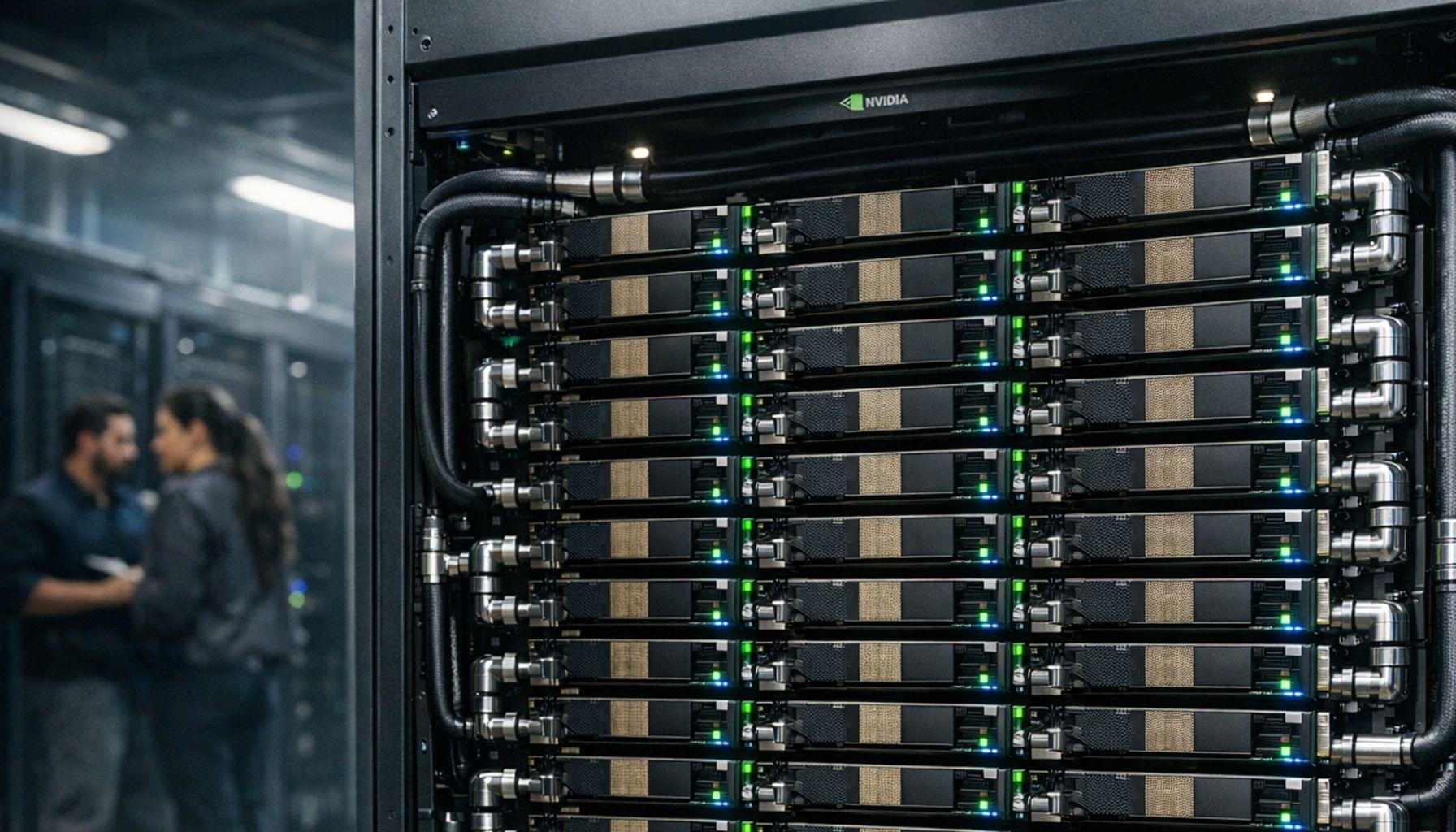
Nvidia is going all in on one of the most critical bottlenecks in artificial intelligence infrastructure: moving data at ultra-high speeds between chips, servers, and clusters inside data centers. To tackle this challenge, the company announced a long-term strategic partnership with Lumentum Holdings, one of the top global names in optical and photonic technologies. As part of the deal, Nvidia will make a $2 billion investment in Lumentum, with the funds earmarked to expand research and development, ramp up manufacturing capacity, and bankroll the construction of a brand-new factory in the United States.
But this deal goes way beyond a simple cash injection. It includes a multibillion-dollar purchase commitment for advanced laser components and secures Nvidia future access to Lumentum’s production capacity through a non-exclusive partnership. The message is loud and clear: optics is no longer a supporting player — it has taken center stage when it comes to scaling AI computing for the years ahead.
To get a sense of just how big this move is, keep in mind that Nvidia already dominates the GPU market for training and running inference on language models, computer vision, and a wide range of other AI applications. But as models grow larger and more complex, chip performance alone isn’t enough anymore. The real bottleneck has shifted to how fast and efficiently data travels between components inside a data center. That’s exactly where Lumentum fits into the picture, supplying optical transceivers, lasers, and other photonic components that transmit massive volumes of information using light — with minimal latency and far lower energy consumption than traditional electrical connections.
The investment also reflects a broader trend across the tech industry. Companies like Microsoft, Google, and Meta have been rapidly expanding their data centers to handle increasingly demanding AI workloads. All of that expansion is driving surging demand for high-performance optical components, and current manufacturing capacity simply can’t keep up. By locking in a strategic partnership with Lumentum and funding the construction of new production lines on American soil, Nvidia is essentially future-proofing its supply chain and positioning itself to meet the demand that’s expected to explode in the coming years.
Why Optics Became a Key Piece of AI Infrastructure
The connection between optics and artificial intelligence might seem like a stretch at first glance, but in practice, it’s one of the most important links in modern computing. When an AI model like a large language model is trained, it needs to distribute computations across thousands of GPUs working in parallel. Those GPUs have to constantly exchange information with each other, and any delay in that communication drags down the performance of the entire system.
Traditional electrical connections using copper cables work fine over short distances, but they start hitting serious limitations as data volumes grow and distances within data centers increase. That’s where optical components step in as the solution, using beams of light to transmit data with significantly higher bandwidth and considerably lower power consumption.
As Jensen Huang, founder and CEO of Nvidia, pointed out, artificial intelligence has reinvented computing and is driving the largest expansion of computational infrastructure in history. According to him, the partnership with Lumentum aims to advance the development of the most sophisticated silicon photonics technologies to build the next generation of gigawatt-scale AI factories.
Lumentum is one of the few companies in the world with a proven ability to produce these components at industrial scale with the quality demanded by the biggest tech players on the planet. Headquartered in San Jose, California, with research, manufacturing, and sales operations spread across the globe, the company is led by Michael Hurlston. Its high-speed optical transceivers, lasers, and photonic modules are already deployed in data centers worldwide, but the demand triggered by the AI explosion is on a completely different level.
We’re talking about connections that need to operate with rock-solid reliability and ever-increasing energy efficiency. Manufacturing these components is extremely complex — it involves advanced fabrication processes and specialized semiconductor materials, which makes production capacity a scarce and valuable resource.
The Role of Silicon Photonics and Co-Packaged Optics
Another important point is that co-packaged optics is becoming one of the most promising frontiers in the sector. This technology integrates optical components directly into switches and the chips themselves, eliminating bottlenecks and further reducing power consumption. Nvidia has already been signaling interest in this approach across its networking platforms, and having Lumentum as a strategic supply chain partner makes it much easier to adopt this technology at scale.
On top of that, Lumentum is already developing essential technologies not just for AI and cloud computing, but also for advanced communications, telecom networks, industrial manufacturing, and sensing applications. This breadth of expertise makes the company an even more valuable partner, since optical breakthroughs developed for AI data centers can be leveraged and adapted for other market segments.
The $2 billion investment is, therefore, much more than a financial transaction — it’s a bet on the architecture that will define how AI data centers operate over the next decade.
Manufacturing in the United States and the Strategic Impact
One of the most significant aspects of this deal is the commitment to building a new optical component factory in the United States. In a global landscape marked by geopolitical tensions and growing concerns about semiconductor supply chain security, bringing the manufacturing of critical components onto American soil is a heavyweight strategic decision.
Nvidia isn’t just diversifying its suppliers — it’s helping create domestic production capacity in a segment that has historically relied on factories in Asia. This aligns directly with the incentives from the CHIPS Act and with U.S. industrial policy, which aims to strengthen local production of technologies considered essential for national security and economic competitiveness.
Lumentum CEO Michael Hurlston reinforced this vision by stating that the multi-year strategic agreement reflects the shared commitment between both companies to advance the optical technologies that will power the next generation of AI infrastructure. According to Hurlston, in support of this collaboration, Lumentum is also investing in a new factory to increase capacity and accelerate innovation, and the company is excited to work alongside Nvidia to push the boundaries of what’s possible for future AI optical architectures.
For Lumentum, the investment represents a complete transformation in the company’s scale of operations. With Nvidia’s resources and a long-term purchase commitment, the company gains the financial predictability it needs to expand its production lines, hire specialized engineers, and invest in research and development of new products.
The optics market for data centers is expected to grow dramatically over the next few years, and having Nvidia as both a partner and a customer simultaneously puts Lumentum in a prime position to capture that opportunity.


What This Means for the Artificial Intelligence Ecosystem
This move by Nvidia is part of a broader company strategy to strengthen the entire hardware ecosystem behind artificial intelligence. Recently, the company announced multiple partnerships focused on improving networking, connectivity, and infrastructure for large-scale AI systems. The investment in Lumentum fits into this context as yet another piece of a much larger puzzle.
For the artificial intelligence ecosystem as a whole, this move signals that the race for AI infrastructure is entering a new phase. Having the best chips is no longer enough — you need to ensure that the entire supply chain, from lasers and optical transceivers to network switches and cooling systems, is ready to handle the scale that AI models demand.
Nvidia figured this out ahead of many competitors and is building a vertical ecosystem that spans from silicon to light, encompassing software, hardware, and now the manufacturing of the components that connect it all together. By securing long-term supply and investing directly in manufacturing capacity, the company is positioning itself to meet the growing global demand for AI-powered data centers.
The trend is for other major market players to follow similar paths, pursuing partnerships and direct investments in optical component suppliers to protect their supply chains and ensure access to the technology needed to scale their data centers. The AI game is increasingly tied to the physical world, and whoever controls the manufacturing of the components that make data travel at the speed of light will hold a competitive advantage that’s tough to replicate. 🚀