What changes with the deal between tech companies and the US government
The biggest tech companies in the world just took a major step toward solving a problem that had been keeping regulators, consumers, and infrastructure experts up at night across the United States. A deal struck directly with the Trump administration establishes that companies like Microsoft, Google, and Anthropic will cover the costs of expanding and maintaining the power grid needed to feed their massive artificial intelligence data centers. In practice, this means the multibillion-dollar bill for upgrading the country’s energy infrastructure will no longer land on everyday consumers. The pact turns into official policy something some of these companies had already been doing voluntarily, but without any formal commitment or public oversight.
The numbers that explain the urgency behind the deal
To understand the scale of the problem, just look at the numbers presented by Michael Jacobs, senior climate and energy manager at the Union of Concerned Scientists. According to his estimate, across just seven of the 13 East Coast states served by the PJM Interconnection high-voltage grid, residents were already facing an estimated bill of at least $3.1 billion in grid expansions driven directly by data center growth, based on PJM’s 2025 spending plan.
The figures are staggering when you break them down state by state. Illinois would be on the hook for $637 million. Pennsylvania, $647 million. And Virginia, home to one of the highest concentrations of data centers on the planet, would carry the heaviest tab: no less than $1.4 billion. And the most concerning detail is that Jacobs was only talking about seven states within the PJM system — not counting the rest of the country.
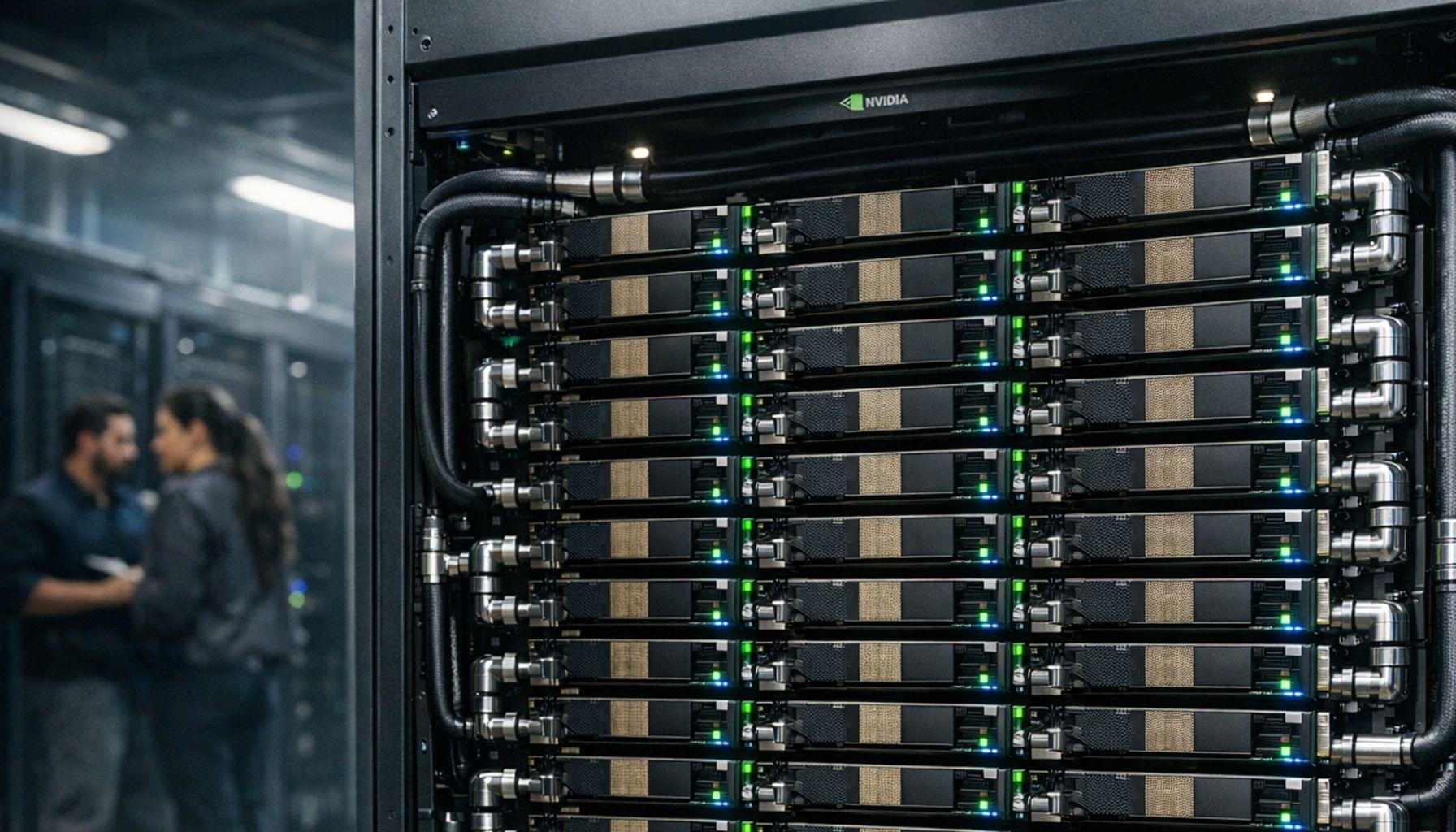
These facilities consume energy on an absurd scale, equivalent to entire cities running 24 hours a day, seven days a week. And the trend is for that demand to only grow, since artificial intelligence models keep getting larger and more complex, requiring more computing power and, consequently, more electricity. Without a clear mechanism to determine who pays for all of this, there was a real risk that millions of American families would see their energy bills skyrocket without having any connection to these data centers’ consumption.
The power grid was already at its breaking point
The stress on American energy infrastructure didn’t come out of nowhere. As Darryl Lawrence, a consumer advocate attorney in Pennsylvania, pointed out, the grid had already been operating under pressure. In his words, simply plugging in a gigantic hyperscale data center — one capable of consuming as much energy as a mid-sized city or even more — is not something that benefits the reliability of the electrical system as a whole. The concern is legitimate and shared by energy regulators across multiple states.
The deal represents, in this context, a shift in posture by the government, which has now officially acknowledged that the expansion of artificial intelligence needs to come with financial responsibility from those who profit from it. This isn’t about slowing down technological development — it’s about making sure progress doesn’t come at the public’s expense. By committing companies to generate or procure their own energy, the deal reduces the risk of all this additional demand overwhelming the American grid in an uncontrolled way. That sends a strong message both domestically and globally, where other countries face similar dilemmas as they try to balance tech innovation with sustainable basic infrastructure.
Still, as analysts point out, there may only be a marginal political benefit for the president in a deal that ultimately helps keep the lights on — something already treated as a basic federal obligation. The real test will come when consumers feel, in practice, whether energy rates have actually stopped climbing because of data centers or not.
Why tech companies agreed to foot the energy bill
It might seem odd, at first glance, that tech giants would voluntarily take on such massive expenses. But the decision makes a lot of sense when you look at it strategically. The deal was clearly designed for the biggest companies — the ones with enough cash to cover upfront infrastructure costs without putting their operations at risk.
An important point is that the pact puts on paper goals that serve both sides’ interests. Trump faces pressure to deal with rising electricity prices, while energy is absolutely essential for the major tech companies. If higher utility costs start hitting American families’ wallets, public support for an unchecked AI boom could sour fast. Nobody wants to be the villain behind people’s electric bills.
Companies like Microsoft and Google know that relying on political goodwill and consumer patience isn’t a sustainable long-term strategy. By formalizing the deal, they gain regulatory predictability and avoid the risk of facing far more restrictive legislation down the road. As Ryan Wiser, senior scientist at the Department of Energy’s Lawrence Berkeley National Laboratory, observed, there have never before been large-scale customers with enough resources and profit margins to — putting it bluntly — cover their own energy costs. Big tech is breaking new ground here.
Moves that were already happening before the deal
In reality, several of these tech companies had already been heading in this direction on their own. Microsoft, for example, signed a 20-year contract with energy giant Constellation Energy in 2024 to restart the Three Mile Island nuclear plant in Pennsylvania. The idea is that the energy generated by the plant offsets the consumption of Microsoft’s data centers, adding electrons to the grid instead of just drawing from it.
Anthropic had also publicly committed to covering electricity price increases tied to its operations. Google, for its part, maintains similar commitments around energy generation for its data centers. According to a senior White House official, these negotiations had been going on for months, and the formal agreement with the government works as a consolidation of these individual moves into a collective, more robust commitment.
Many US states, by the way, had already created separate rate structures — known as tariffs — for large energy consumers like data centers. These structures included contractual commitments to prevent tech companies from shifting costs onto other consumers. In some cases, the companies were required to pay for most of the energy they planned to use, even if their data centers never actually got built.
The race for global competitiveness
Beyond the reputational angle, there’s a very practical factor at play. These tech companies need fast approvals to build new data centers and connect their facilities to the power grid. When local communities start pushing back against these projects over fears of rising energy costs, the entire expansion process gets stuck in legal and bureaucratic battles. With the public commitment that they’ll pay for the necessary infrastructure upgrades themselves, local resistance tends to drop significantly, paving the way for faster and less contentious growth.
The United States isn’t the only country racing to become the leader in AI. China, European nations, and even countries in the Middle East are investing heavily in data center infrastructure. If American companies can’t scale their operations quickly because of energy bottlenecks, they lose ground in this competition. That’s why taking on energy costs in a transparent and organized way is actually a way to ensure the American artificial intelligence ecosystem stays competitive and attractive to investors and talent from around the world.
The challenges that still lie ahead
Despite being a significant step forward, the deal doesn’t solve everything at once. The American power grid, broadly speaking, was already facing modernization challenges well before the artificial intelligence boom. Much of the infrastructure is decades old and needs heavy investment regardless of data center demand. That means even with tech companies covering their own share, there’s still a structural deficit that will require attention — and money — from state and federal governments.
The complexity of splitting the costs
As Sarah Friedman, co-founder of the Better Data Center Project, an organization that promotes community engagement in data center development, warned, the way these costs are allocated is extremely complex. According to her, we’re in a new world, and some of the existing mechanisms simply don’t work for this consumption model. Tech companies have also tried, on multiple occasions, to limit how much they cover of the indirect costs their operations impose on the grid — meaning impacts that go beyond simple energy consumption and include wear and tear, transmission line expansion, and substation upgrades.
Existing consumer protection mechanisms, while helpful, don’t guarantee capturing all the costs involved. The rate structures created by states, however well designed, still have gaps when confronted with the unprecedented scale of new artificial intelligence data centers. It’s a situation where regulation is trying to catch up to a technology that moves at a much faster pace than the energy sector’s laws and rules can adapt.


Oversight and enforcement of commitments
There’s also the concern around oversight and actually enforcing the commitments that were made. A deal between tech companies and the government only works if there are clear tracking mechanisms and penalties for those who don’t hold up their end. History shows that voluntary commitments from the tech industry don’t always translate into concrete action once the spotlight fades. State regulators and consumer advocacy organizations will need to stay actively vigilant to ensure that energy costs truly aren’t passed on to the public, whether directly through rates or indirectly through disguised public subsidies.
The pace of artificial intelligence growth could outstrip any forecast made today. Increasingly sophisticated models demand amounts of energy that would have been unthinkable just two or three years ago. If demand grows far beyond expectations, the current deal may need frequent revisions to remain fair and functional.
What this move means for the future of AI and energy
What’s clear is that the relationship between artificial intelligence and energy infrastructure is going to be one of the defining issues of the next decade. The deal struck between big tech and the US government sets an important precedent: whoever creates the demand should cover the costs of sustaining it. It’s a simple principle, but one that until recently had no formal weight in the tech sector.
For everyday consumers, the expectation is relief on their bills — or at least that the explosion of AI data centers won’t become yet another factor driving up the cost of electricity. For tech companies, the deal brings legal and regulatory certainty, along with a stamp of responsibility that could prove decisive when it comes to winning local support for new projects.
And for the rest of the world, this first step taken in the United States will certainly serve as a reference point. European, Asian, and Latin American countries that also face the dilemma between attracting AI investment and protecting their power grids will be watching closely to see how this model works in practice. The success or failure of this American experiment could define how the entire planet deals with the energy appetite of artificial intelligence in the years ahead 🔌