Anthropic Gives Claude Computer Control and SK Hynix Places a Historic $8 Billion Order with ASML
Anthropic and SK Hynix made two of the most talked-about moves in tech over the past few days, and it’s not hard to see why.
On one hand, Anthropic just announced a new capability for Claude that puts the assistant in direct control of your computer, opening the door to a new generation of AI agents that do way more than just answer questions.
On the other, SK Hynix closed what may be the largest single order in ASML history, placing an order for no less than $8 billion in cutting-edge chip manufacturing equipment.
These are two events that, at first glance, seem to have nothing in common, but in practice they tell the exact same story 👇
Artificial intelligence is growing on two fronts at the same time: in software, with increasingly autonomous and capable agents, and in hardware, with an accelerating race to produce the chips that will power all of it.
Let’s break down what each of these developments means and why they matter so much for the industry right now.
Claude Taking Control of Your Computer: What Anthropic Actually Announced
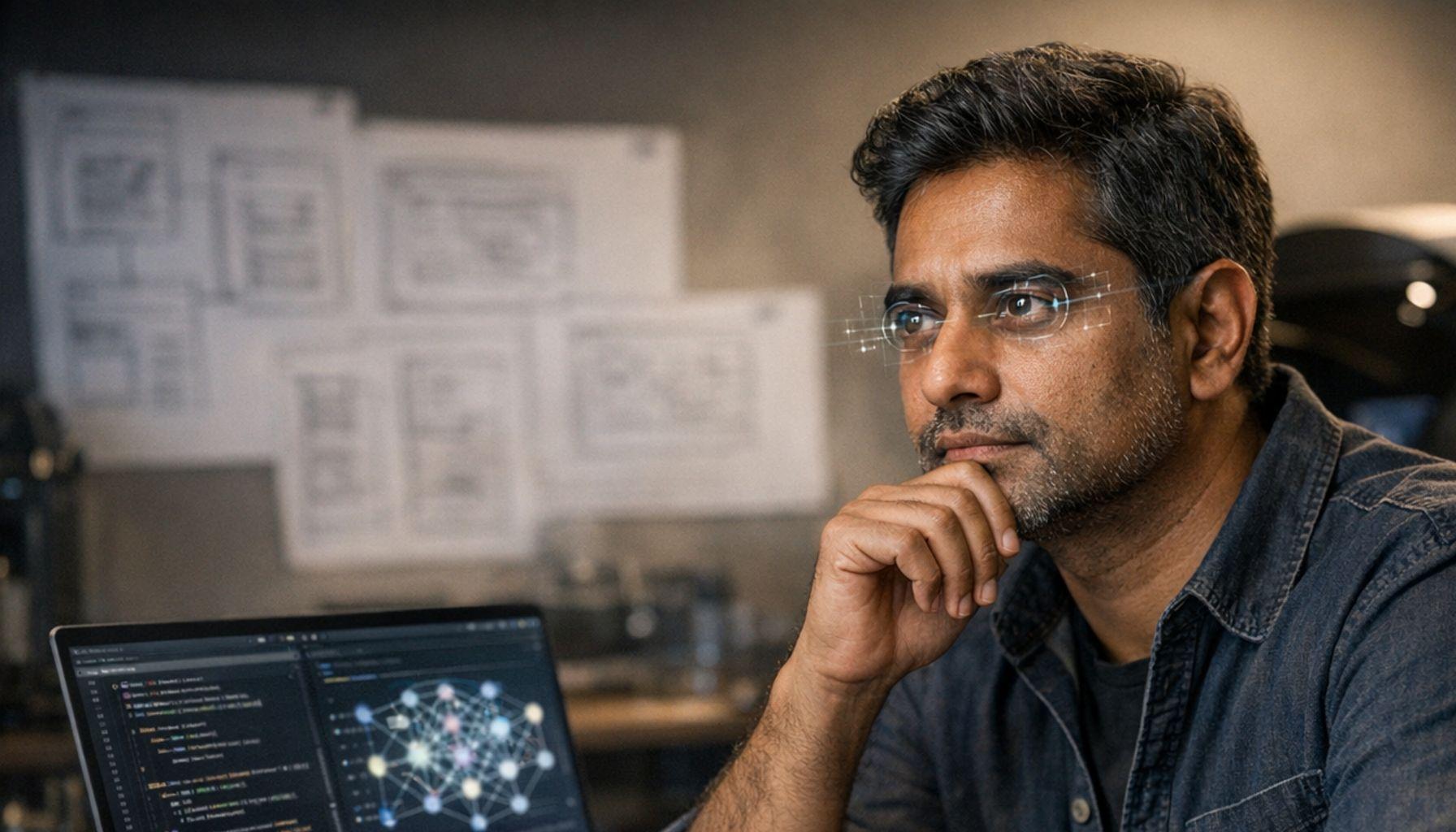
Anthropic took a step many people were expecting, but one that still surprised everyone with how it was executed. The company announced a new feature for its Claude Cowork and Claude Code tools, allowing Claude to take direct control of a computer. In practice, this means it can move the cursor, click buttons, type text, browse web pages, and access different files and applications — all autonomously, without the user needing to step in at every stage.
This isn’t just a feature update. It’s a paradigm shift in what we expect from an artificial intelligence assistant.
This capability, internally called computer use, puts Claude in territory that goes far beyond what language models used to do. Before, the role of an assistant like this was basically to answer questions, summarize text, generate code, or help with writing tasks. Now, it can literally operate a digital workspace the same way a human would — opening files, interacting with graphical interfaces, and chaining complex actions together to complete a goal defined by the user. It’s like having a digital intern who doesn’t need instructions at every click.
The practical impact is huge for anyone working in automation, software development, data analysis, or any field that involves repetitive computer tasks. Companies that currently spend hours setting up automation pipelines with traditional RPA tools may find Claude to be a more flexible and adaptable alternative, since it can handle interface changes and unexpected contexts in ways that traditional scripts simply can’t.
Security Is a Central Concern
Anthropic made a point of emphasizing that it’s implementing safeguards to prevent bad actors from exploiting these advanced agent capabilities. This is a legitimate concern that has gained more attention in recent months, especially after the rise of OpenClaw, an open-source AI agent platform launched in November.
OpenClaw, developed by Peter Steinberger, who later joined OpenAI, allows users to set up AI agents capable of executing tasks directly on their computers — from checking emails to managing system files. The tool became a hit among the more technical crowd, but it also raised red flags among cybersecurity experts.
In February, for instance, an AI safety and alignment researcher at Meta‘s Superintelligence lab reported on X that her own OpenClaw agent mass-deleted emails without any permission. This kind of incident shows exactly why companies like Cisco and NVIDIA are racing to launch security tools specifically designed to protect against rogue AI agents.
Cisco itself recently introduced a series of new security offerings designed for exactly this scenario, acknowledging that giving an AI model the power to control an entire computer is great when it works, but can cause serious problems when something goes wrong — like the permanent deletion of important emails or entire system programs.
Why This Shift Matters Beyond the Hype
When Anthropic launches something like this, it’s worth pausing to think about what’s happening at a more structural level in the industry. Claude evolving from just a text model into an agent capable of acting in the real world represents a transition that many artificial intelligence researchers considered the next big leap for the field. And that leap is happening now, not in some distant future.
Autonomous AI agents that can perceive the digital environment around them and make decisions based on it are the kind of technology that starts redefining what productivity means at work. Someone with access to an agent like this can delegate not just content creation or data analysis, but the execution of entire processes — from research all the way to the final delivery of a result. This has profound implications for careers, corporate workflows, and the very concept of digital work.
Anthropic‘s move in this direction puts direct pressure on competitors like OpenAI, Google DeepMind, and Meta AI, which are also developing similar capabilities for their own models. The AI agent market is becoming one of the most fiercely contested battlegrounds in tech, and whoever manages to deliver the most reliable, secure, and useful experience will come out ahead.
Anthropic has been leaning hard into the safety and control narrative, and the launch of computer use seems to have been carefully calibrated to keep that reputation intact while pushing the boundaries of what Claude can do.
SK Hynix and ASML: $8 Billion That Say a Lot About the Future of Chips
On the other side of the world, SK Hynix was closing a deal that made the entire semiconductor industry stop and pay attention. The South Korean company, one of the largest memory manufacturers on the planet, placed an order for 11.95 trillion won (roughly $7.97 billion) in advanced EUV lithography equipment from ASML, the Dutch company that makes the most advanced chip manufacturing machines in the world.
For context: ASML is essentially a monopoly in EUV technology, the process used to manufacture the most modern and dense semiconductors in existence. Without it, no cutting-edge chip factory can operate.
According to SK Hynix’s regulatory filing, the equipment purchase is expected to be completed by December 31, 2027, and will be used for mass production of new products. Market analysts point out that the equipment is destined for both the company’s new plant in the city of Yongin, whose opening was moved up to February 2027, and the M15X factory in Cheongju, which will produce high-bandwidth memory chips, commonly known as HBM.
HBM: The Ingredient AI Can’t Live Without
HBM is exactly the type of chip used in AI accelerators like those from NVIDIA. It’s a critical ingredient for next-generation GPUs, and demand for it has exploded alongside the artificial intelligence boom of the past two years. Without enough HBM memory, there’s no way to scale the data centers running models like Claude itself or any other large language model.
This high-demand scenario became even more evident with Micron‘s recent results, another giant in the memory sector. The company reported earnings per share of $12.20 on revenue of $23.86 billion in the second quarter, representing a 682% increase in profit and 196% jump in revenue compared to the same period last year. The outlook for the third quarter also beat analyst expectations, showing that the hunger for AI memory chips shows no signs of slowing down.
What makes the SK Hynix deal with ASML even more relevant is the context in which it’s happening. The semiconductor industry went through a downturn between 2022 and 2023, with excess inventory and falling prices. The recovery was driven precisely by AI demand, and SK Hynix is betting that this demand will continue growing for years to come. An $8 billion order is, in practice, a statement that the company believes the AI chip market isn’t slowing down anytime soon.
The Broader Tech Landscape
While Anthropic and SK Hynix grabbed the spotlight, the rest of the industry wasn’t sitting still either. Tech stocks traded in a muted tone on Tuesday, following a market recovery driven by hopes that negotiations between the United States and Iran could ease geopolitical tensions.
Investors are also still digesting NVIDIA‘s announcements from the GTC conference the previous week, where CEO Jensen Huang predicted that AI chip sales could surpass the $1 trillion mark by 2027. The company unveiled new chips and an agentic AI platform, reinforcing its position as the leader in model inference and training.
Other Moves That Caught Attention
-
Wing, the drone delivery company owned by Alphabet (Google’s parent company), announced plans to expand its aerial delivery operations to San Francisco soon. The company is betting on drones as a solution for the last-mile delivery challenges of household items and meals in dense residential areas.
-
Apple confirmed that it will hold its annual WWDC conference on June 8 at its Cupertino headquarters. The event will be particularly important because the company is expected to reveal more details about the Siri overhaul with artificial intelligence, which has faced repeated delays, along with a deeper look at its AI strategy. CEO Tim Cook also mentioned that the launch week of the MacBook Neo, Apple’s first budget MacBook priced starting at $599, was the best week in Mac history in terms of new users.
-
Amazon reported that AWS services in Bahrain experienced outages due to drone activity in the region, amid the conflict in the Middle East. The company is helping customers migrate to alternative AWS regions while working on recovery.


-
Elon Musk unveiled the Terafab project, a mega chip factory in Austin, Texas, that would be a joint venture between Tesla, SpaceX, and xAI. With initial costs estimated between $20 billion and $25 billion, Musk called the project the most ambitious in the history of semiconductor manufacturing, arguing that foundries like TSMC and Samsung can’t produce chips fast enough for the AI and robotics needs of his companies.
-
OpenAI announced the acquisition of Astral, a company that develops tools for the Python programming language, aiming to supercharge its Codex coding tool and compete more effectively with Anthropic’s Claude Code.
-
Uber closed a deal worth up to $1.25 billion with Rivian for the purchase of up to 50,000 fully autonomous robotaxis, with initial deliveries expected in San Francisco and Miami starting in 2028.
-
Figma shares continued to slide after Google updated its Stitch design platform, which competes directly with tools from Figma and Adobe. Google added voice commands to Stitch, allowing users to design interfaces through natural language.
Software and Hardware: Two Wheels on the Same Vehicle
It’s tempting to treat these events as separate stories, but they’re deeply connected. Claude‘s advancement as an autonomous agent is only possible because there’s hardware infrastructure capable of running increasingly larger and more complex models in real time. Every time Anthropic or any other artificial intelligence company expands its models’ capabilities, the demand for computing power grows with it — and that computing power depends directly on chips like the ones SK Hynix produces and the machines that ASML supplies.
This interdependence between software and hardware is one of the most fascinating aspects of the current AI moment. Progress on one side feeds and demands progress on the other, creating an investment cycle that’s moving trillions of dollars around the world. Countries, companies, and governments are all trying to figure out how to position themselves in this race — whether by investing in chip factories, developing language models, or creating regulations that set the rules of the game.
For anyone following the tech industry, what’s happening right now is one of those rare moments when you can clearly see where things are headed. The combination of more capable AI agents, like Claude with computer use, with hardware infrastructure being supercharged by investments like SK Hynix‘s order from ASML, points to an industry that is far from hitting its ceiling.
The pieces are moving fast, and understanding each one individually is just as important as seeing the bigger picture. 🚀