How Claude Reached the Top of the App Store
Claude did not climb to the number one spot among Apple’s free App Store apps through the usual playbook of multimillion-dollar marketing campaigns or influencer partnerships. What happened was far more interesting and, in some ways, unpredictable. Anthropic, the company behind the artificial intelligence assistant, made a decision that shook the U.S. political landscape by setting clear ethical limits on how its technology could be used by military agencies. When the Pentagon tried to expand Claude’s use into operations the company considered outside its safety principles, Anthropic simply said no. That stance triggered a chain reaction that no one could have predicted with precision.
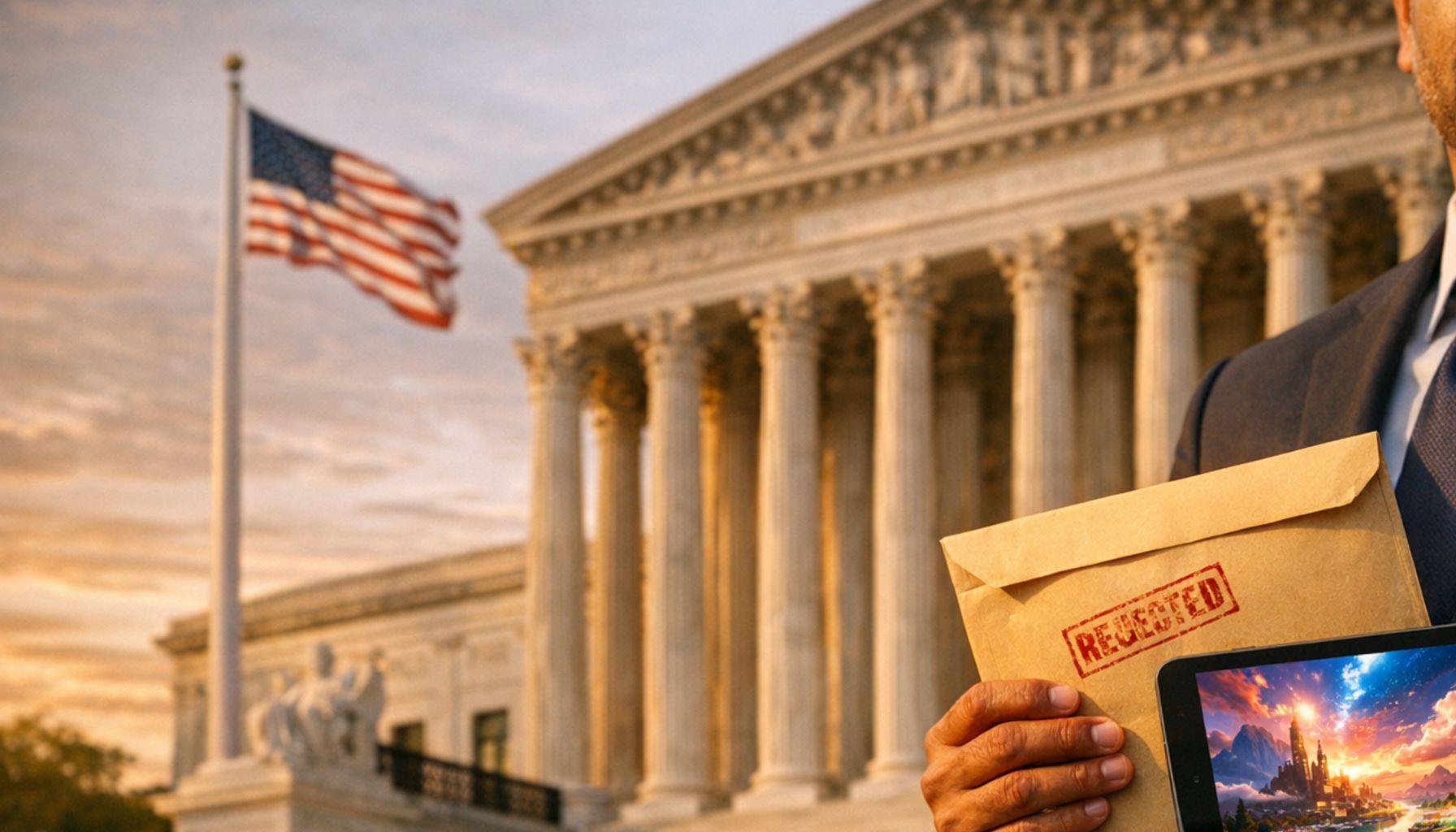
The story begins with a $200 million contract signed between Anthropic and the Pentagon in July. The deal seemed promising for both sides, but tensions emerged when the company asked for guarantees that its AI models would not be used for fully autonomous weapons or for mass domestic surveillance of American citizens. The Department of Defense rejected those restrictions and insisted that the military be allowed to use the platform for any legally permitted purpose, with no exceptions. That standoff became the spark for everything that followed.
The U.S. government was far from happy with the refusal and responded directly. President Donald Trump ordered all federal agencies to immediately stop using Anthropic’s products. Soon after, Defense Secretary Pete Hegseth posted on social media that the Pentagon would begin classifying the company as a national security supply chain risk. What could have turned into a commercial disaster instead became a viral phenomenon. Millions of people around the world saw the company’s move as a bold stand for ethics in artificial intelligence, and the response was massive — a rush to download the app on the App Store that sent Claude straight to the top of the download charts.
Within hours, the app had passed established rivals like ChatGPT and Gemini, showing that the public is paying closer attention to how tech companies operate and is willing to support those seen as aligned with transparency and responsibility. This kind of organic virality is rare, and it carries enormous symbolic weight for the artificial intelligence market. Anthropic did not spend a dime on advertising to get there. What drove millions of downloads was a powerful narrative — the story of a company willing to lose multimillion-dollar contracts with the world’s most powerful government rather than compromise its principles.
Of course, not everyone agrees with that interpretation. Critics argue that the decision may have been more strategic than idealistic, but the impact on the App Store was undeniable, and the numbers speak for themselves. At the same time, rival OpenAI moved quickly into the gap left by Anthropic and signed a deal with the Department of Defense just hours after the government cut ties with its competitor. That made one thing clear: competition in the AI market is not just about models and technology — it also involves political positioning and institutional relationships.
Errors and Instability Amid the Surge in Traffic
It was not all smooth sailing for Anthropic during this wave of explosive popularity. While Claude was celebrating its lead on the App Store, the company’s infrastructure was under intense pressure, resulting in elevated error rates and visible service degradation. Anthropic’s official status page logged multiple incidents on Monday, confirming that its systems were operating above planned capacity.
The Claude status site showed degraded performance specifically affecting Claude Opus 4.6, the company’s latest model, released the previous month. Users around the world reported trouble accessing the app, slow responses, timeouts, and error messages appearing at an alarming rate. For people who had been using Claude before it went viral, the experience was frustrating — the assistant that normally replied quickly and accurately began to fail in ways that disrupted even simple daily tasks.
Anthropic’s team moved quickly to address the situation. At around 10:47 a.m. Eastern Time, an update on the status site said that the issues affecting claude.ai, the console, and Claude Code had been resolved. Two minutes later, at 10:49 a.m., another update said the specific issue affecting Opus 4.6 had been identified and a fix was already in progress.
Shortly before 11 a.m., Anthropic sent a statement to CNBC confirming that services had returned to normal. The company said Claude was back and operating normally across all platforms, including the website and apps. The statement also acknowledged the remarkable demand the assistant had seen in recent days and thanked users for their patience while the team worked to keep up with the unexpected surge in traffic.
Why These Problems Happen
These errors are not exactly surprising when viewed through the technical lens of the situation. Generative artificial intelligence platforms run on language models that require an enormous amount of computing power for every interaction. When the number of simultaneous requests suddenly spikes, as it did during the App Store download surge, servers need to scale up fast to meet demand.
That scaling process does not always happen instantly, and bottlenecks can appear across different layers of the architecture — from load balancing to GPU allocation for model inference. Some of the most sensitive pressure points include:
- Load balancing — efficiently distributing requests across multiple servers when traffic suddenly explodes is one of the toughest engineering challenges
- GPU allocation — models like Opus 4.6 require specialized hardware, and those graphics processing units cannot be provisioned instantly
- Queue management — when demand exceeds processing capacity, requests begin piling up, leading to timeouts and user-facing errors
- Caching and optimization — unlike static content, each interaction with a language model produces a unique response, which limits the usefulness of traditional caching
What is especially interesting is that these errors also sparked a broader discussion about how mature the infrastructure behind artificial intelligence companies really is. Unlike services such as video streaming or social media, which have gone through decades of optimization to support massive user volumes, generative AI platforms are still in a relatively early stage when it comes to operating at huge scale. Claude was not the first to face this kind of challenge and certainly will not be the last. OpenAI’s ChatGPT has had similar issues during peak demand, and Google’s Gemini has also experienced instability. What separates companies in this environment is how quickly they recover and how transparently they communicate problems to users.
The Ethical Question That Moved the Market
At the center of this story is a question that will help define the next several years of the tech industry — should artificial intelligence companies impose limits on how governments use this technology? Anthropic clearly believes the answer is yes, and its decision to restrict the Pentagon’s use of Claude pushed that debate into the public spotlight in a way no academic paper or tech conference could have achieved.
The company has long positioned itself as an organization focused on AI safety, and its founders — former OpenAI members — built Anthropic around the idea that artificial intelligence development must come with strong guardrails. Refusing unrestricted military use of its technology is a logical extension of that stance, but it is also a decision with major financial and political consequences.
Contracts with the U.S. government represent a significant source of revenue for technology companies, and walking away from that money is not a trivial move. Competitors such as Palantir, Microsoft, and even OpenAI itself maintain strong commercial ties with government and military agencies, and none of them has shown any interest in taking the same path as Anthropic. That leaves the company in a unique position in the market — admired by a meaningful portion of the public while potentially cut off from one of the largest technology buyers on the planet.
The Troubling Precedent
The government’s decision to ban Anthropic products across all federal agencies raises serious concerns about the precedent it sets. If companies can be punished for placing ethical limits on the use of their technologies, the incentive for others to do the same drops sharply. That dynamic could create a situation where only companies willing to accept any government demand without pushback are able to maintain public contracts — and that is not exactly the kind of environment that supports responsible innovation.
The fact that OpenAI signed a deal with the Department of Defense just hours after the break with Anthropic reinforces that concern. The message beneath the surface is clear — if one AI company refuses to cooperate without restrictions, another will be ready to take its place. That race for government contracts could end up pressuring the entire sector to loosen safety and ethical standards in the name of commercial competitiveness.


What Comes Next for Claude and Anthropic
As this debate continues, Claude is still benefiting from the visibility it gained in the App Store. Its user base has grown significantly, and Anthropic is now facing a twofold challenge: fixing infrastructure issues while turning this wave of interest into long-term engagement.
Stabilizing the systems is the first step, but maintaining service quality and continuing to innovate in artificial intelligence models will determine whether this popularity holds over time. Claude Opus 4.6, even with the performance issues recorded on Monday, represents a meaningful step forward in the company’s model lineup and remains one of the most advanced options on the market for people looking for a versatile and capable AI assistant.
The company also needs to find ways to monetize this new user base without hurting the free experience that attracted millions of people in the first place. The balance between offering enough value in the free tier and encouraging upgrades to paid plans is a delicate dance that every SaaS company knows well, but it takes on added complexity when the user base grows so suddenly and so emotionally.
One thing is certain — this episode showed that ethical decisions can have more impact than any marketing campaign, and that the public is paying attention to who is willing to put principles ahead of profit. What remains to be seen is whether the market will reward or punish that stance in the next chapters of a story that is still far from a clear conclusion. 🤖