AI and automation move off the drawing board and become a budget priority in the American Midwest
Artificial Intelligence and automation are no longer just talking points in meetings — they are now a line item in the budget. That is the takeaway from the BMO Business Outlook Spring 2026 report about what is happening in the American Midwest, and the signal is loud and clear: companies in Illinois, Wisconsin, Minnesota, and Indiana are moving out of wait-and-see mode and into real execution. 🚀
This is no longer about testing, exploring, or setting up committees to evaluate technology potential. It is about putting capital to work, modernizing operations, and deploying AI and automation in real-world situations with results that show up on the balance sheet. What is driving all of this? A tight labor market, margins under pressure, and the need to grow without necessarily hiring in bulk. The focus now is on doing more with the team already in place — and technology is the most direct path to get there.
According to Tony Sciarrino, Head of BMO Commercial Bank in the U.S., Midwest companies are making a decisive shift from planning to execution. In a region defined by industrial intensity and labor shortages, business leaders are prioritizing AI, automation, and disciplined capital allocation to expand productive capacity, protect margins, and stay competitive. In his words, the focus is not on expansion at any cost but on putting capital and technology to work in ways that deliver measurable results.
What the report reveals about the current moment
The BMO Business Outlook Spring 2026 surveyed business leaders from four Midwest states and reached a conclusion that will not surprise anyone following the sector but does confirm what many already felt in the air: investment in technology has stopped being aspirational and has become an urgent strategic decision. Companies that previously postponed automation projects due to unclear returns are now building dedicated budgets, hiring specialized partners, and setting concrete implementation goals. The mindset shift is visible, and the numbers in the report simply put into perspective what is already happening day to day within these organizations.
One point that stands out in the survey is the direct correlation between labor market pressure and the advance of automation. With difficulty hiring qualified professionals and rising operational costs, companies have found in technology a way to maintain productivity without inflating headcount. This does not mean replacing people — it means redirecting human effort toward tasks that truly require judgment, creativity, and relationship-building, while repetitive and operational processes are handled by intelligent systems. It is an equation that is starting to make a lot of financial sense for anyone who needs to grow sustainably.
Another relevant finding the report highlights is that this movement is not limited to large corporations. Mid-sized companies with leaner structures that have historically been more cautious about technology are also getting on board. Access to artificial intelligence tools has become more democratic in recent years, implementation costs have dropped, and the ecosystem of specialized vendors has grown. This has created a window of opportunity that companies of different sizes are seizing — each at their own pace, but all heading in the same direction. 📊
The national U.S. landscape and the importance of disciplined execution
The BMO report also places this regional movement within the broader economic landscape of the United States. According to the document, the American economy has meaningful tailwinds in 2026, including business investment driven by AI. At the same time, risks remain elevated in areas such as trade policy, inflationary dynamics, and geopolitics. It is a scenario that demands balance: there is real opportunity, but it needs to be captured with discipline.
The business leaders surveyed report that capital markets activity is beginning to thaw, although unevenly. Credit demand is improving as rate cuts work their way through the financial system. Underwriting remains rigorous, and mergers and acquisitions activity is gaining traction selectively — mainly for complementary bolt-on acquisitions, while broader private equity-led activity remains cautious.
This context matters because it explains why Midwest companies are not chasing expansion for the sake of expansion. They are prioritizing spending on modernization, cash flow protection, and margin resilience. In markets with a strong industrial presence, the projects moving forward are those that improve yield, efficiency, and adaptability. Spending that does not clear rigorous return-on-investment criteria is being deferred. It is a pragmatic approach that reflects the current uncertainty but also a long-term vision about where to put every dollar.
Demand for AI-related infrastructure as an investment driver
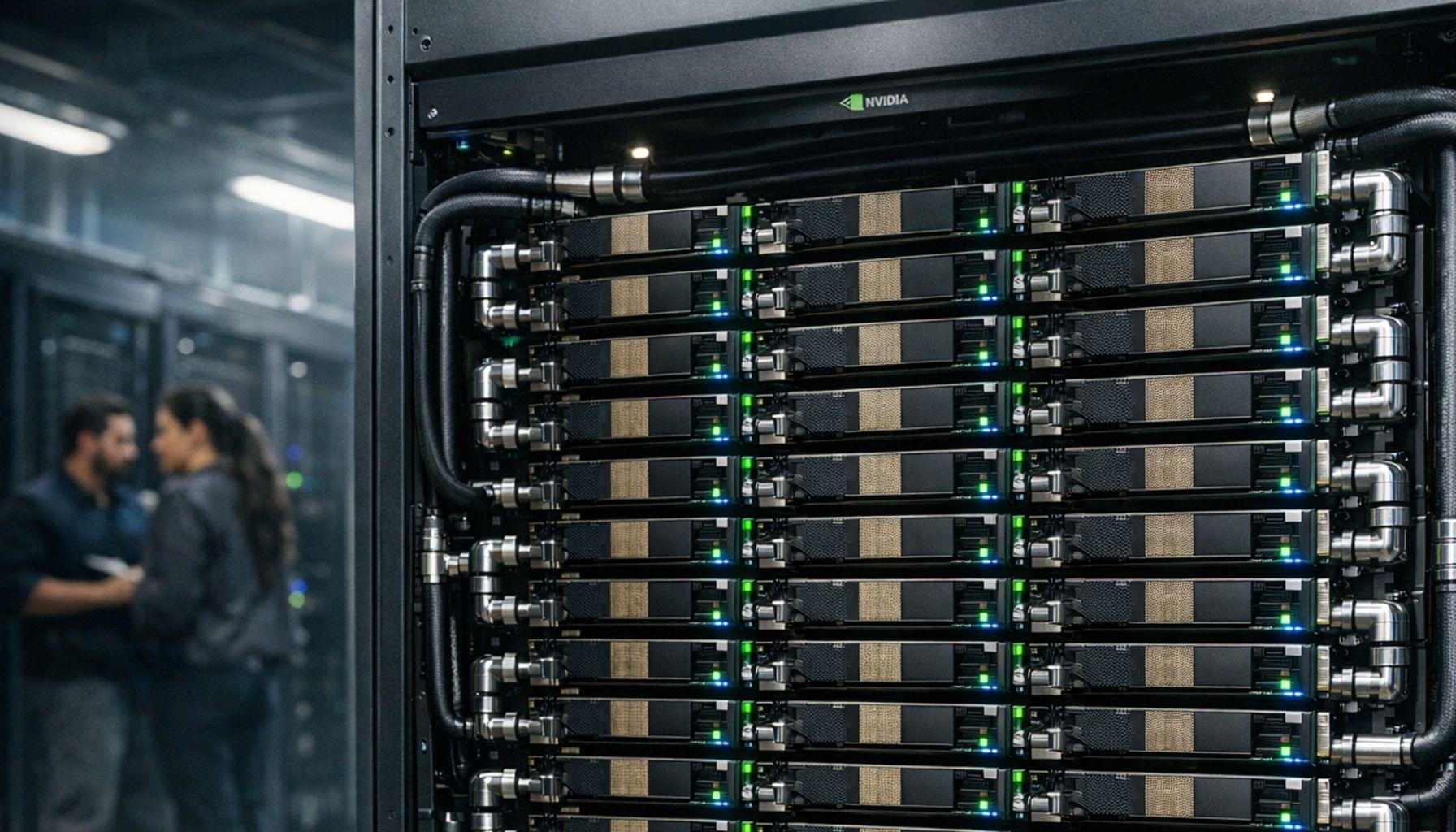
One aspect the report highlights that deserves special attention is the strength of manufacturing combined with demand for artificial intelligence-related infrastructure. This combination is sustaining selective investments and targeted mergers and acquisitions. The growing need for data centers, specialized components, industrial cooling systems, and the entire supply chain that supports AI infrastructure is creating concrete opportunities for Midwest industrial companies. It is a cycle where technology fuels industrial demand, which in turn enables more technology.
This dynamic creates a favorable scenario for companies that can position themselves in the AI value chain without necessarily being pure technology companies. A precision equipment manufacturer, for example, can benefit directly from data center expansion. A logistics provider can gain efficiency by automating processes with AI while also transporting the components that feed that infrastructure. These are connections being mapped and leveraged by the most alert companies in the Midwest. 🔧
Modernization that goes beyond the technology itself
When we talk about modernization within the context of this report, it is important to understand that we are not just talking about swapping old systems for new ones or subscribing to an AI platform and waiting for results to appear. The modernization being described here is deeper — it involves rethinking processes, reorganizing workflows, and most importantly, preparing the people who will operate these new resources. Without a well-structured human component, any technology runs the risk of becoming a cost with no return. The most successful companies in this process understood this early and treated cultural change with the same care they gave to choosing their tools.
The report reinforces that many of these companies are modernizing to grow — upgrading equipment, streamlining processes, and using technology to expand capacity with their existing teams. Instead of expanding their workforce or opening new facilities without clear criteria, they are investing in factory process automation, implementing AI-based predictive maintenance systems, and adopting data analytics tools that enable faster and more informed decisions. Every dollar invested needs to generate visible returns — and that mindset is shaping the entire modernization process.
Another aspect of modernization worth highlighting is system integration. Many companies arrive at this process carrying a legacy of disconnected tools, data scattered across silos, and processes that were built at different times without a unified vision. Implementing artificial intelligence often ends up being the trigger that forces this broader organization — because AI systems need clean, accessible, and well-structured data to function efficiently. This house cleaning, as labor-intensive as it may be, has enormous value for the operation as a whole, regardless of what technology will be layered on top of it.
From pilots to practical deployments: 2026 as the year of execution
One of the most striking conclusions of the report is that 2026 is shaping up to be the year of execution in AI and automation. Companies are moving past the experimentation phase and toward measurable deployments that improve operational performance, reduce process friction, and free up capacity for higher-value activities. This is no longer about proving the technology works — it is about scaling what has already been validated and ensuring that gains are consistent.
This transition from pilots to practical use is a significant milestone in the technological maturity of these companies. Over the past two or three years, many organizations invested in proofs of concept, experimental projects, and feasibility assessments. Now, with data from those pilots in hand and clarity about what works and what does not, they are ready to expand the applications that delivered and discard those that fell short. This evidence-based approach is what makes the current movement so different from previous technology waves, where much was implemented based on expectations and promises rather than concrete results.
Workforce development as a real competitive advantage
One of the most interesting readings the BMO Business Outlook Spring 2026 offers is that workforce development is no longer a secondary benefit or a corporate responsibility initiative. It has become a real competitive advantage, especially at a time when the labor market remains tight and retaining talent is just as hard as hiring it. Companies that invest in developing their professionals in areas related to artificial intelligence and automation are building an internal asset that is difficult to replicate quickly. The accumulated knowledge within the organization has strategic value that extends well beyond day-to-day operations.
Workforce development also has a direct effect on the speed of technology adoption. Teams that understand what they are using, that feel comfortable with the tools, and that have clarity about how those tools fit into their work move much faster along the adoption curve. This shortens the gap between implementation and the first concrete results — which is exactly the most critical period for maintaining internal engagement and justifying the investment to leadership. When early wins show up quickly, the process gains momentum and the natural resistance that exists in any organizational change decreases significantly.
On top of that, a well-trained team tends to identify new technology use cases that were not anticipated in the original plan. This is valuable because artificial intelligence and automation have a very broad range of applications, and many of the best use-case ideas come from people who are in the trenches, understanding the real problems of the business. When people have the basic technical knowledge to connect those problems to what the technology can do, the result is innovation that is far more organic and aligned with what the company actually needs. This virtuous cycle of development, use, and discovery of new applications is what separates companies that merely adopt technology from those that truly transform with it. 🔄
What this movement signals for the rest of the market
The American Midwest is not typically seen as the epicenter of technological innovation — that role usually goes to the big hubs on the West Coast or the financial centers out East. But that is exactly why what is being documented in this report is so relevant. When companies with a more traditional profile, in sectors like manufacturing, agriculture, regional financial services, and healthcare, start putting artificial intelligence and automation at the center of their growth strategy, the signal is that this transformation has moved past the early adopter phase and is becoming truly mainstream. This is no longer about who is on the cutting edge — it is about who will be left behind if they do not move now.


For the global market, and especially for emerging economies, this type of data serves as an important reference point. Many countries have a diverse business ecosystem with companies at different stages of technological maturity, and many of the dynamics described in the report — a pressured labor market, tight margins, the need to grow efficiently — are completely familiar elsewhere. The difference lies in the speed and scale of investment, but the direction is the same. Understanding what is working in other markets helps calibrate decisions and avoid mistakes that have already been made and documented in other contexts.
Three pillars that sum up the Midwest movement
The BMO report highlights three pillars that define the current moment for companies in the region:
- AI and automation migrating from pilots to practical deployments, with a focus on expanding capacity in a labor-scarce environment
- Prioritization of modernization spending, cash flow, and margin resilience over expansion for its own sake
- Manufacturing strength and demand for AI-related infrastructure sustaining selective investments and targeted M&A activity
These three points work as a guide for any company — regardless of country or industry — trying to navigate the same type of landscape. The logic is universal: invest with discipline, modernize with purpose, and use technology as a capacity multiplier, not as a substitute for strategy.
The bottom line for anyone watching this transformation
The message this report leaves is simple and direct: the window to implement artificial intelligence and automation in a planned and structured way is still open, but it will not stay that way forever. Companies that use this moment to build a solid foundation — with real process modernization, genuine team development, and consistent investment in technology — will enter the next cycle in a much more competitive position. Those that keep waiting for the perfect moment will find a market where the starting line has already moved much further than it is today.
The Midwest is showing that you do not need to be a Silicon Valley company to make artificial intelligence a pillar of growth. You need clarity about the problems you want to solve, discipline to allocate capital to the right projects, and a willingness to prepare the people who will put it all into practice. That is the model that is working — and the results, as the report itself documents, are already starting to show. 🎯