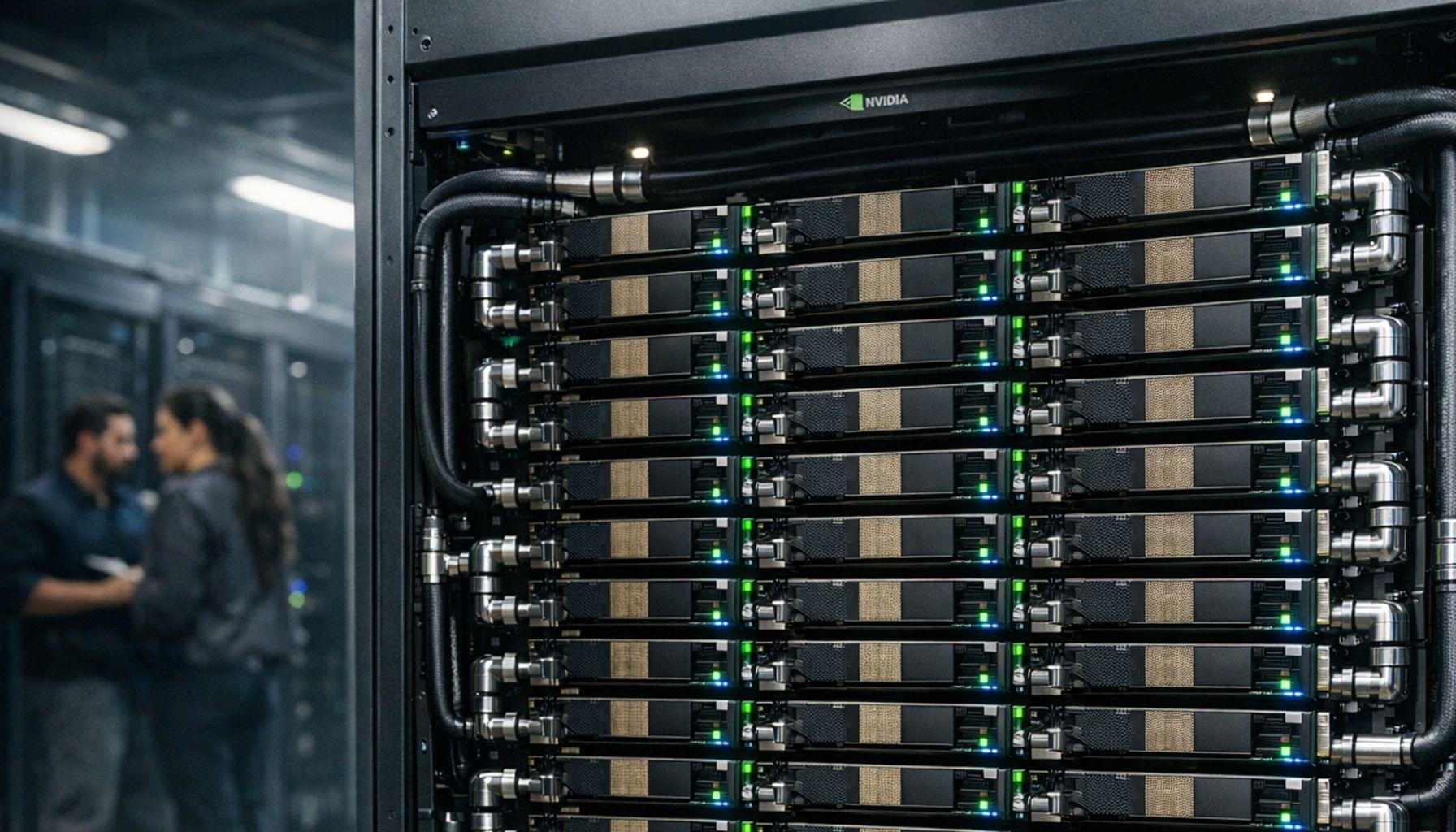
Artificial Intelligence is changing the game in the corporate world
The age of Artificial Intelligence is changing the game in the corporate world — and this shift is happening faster than most people expected. Companies of all sizes are looking for ways to do more with less, and that puts enormous pressure on workers. The question is no longer just about keeping your job. It is about growing alongside the company in a landscape where technology never stops advancing. And those who figure this out before everyone else get a head start. 🚀
In an increasingly tight job market, organizations are betting on technology to boost productivity. At the same time, professionals are chasing new skills to evolve alongside their companies — securing not just job stability, but also career advancement. This dual movement, driven by both companies and employees, is reshaping how we think about work, professional growth, and competitiveness.
Within this context, a powerful trend is gaining momentum inside organizations: investing in the people already on the team. Corporate education programs, structured career paths, and internal mobility are no longer nice-to-have perks on paper. They have become survival strategies — for companies and professionals alike. And the data backs it up.
Below, you will understand why companies investing in talent development are seeing real results — and what that means for anyone looking to advance their career in a world increasingly powered by AI.
What AI has to do with your professional growth
When we talk about artificial intelligence in the workplace, a lot of people still react with fear. Fear of being replaced, fear of falling behind, fear of becoming irrelevant. But the reality emerging inside the most competitive companies in the world points in a completely different direction: AI did not come to eliminate talent — it came to amplify the capabilities of those who know how to use it. Professionals who understand how to work side by side with AI tools are delivering results that would have previously required entire teams, and that is being noticed — and very well rewarded.
The direct impact on productivity is one of the most discussed topics in the corporate landscape right now. Major companies are already reporting significant gains by integrating generative AI tools into daily workflows. That means more projects delivered, less rework, faster decisions grounded in real data. For companies, this translates into higher margins. For professionals, it means more room to focus on what truly matters — the creative, strategic, and relational tasks that AI still cannot execute with the same human quality.
And here is the central point of this transformation: productivity with AI is not automatic. It depends on people who have been trained to get the best out of these tools. A company can have access to the best AI platforms on the market and still get mediocre results if the people on the team do not know how to integrate them into their daily work. That is why the connection between artificial intelligence and talent development has become one of the hottest topics across HR and corporate education departments around the world.
Bijal Shah, CEO of Guild — a company that offers educational benefits through a platform where employees can earn degrees and certifications to advance their careers — summed up this dynamic pretty directly. According to her, employers and leaders are being pushed to do more with less, and that means every single person within the organization needs to be the best version of themselves, because the need to increase output and productivity is real and urgent.
Leaders are rethinking how to retain and develop talent
Shah, who was named to the 2025 CNBC Changemakers list, said that disruptions like AI — which reshape companies and the economy as a whole — require workforces to be more resilient. That goes for both workers and the companies that want to stay competitive. She also emphasized that workforce mobility, meaning the ability of professionals to adapt and evolve to fill high-demand roles, is a crucial indicator of which companies and workers will manage to adapt to these disruptions — or get left behind.
In Shah’s view, CEOs and their leadership teams are spending a lot of time thinking about how to do more with less. And because of that, making sure the best people stay at the company — especially those who carry domain expertise and institutional knowledge — has become extremely important.
The key to achieving this, according to the Guild CEO, lies in building solid career paths within organizations. These are the workers who not only can become critical talent for the business, but who are also more likely to stay with the company long term. And in a market where the cost of hiring and training a new employee from scratch is high, that retention makes all the difference on the bottom line.
The Charter Communications case: data that proves the impact
A concrete example of this movement comes from Charter Communications, a telecom company with more than 90,000 employees. Paul Marchand, the company’s chief human resources officer, described the dynamic as a virtuous cycle. The longer someone stays at the company, working with dedication and continuously developing their skills, the more committed that person becomes to the customer experience, making sure consumers are well served — which, in turn, drives loyalty. And at the end of the day, that is the company’s business objective.
In 2023, Charter launched a free education benefit for its employees in partnership with Guild, offering a structured career progression program. Marchand revealed that so far, roughly 13% of the company’s workforce has enrolled in or completed courses through the program — and the vast majority of those employees work in frontline roles, directly serving customers.
The results are impressive and go well beyond engagement:
- Employees who participated in the program were promoted at a rate 20% higher than other workers at the company.
- Those same professionals are 19% more likely to stay with the company, according to Charter’s internal data.
Marchand highlighted that the program changed how employees perceive their own work. Instead of viewing their position as just another job, they started seeing a real career trajectory, with concrete opportunities for promotion. Now these professionals feel like part of a team, feel engaged and empowered, and see a clear path for growth — and that opens up all kinds of productive conversations within the organization.
Corporate education as a real competitive advantage
For a long time, corporate education programs were seen as a nice perk — the kind that looks good in a job posting but in practice ended up being generic courses disconnected from the reality of the business. That has changed — and changed a lot. Organizations at the forefront of the market have understood that training their employees with relevant, up-to-date content directly tied to real business demands is, in practice, an investment with measurable returns. It is no longer optional. It is a growth strategy.
The trend gaining traction inside these companies is the creation of personalized learning paths that take into account both the organization’s needs and each employee’s profile and goals. Corporate learning platforms powered by artificial intelligence can map skill gaps, suggest relevant content, and track each person’s progress in real time. This makes learning far more efficient and far less generic — and employees notice the difference. When training makes sense for their day-to-day work, engagement rises naturally.
The results do not just stay on paper. Companies like Amazon, IBM, and Unilever have publicly reported the positive impact of their internal reskilling programs, widely known in the market as upskilling and reskilling. The reasoning behind it is simple: hiring new talent from the outside is expensive and time-consuming. Developing the people already on your team, besides being more efficient, creates a sense of belonging and loyalty that is nearly impossible to achieve with salary alone.
Workforce mobility: the new career map
Another concept that has gained traction in this new landscape is workforce mobility — and we are not just talking about remote work or hybrid models, although those are part of the equation too. The mobility we are referring to here is the ability of a professional to move within their own organization, taking on new roles, contributing to different areas, and building a trajectory that does not necessarily follow a straight line. This lateral career model, once viewed with skepticism, has become a valuable asset for both companies and professionals.
For companies, an employee who already knows the culture, the processes, and the business objectives — and who can still transition across different roles — is extremely valuable. That person reduces onboarding time, keeps institutional knowledge within the organization, and brings a broader perspective to every new role they take on. For the professional, internal mobility represents a concrete growth opportunity without having to leave a company they already know — which lowers risk and increases psychological safety at work. And when that mobility is supported by strong talent development programs, the cycle closes in a much healthier way.
Artificial intelligence also plays a very direct role in this equation. People Analytics tools, for example, can cross-reference performance data, mapped skills, stated interests, and internal opportunities to suggest moves that make sense for both the employee and the company. This takes the internal mobility process out of the realm of gut feeling — where it often stayed limited to whoever had the most visibility or access to decision-makers — and places it in a fairer space, grounded in real data. The result is a more dynamic, more equitable, and consequently more productive organization. 📊
Professionals who invest in themselves are increasingly valued
Shah reinforced that in this environment where companies are looking for highly productive professionals, making sure these kinds of programs are available — and that workers know these paths exist — is critical to the success of any organization.
In her view, people who are willing to invest in themselves, who show commitment to their employer, and who are open to evolving their skills and becoming better at what they do are becoming increasingly important in the market. Companies are starting to face this reality and asking themselves: what can I do to help my workforce keep up with what is being demanded?


That question is not rhetorical. It is driving real investments, structured programs, and deep cultural shifts inside organizations around the world. And those on the other side — the professionals — have a concrete opportunity to seize this moment and truly grow.
Why this movement is here to stay
What ties all these elements together — artificial intelligence, productivity, talent development, workforce mobility, and corporate education — is a profound shift in how organizations view their most important asset: people. For decades, the dominant model was to hire ready-made specialists, extract as much value as possible while they were useful, and replace them when needed. That model is not only costly but also unsustainable in a market where the most valued skills change in a matter of months, not years.
The logic taking hold now is different. Companies that continuously invest in developing their people create a virtuous cycle: more capable employees deliver more and better work, which generates financial results that fund further investment in training, which in turn attracts and retains the best talent on the market. And when you bring artificial intelligence in as an accelerator of that cycle — whether through personalized training, performance analysis, or automation of repetitive tasks — the effect multiplies significantly.
The Charter Communications case is a perfect example. A company with more than 90,000 employees, operating in the highly competitive telecom sector, achieved measurable results in promotion and talent retention by investing in an accessible, well-structured education program. If an organization of that size can move the needle with 13% enrollment and promotion rates 20% higher among participants, imagine the potential for companies of all sizes that decide to follow this path.
For professionals keeping an eye on this movement, the message is clear: those who actively pursue new skills, embrace AI tools with curiosity, and take advantage of mobility opportunities within organizations are building a far more resilient career. Not because the market is going to stop changing — it will keep changing, probably faster and faster. But because those who learn how to learn, and who understand that continuous growth is part of the job and not an optional extra, will always find room to stand out.
In a world where AI is already part of the corporate landscape, that kind of professional is worth their weight in gold. 🏆