High-performance computing, artificial intelligence, and automation are reshaping the way companies operate, compete, and grow in the digital economy. What recently sounded like a distant concept is now at the heart of operations, marketing, tech infrastructure, and even the way organizations think about product, customer service, and customer relationships.
In virtually every industry, businesses are becoming more data-driven. This means dealing with massive volumes of information coming from multiple sources in real time. Without the support of advanced algorithms, automated systems, and powerful machines, the equation simply does not add up. Artificial intelligence helps make sense of the data chaos, while automation takes care of turning decisions into fast, consistent actions.
The practical impact shows up on three main fronts: more efficient operations, more personalized experiences, and faster, better-informed decision-making. Companies are able to reduce costs, cut waste, and increase productivity while offering more relevant interactions tailored to each user’s behavior. Behind the scenes, high-performance computing makes sure everything runs smoothly and reliably, even at large scale.
AI transforming the digital marketing ecosystem
One of the fields where artificial intelligence has had the biggest impact is digital marketing. With consumer behavior constantly changing and spreading across multiple channels, relying only on manual analysis or generic campaigns has become unfeasible. This is where AI-powered platforms and tools come in, capable of tracking in real time what works and what needs to be tweaked.
According to Aditya Jangid, Managing Director at AdCounty Media India Ltd., digital marketing has fully embraced automation and the different branches of AI. Instead of guesswork, professionals now analyze consumer behavior data, market nuances, and demand fluctuations with the support of smart algorithms. This enables more rational decision-making, more precise audience segmentation, and large-scale campaign optimization.
The real game changer is that AI makes massive personalization possible. By combining browsing history, past interactions, context, and preferences, systems can tailor messages, creatives, and offers for specific groups or even for individuals. All of this happens automatically, in continuous testing and optimization cycles. It is not just about selling more, but about delivering experiences that make sense for each person at each moment.
As the marketing ecosystem becomes more digital, this kind of automation stops being a differentiator and becomes part of the competitive baseline. Platforms that combine AI, data analytics, and campaign orchestration can react faster to behavior changes, demand swings, and new media formats. Those still relying only on manual processes tend to fall behind in efficiency, speed, and relevance.
The new era of intelligent performance marketing
Within digital marketing, performance marketing is going through a quiet revolution. Instead of focusing on superficial metrics like impressions or isolated clicks, there is growing use of advanced models to understand the real value of each interaction along the user journey.
According to Hiren Joshi, founder of Bee Online Communication, the future of digital marketing lies in the combination of intelligent automation and fully performance-driven ecosystems. AI is helping brands go far beyond generic messaging, opening the door to hyper-personalized communication that connects with each user’s specific interests.
Predictive analytics tools come into play to estimate conversion probability, identify higher-potential leads, and suggest the best timing for an outreach or offer. At the same time, automatic optimization engines adjust bids, targeting, and creatives based on real results, not just on fixed rules set manually.
This scenario favors companies that combine creativity with a strong data mindset. Performance campaigns that bring together good storytelling, engaging formats, and data-driven decisions tend to deliver more consistent results. It is not enough to reach a lot of people; you need to reach the right people, at the right time, with messages that make sense within a well-designed journey.
The companies most likely to stand out in the coming years are precisely those that can blend storytelling, data insights, and performance-focused strategies. This mix makes it possible to test more, fail fast, correct course, and scale only what truly works, cutting waste and bringing marketing and business goals closer together.
Transforming business operations with AI and automation
The impact of AI and automation goes far beyond advertising. In companies’ day-to-day operations, these technologies are reshaping entire workflows, from back-office areas to strategic functions. Repetitive routines that once required hours of human work are being automated with the help of software robots, orchestrated workflows, and system integrations.
Siddharth Maurya, founder and Managing Director at Vibhvangal Anukulakara Private Limited, points out that digital transformation is no longer optional; it has become a basic requirement for competitiveness. Organizations today deal with more complex operational environments and ever-growing data volumes, making it unsustainable to keep processes fully manual.
AI-based tools help extract practical insights from large databases, highlighting bottlenecks, risks, cost-saving opportunities, and paths to continuous improvement. In parallel, automation workflows take over tasks such as order processing, document verification, ticket triage, initial fraud analysis, and monitoring of critical indicators.
This movement frees up teams to focus on what truly demands strategic vision: new product development, market expansion, customer relationships, partnerships, and innovation. Instead of spending energy on repetitive operational activities, professionals can dedicate time to higher-value analysis, solution creation, and decisions that shape the future of the business.
Companies that invest early in intelligent technologies tend to build more agile and resilient models. In times of crisis or sudden change, organizations with automated processes, well-structured data, and systems capable of generating fast insights can respond more flexibly. This creates a competitive edge that is hard to copy with one-off investments alone.
The growing importance of high-performance computing
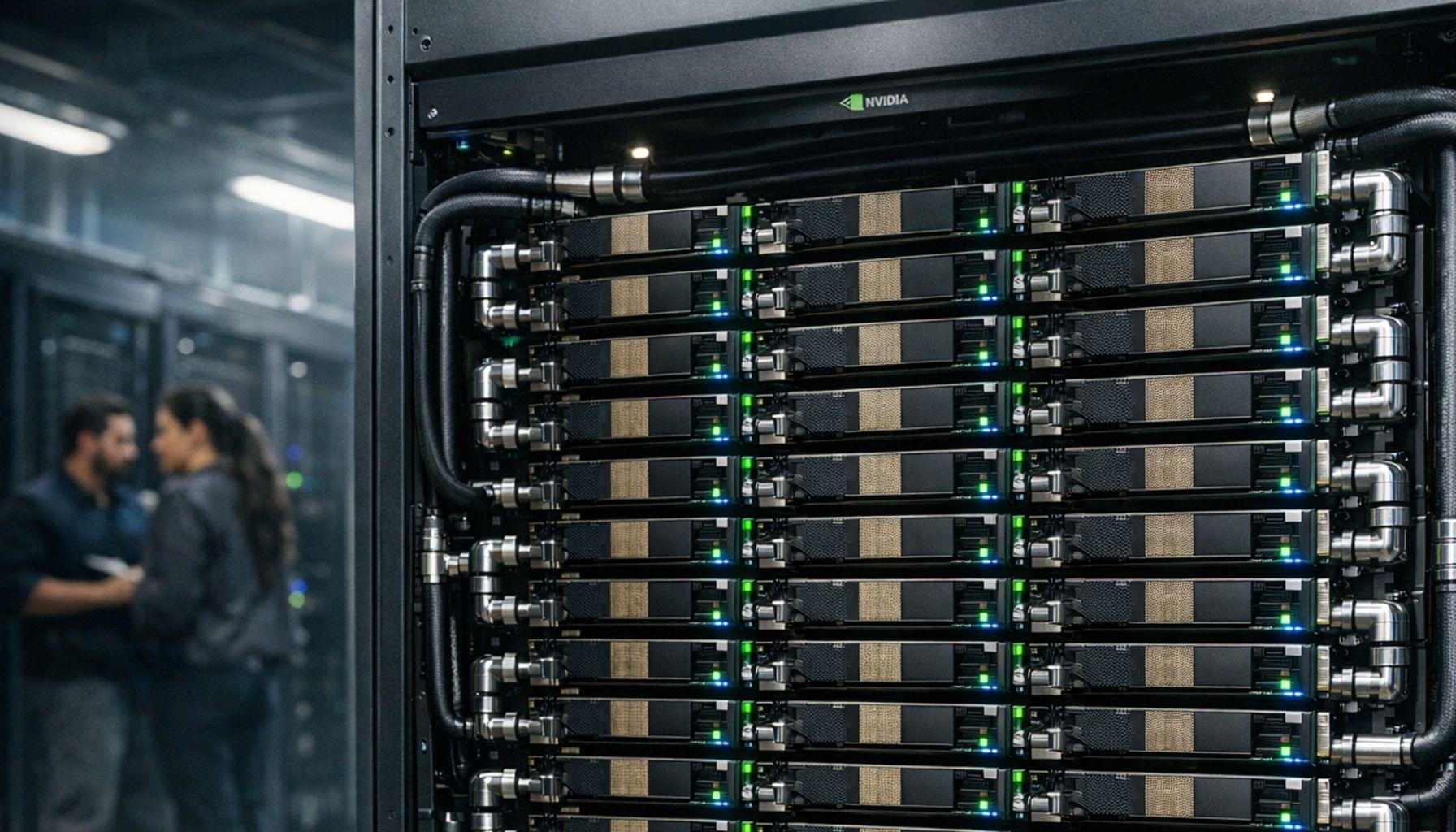
As AI and automation gain ground, the infrastructure required to support it all becomes even more critical. Machine learning models, recommendation engines, real-time analytics systems, content creation tools, and even games and simulations all demand heavy processing power.
Sarthak Sharma, founder of ModxComputers and tech content creator, highlights the growing demand for high-performance computing. Developers, gamers, content creators, and professionals working with advanced AI models depend on optimized machines that can handle complex workloads without crashing.
This applies both to corporate environments and individual setups. In companies, architectures based on dedicated servers, cloud, GPUs, fast storage, and well-configured networks form the backbone that supports mission-critical applications. For individual professional use, customized PCs tuned to each profile’s needs enable higher productivity, less waiting time, and faster creation cycles.
As the adoption of compute-intensive technologies grows, the hardware ecosystem evolves as well. New generations of processors, graphics cards, memory, and cooling solutions are emerging to handle more demanding projects while maintaining a balance between performance, energy consumption, and cost.
Without this high-performance computing foundation, many AI, automation, and advanced content projects remain stuck in proof-of-concept mode, unable to scale to real-world environments. It is the combination of intelligent software and well-sized hardware that makes it possible to train more sophisticated models, work with larger data volumes, and ensure smooth experiences for end users.


The road ahead for digital businesses
Looking ahead, the convergence of artificial intelligence, automation, and advanced infrastructure is set to accelerate even more. Entire sectors are being redesigned around digital business models, connected value chains, and experiences that start and end online, even when they involve physical interactions along the way.
Companies that embrace this shift with a strategic mindset tend to be better positioned in terms of innovation, customer experience, and sustainable growth. It is not just about digitizing what already exists, but about rethinking processes, offerings, and interactions under a new logic where data, algorithms, and automation are foundational.
In this context, AI and automation are not just tools to speed up processes. They are helping redefine how industries operate, which professional roles come to the forefront, and what kinds of products and services become possible. At the same time, there is a growing need to take seriously topics such as data governance, ethical use of algorithms, and the social impact of automation.
Digital businesses that manage to balance efficiency, personalization, and responsibility tend to build more lasting relationships with their audiences and partners. Technology stops being just a differentiator and becomes a structural part of the business model, influencing decisions from the operational level all the way up to strategy.
The integration of artificial intelligence, automation, data-driven marketing, and high-performance computing is already shaping the next phase of the digital economy. Those who understand this dynamic and adapt consistently are more likely to stay relevant, scale results, and navigate safely in a landscape of rapid, ongoing change.
Disclaimer: The opinions cited throughout this content are attributed to the experts mentioned and do not necessarily reflect the institutional views of ET Edge Insights, its management, or its members.