The billion-dollar strategy behind Oracle’s cuts
Oracle is at the center of one of the most aggressive moves in the tech sector in 2025. Rumors that surfaced last Thursday, based on a Bloomberg report, indicate that Larry Ellison’s company plans to eliminate around 10% of its 160,000-person workforce. According to estimates from investment bank TD Cowen, that cut could mean the elimination of somewhere between 20,000 and 30,000 positions. The objective behind this decision is straightforward and blunt: free up somewhere between 8 and 10 billion dollars to channel directly into artificial intelligence infrastructure.
The financial market, as expected, reacted positively. ORCL shares climbed roughly 2.5% shortly after the news started circulating. This kind of reaction shows that investors are increasingly comfortable with the idea that massive job cuts can be justified when the destination for that capital is artificial intelligence. It is a clear sign of how priorities have shifted in Silicon Valley and on Wall Street.
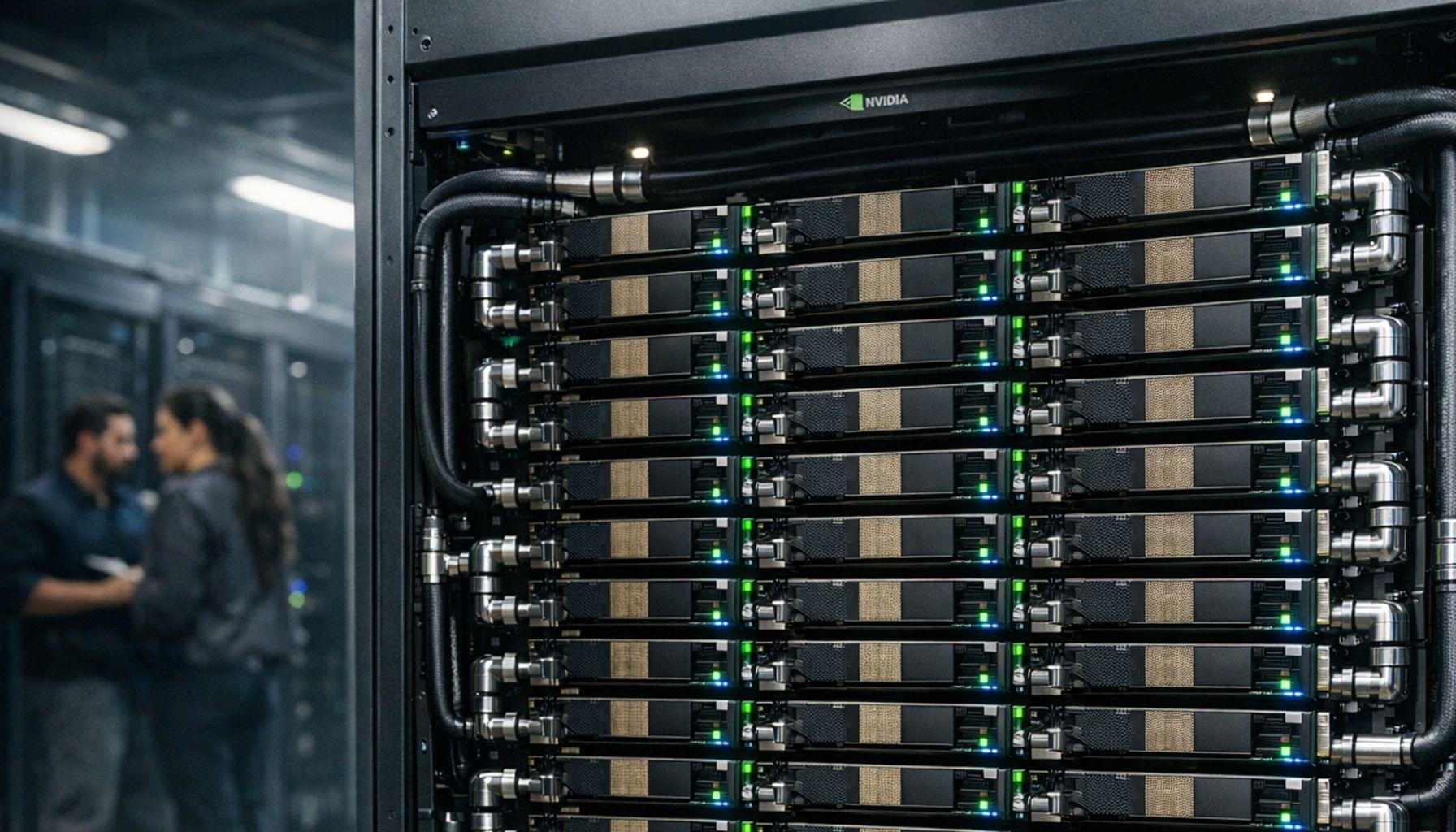
For anyone following Oracle’s recent trajectory, this move does not come as a total shock. The company had already been investing heavily in building data centers equipped with Nvidia GPUs, locking in robust contracts to serve ultra-high-caliber clients like OpenAI and even the United States government. The logic is relatively simple to understand: demand for computational capacity to train and run large language models — the now-famous LLMs — is growing at a pace that few predicted two or three years ago. And Oracle wants to make sure it has the infrastructure in place to capture that demand before competitors like Microsoft, Google, and Amazon further consolidate their positions in the AI-focused cloud market.
What really stands out, though, is the scale of the bet. We are talking about a company willing to drastically reduce its human capital to redirect billions of dollars into hardware and infrastructure. This raises important questions about the future of work inside major tech companies, where value is migrating faster and faster from people to machines — specifically, to GPU clusters powering the most advanced artificial intelligence systems on the planet.
Colossal investments that were already on the radar
The layoff rumors carry even more weight when we look at the numbers Oracle had already been reporting. In December 2025, while presenting results for the second quarter of fiscal year 2026, the company revealed capital expenditures (CapEx) of 12 billion dollars in a single quarter, all of it directed toward building data centers to serve artificial intelligence clients like OpenAI. That is a staggering amount of investment for just three months of operation.
And the trend is accelerating. According to research firm Futurum, the expectation is that Oracle’s capital spending for fiscal year 2026 will reach something close to 50 billion dollars, earmarked for GPU capacity expansion and data center buildouts. When we put that figure in perspective, the 8 to 10 billion that would be freed up by the workforce cuts represents a fraction of the total needed. It is one piece of the puzzle, but clearly not the main one. This raises the inevitable question: why cut so many people if the freed-up value is relatively small compared to the total planned investment?
Some analysts suggest the answer may lie less in operational efficiency and more in signaling to the market. By announcing aggressive cuts, Oracle shows investors it is willing to make sacrifices to prioritize its AI strategy. It is the kind of message that boosts the stock price in the short term and maintains the confidence of those betting on the company’s future as an artificial intelligence infrastructure powerhouse. 📊
Nvidia’s role in this equation
You cannot tell this story without talking about Nvidia, which continues to be the central piece of the global artificial intelligence puzzle. Every dollar Oracle frees up from job cuts has a strong chance of ending up, directly or indirectly, in the chipmaker’s coffers. Nvidia’s GPUs, especially the H100 line and the more recent Blackwell family, are today the industry standard for training and running AI models at scale.
When Oracle announces it will build more data centers, the market automatically understands that means more multi-billion-dollar orders for Nvidia. It is a symbiotic relationship that has enormously benefited both companies in recent quarters.
Nvidia’s position in this ecosystem is so dominant that virtually every major AI infrastructure investment decision runs through it. Jensen Huang’s company holds roughly 80% of the GPU market for data centers focused on artificial intelligence, and that share shows no signs of shrinking in the near term. Competitors like AMD and startups like Cerebras are trying to chip away at that market, but the truth is that Nvidia’s software ecosystem — especially CUDA — has created a barrier to entry that is extremely difficult to overcome.
There is also a broader strategic component to this dynamic. Oracle is not just buying GPUs to resell computational capacity. It is trying to position itself as a viable alternative to the three big clouds — AWS, Azure, and Google Cloud — specifically for artificial intelligence workloads. Oracle Cloud Infrastructure (OCI) needs a density of cutting-edge hardware that only Nvidia can supply at the volume and performance levels required. This race for relevance in the AI cloud market is the real engine behind the announced cuts, and it explains why the market reacted with optimism instead of concern. 📈
The Paramount question and the Ellison family’s interests
There is an extra layer to this story that cannot be ignored. At the same time Oracle is planning to cut thousands of employees to fund its AI expansion, Larry Ellison is involved in a colossal negotiation to ensure his son, David Ellison, can close the acquisition of Paramount through a 110-billion-dollar deal that would include 31 dollars per share in cash for Warner Bros.
The timing overlap between the layoffs and this mega-deal has not gone unnoticed by analysts. Some are questioning whether part of the motivation to free up cash at Oracle might be connected, even if indirectly, to the need to secure resources to make the Paramount deal happen. Or whether Larry Ellison is simply looking to boost Oracle’s stock price so he can sell off part of his holdings and raise additional capital.
Regardless of the real motivation, the fact is the Ellison family is operating on multiple fronts with volumes of money that would keep any other CEO up at night. Simultaneously managing a restructuring of tens of thousands of employees, a multi-billion-dollar infrastructure expansion, and an acquisition worth over a hundred billion dollars in the entertainment sector demands a level of execution capability that will be put to the test in the months ahead.
Geopolitical risks in the Middle East
But it is not all smooth sailing with Oracle’s aggressive strategy. The company has been betting heavily on expanding its cloud infrastructure in the Middle East, and that is exactly where one of the biggest risks in the current landscape lives.
Oracle has already committed 14 billion dollars in Saudi Arabia, launched multiple OCI cloud regions in Riyadh and Jeddah, and is expanding cloud and AI capacity in Abu Dhabi. The Gulf countries are positioning themselves as global hubs for AI computing and data centers, and Oracle has planted itself right in the middle of that race.
However, the Financial Times reported this week that conflicts in the Middle East are threatening this massive AI infrastructure expansion in the Gulf region, potentially putting billions of dollars in projects at risk. And based on what President Trump has been communicating through the media and Truth Social, there are no signs the situation will calm down anytime soon.
For Oracle, this scenario represents a significant curveball. Billions have already been committed, partnerships have been signed, and data centers are in construction or planning phases. If conflicts intensify or new export restrictions are imposed — something that has already happened with Nvidia chips for certain markets — some of those investments could be frozen or even lost. This is the kind of risk that no financial spreadsheet can predict with precision, and it adds a considerable dose of uncertainty to an already extremely ambitious strategy.
The broader picture for the tech industry
Oracle is not alone in this race. Meta, Microsoft, and Google are also pouring tens of billions into data center investments and Nvidia chips. But the scale of job cuts to fund this transition is something that sets Oracle’s approach apart and deserves extra attention.


What we are seeing is a deep reconfiguration of how major tech companies allocate their resources. Human capital, which for decades was considered these companies’ most valuable asset, is being reassessed against the nearly insatiable need for computational power. Each eliminated position represents not just a salary savings but a signal that the future of these companies is being built more on silicon than on human talent — at least in the short- and medium-term view of their executives.
This dynamic creates an interesting paradox. Companies need highly skilled professionals to design, build, and operate AI infrastructure. But at the same time, they are laying off thousands of employees to free up the cash needed to buy the hardware that will sustain that very infrastructure. It is a delicate equation, and how each company solves this dilemma will define who comes out on top in this phase of the artificial intelligence race.
What to expect in the coming months
If the cuts are indeed confirmed — and most analysts believe they will be — Oracle is heading into an intense transition phase. The combination of massive workforce restructuring, record-setting AI infrastructure investments, the Paramount mega-deal, and geopolitical instability in the Middle East creates a scenario with many variables in motion at the same time.
The success or failure of this strategy will depend on factors that go well beyond technology. Execution capability, market timing, diplomatic relations, and even the Ellison family dynamics are all pieces on this board. For anyone following the tech sector, Oracle’s next few quarters promise to be one of the most revealing chapters of how the industry is transforming under the influence of artificial intelligence.
The lingering question is whether this monumental bet will pay off at the same speed it is being placed, or whether we are looking at yet another cycle of inflated expectations that will eventually meet reality. One thing is certain: the AI infrastructure game is getting more expensive by the day, and only those willing to make bets of this magnitude will have a shot at sitting at the main table. 🤔