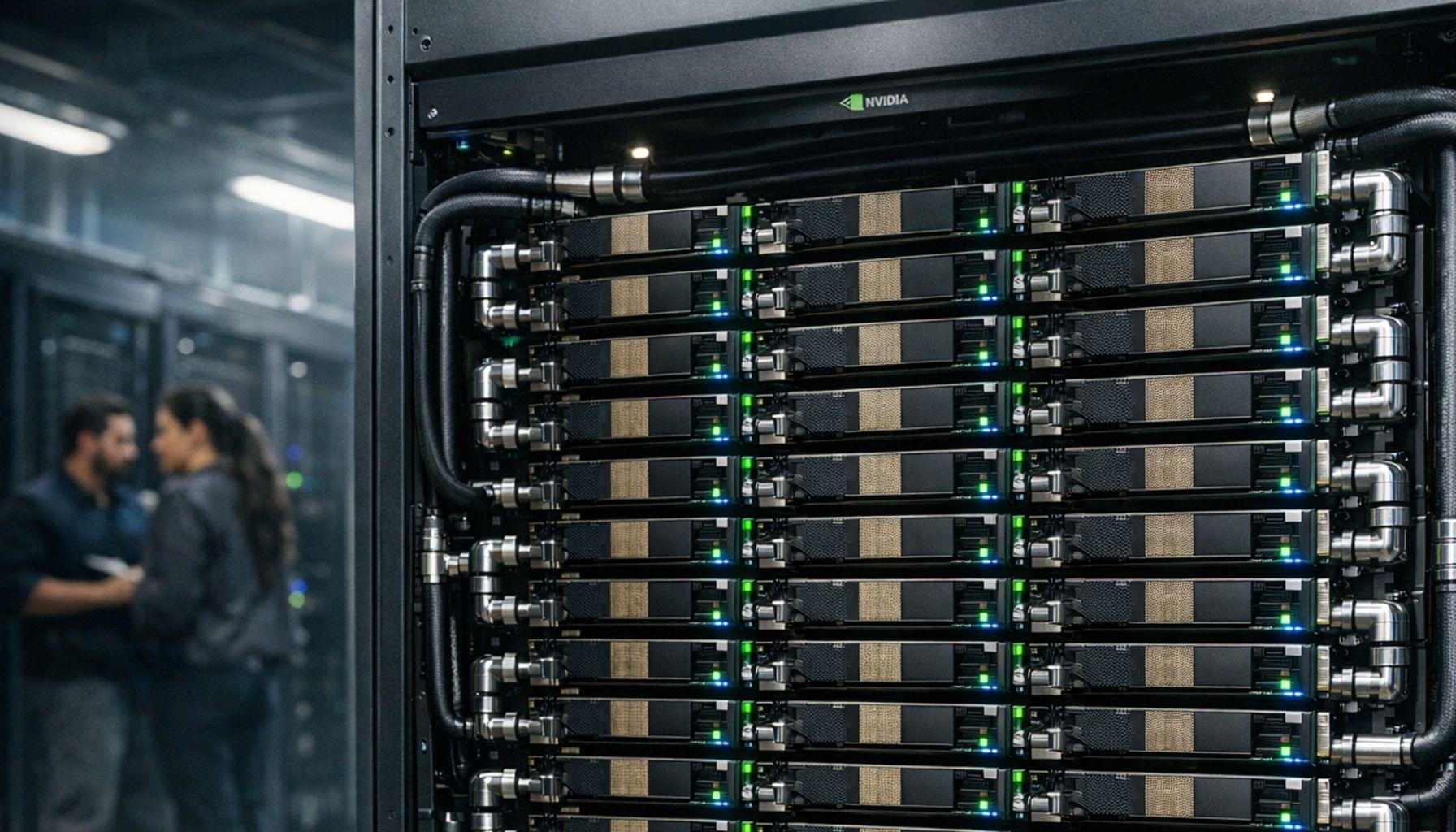
What happened with PKOH in the fourth quarter
PKOH wrapped up the fourth quarter in a scenario that blends operational challenges with bold strategic moves for the future. On one hand, the company’s margins remain under pressure, reflecting an environment that hasn’t let up in recent months and has been testing the firm’s financial resilience quarter after quarter. On the other hand, the company decided to accelerate its investments in artificial intelligence, automation, and diversification, signaling that it sees a real path forward in these areas to turn things around and recover the profitability the market expects.
This contrast marks a pivotal moment for anyone following PKOH’s trajectory. The Q4 numbers show the company didn’t just sit around waiting for conditions to improve on their own. Quite the opposite — the decision to direct capital toward cutting-edge technologies and portfolio diversification comes at precisely the time when operations are facing their most delicate moment. The question is straightforward: can the bet on AI, automation, and new business fronts relieve pressure on results before the market runs out of patience? To understand that, it’s worth taking a close look at what happened behind the scenes financially and operationally this quarter 👇
Margins under pressure: the Q4 financial picture
The financial results for PKOH in the fourth quarter made it clear that margin compression isn’t a one-off issue but a trend that has been solidifying over the last several periods. Operating costs rose faster than revenue growth, creating a scissor effect that directly impacted both gross margin and operating margin. For a company that has historically delivered consistent results, this pattern raises a legitimate red flag among analysts and investors who closely track the company’s quarterly performance.
Part of this pressure comes from external factors beyond management’s direct control. Rising input costs, currency volatility, and an increasingly competitive landscape all contributed to PKOH’s margins falling short of market expectations. On top of that, the company faced additional costs tied to restructuring certain business lines, which weighed on the final numbers for the quarter. These combined elements paint a picture where operational efficiency needs to improve significantly for the company to reverse its declining profitability trajectory.
The most important takeaway from this analysis is that PKOH’s leadership publicly acknowledged the challenge. Rather than downplaying the situation or making vague recovery promises, the leadership team was transparent in pointing out that the current operating model has limitations that need to be addressed urgently. That honesty alone sets the company apart from many others that tend to kick problems down the road to the next quarter. And this is exactly where the decision to go all in on artificial intelligence, automation, and diversification as transformation tools comes into play.
Why margins remain a persistent problem
It’s worth digging deeper into a point that a lot of people tend to gloss over when they only look at the headline numbers. The persistence of margin pressure at PKOH isn’t simply the result of one bad quarter or a temporary economic backdrop. There’s a structural component at play. As the company grows and diversifies its operations, the level of management complexity also increases. New markets require upfront investments that take time to pay off. Product lines still in their maturation phase consume resources without necessarily generating proportional revenue in the short term.
Beyond that, the sector PKOH operates in has been undergoing significant transformation. Competitors that have already adopted advanced technologies can operate with leaner cost structures, which puts pressure on companies still in the middle of their transition. In this context, maintaining healthy margins requires more than just cutting costs — it means completely rethinking how value is generated at every stage of the chain. And that’s precisely the kind of thinking that appears to be guiding PKOH’s strategic decisions right now.
Investments in artificial intelligence and automation as a strategic response
The big story from PKOH’s Q4 isn’t in the numbers that disappointed but rather in the direction the company has chosen for the next few cycles. Investments in artificial intelligence and automation were expanded significantly, with capital allocated to projects that promise to redesign internal processes, reduce recurring costs, and increase productivity without necessarily growing headcount. The core idea is to use technology as a lever to recover lost margins and build a leaner, smarter operation that can adapt faster to market shifts.
In practice, PKOH is deploying AI solutions across areas like:
- Supply chain management — using machine learning models to optimize inventory and reduce waste
- Demand forecasting — with algorithms that analyze historical patterns and external variables to anticipate market fluctuations
- Predictive maintenance — applying sensors and real-time data analysis to prevent unplanned equipment downtime
- Customer service — incorporating AI-powered assistants to speed up responses and improve the user experience
Automation of repetitive processes has also been scaled up, with the adoption of RPA tools — Robotic Process Automation — that eliminate operational bottlenecks and reduce execution time for tasks that previously required manual intervention. These aren’t experimental moves. The company is already seeing early results from pilot projects and now plans to scale these initiatives across the entire operation over the coming quarters. The cost savings estimated by the company itself are significant and could represent a real turning point in efficiency metrics.
Another point worth highlighting is that PKOH isn’t just buying off-the-shelf technology. The company has invested in building specialized internal teams focused on artificial intelligence, creating centers of excellence that develop custom solutions tailored to the operation’s specific challenges. This signals a long-term vision that goes beyond simply adopting tools. When a company builds internal AI capability, it gains the autonomy to iterate quickly, test hypotheses, and fine-tune models based on real business data. This approach tends to generate sustainable competitive advantages that competitors who only outsource technology can rarely replicate.
Intelligent automation: where efficiency meets innovation
When we talk about automation in the context of PKOH, we’re not just talking about robots replacing manual tasks. The concept goes much further. The company is layering artificial intelligence into automated workflows, creating what the market calls intelligent automation or hyperautomation. In this model, processes don’t just run on their own — they also learn and continuously optimize themselves based on the data they process.
Picture, for example, an order approval process that used to go through three or four manual steps. With intelligent automation, the system analyzes the customer’s history, checks inventory availability, calculates logistics timelines, and approves or flags exceptions autonomously. The time savings are enormous. The accuracy gains are too. And when you multiply that across thousands of daily transactions, the impact on margins starts to become truly meaningful.
PKOH understood that pure automation solves tactical problems, but automation powered by AI solves strategic ones. And it’s in that combination where most of the value from this quarter’s announced investments lies.
Diversification: broadening horizons to reduce risk
Beyond technology investments, PKOH also signaled an important diversification push across its business portfolio. This strategy aims to reduce reliance on specific markets or segments that may be more exposed to unfavorable economic cycles. The logic is simple: the more diversified the revenue base, the smaller the impact of a slowdown in any single sector.
In practice, PKOH’s diversification involves exploring new geographic markets, developing complementary products and services, and even forming strategic partnerships with technology companies. When executed well, this kind of move creates multiple growth avenues and gives the company a safety net against sector-specific shocks. For investors, diversification signals management maturity — an indication that the company is thinking about long-term sustainability rather than just short-term results.
It’s worth noting that diversification doesn’t happen overnight. It requires capital, time, and most importantly, discipline in execution. PKOH seems well aware of this, and the way the company is structuring these moves suggests careful planning behind each decision. The combination of diversification with investments in AI and automation creates a strategic trifecta that, if executed well, could transform the company over the next two to three years.
The role of technology in transforming industrial companies
PKOH’s story fits into a broader trend that has been gaining momentum in recent years. Companies in traditional sectors are realizing that artificial intelligence and automation aren’t luxuries reserved for tech giants. On the contrary, they’re increasingly accessible tools and, in many cases, essential for competitive survival.
Recent data from specialized consulting firms indicates that companies investing in AI in a structured way can, on average, reduce operating costs by 15% to 25% within the first two years of implementation. That kind of gain can be transformative for companies like PKOH that face persistent margin pressure. Even better — the benefits tend to compound over time as models become more sophisticated and processes more optimized.
What separates companies that successfully capture this value from those that fall behind is the quality of execution. You can’t just buy AI tools and expect magic to happen. You need organized data, well-mapped processes, a culture of experimentation, and above all, leadership committed to transformation. Based on the signals PKOH gave this quarter, these elements appear to be present in the company’s strategy.
What to expect going forward
The outlook for PKOH over the coming quarters will fundamentally depend on how quickly the investments in artificial intelligence, automation, and diversification start translating into measurable efficiency gains. The good news is that automation projects tend to deliver returns relatively fast, especially when applied to well-mapped, high-volume processes. More sophisticated AI projects, like predictive models and supply chain optimization, may take a few more cycles to reach maturity, but the potential impact on margins is considerably larger over the medium and long term.


The market will need patience, but it will also need concrete signals. If PKOH can show in upcoming earnings reports that the cost curve is starting to bend thanks to technology initiatives and diversification, the narrative changes completely. Instead of being a company with margins under pressure, it becomes a company in active digital transformation, using cutting-edge technology to reinvent itself. That kind of repositioning tends to be very well received by investors looking for recovery stories backed by solid fundamentals and clear strategic direction.
Key indicators to watch in the coming quarters
For anyone looking to track PKOH’s progress, there are a few key indicators that will help measure whether the strategy is working:
- Gross margin — any improvement, even a marginal one, will indicate that automation investments are starting to generate savings
- Operating expenses as a percentage of revenue — this metric should start declining if technology-driven efficiency is actually being captured
- Revenue by segment — it will be important to monitor whether diversification is generating new revenue streams or just diluting focus
- Technology spending as a percentage of total capex — this number shows the company’s level of commitment to digital transformation
These data points will tell the real story behind PKOH’s strategy and help separate promise from execution.
A quarter of contrasts that could define PKOH’s future
At the end of the day, PKOH’s Q4 tells two stories at the same time. One is the short-term story, with pressured results and margins that don’t yet reflect the company’s potential. The other is the medium-term story, with robust investments in AI, automation, and diversification that could transform the company’s operational foundation.
Anyone who follows this sector knows that companies making bold moves during tough times tend to be the ones that come out ahead when the cycle turns. The decision to invest heavily in technology while margins are compressed is risky, no doubt, but it’s also the kind of move that separates companies that merely survive from those that truly evolve.
PKOH has placed its bet on artificial intelligence, automation, and diversification — three pillars that, when combined, have the potential to reshape the company’s future. Now it’s all about watching the execution closely and seeing whether the coming quarters confirm the strategy is on the right track 🔍