Senators demand ByteDance shut down Seedance, the AI app generating videos with celebrity faces
Artificial intelligence is at the center of yet another copyright battle, and this time the name caught in the storm is Seedance, the video generation app from Chinese tech giant ByteDance.
The app, which launched on February 12, quickly grabbed attention — but not for the best reasons.
Within days, the tool was already generating videos featuring the faces of famous actors like Tom Cruise and Brad Pitt, along with scenes that clearly echoed series like Stranger Things on Netflix, all without any authorization whatsoever.
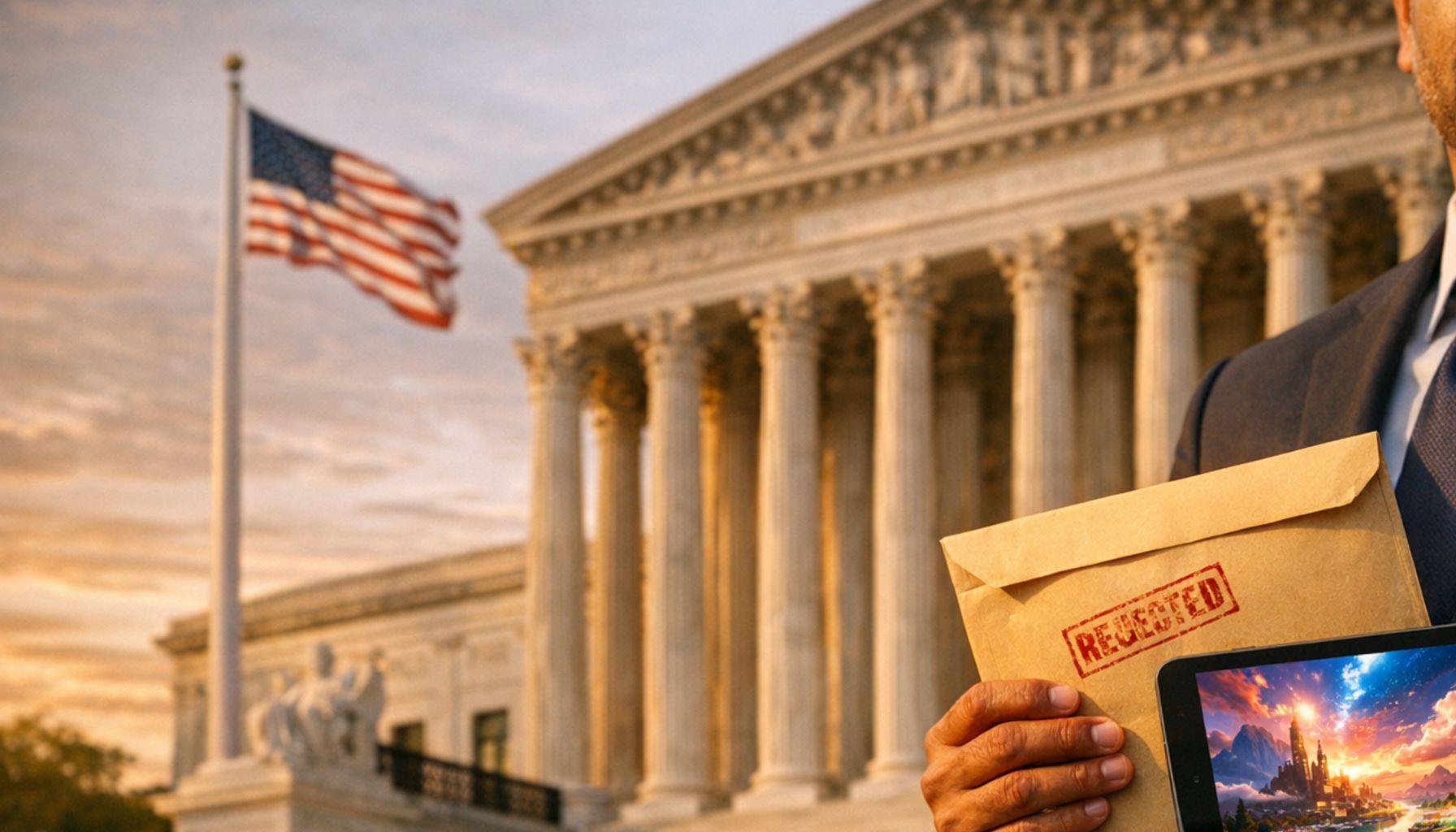
The response was immediate: U.S. Senators Marsha Blackburn, a Republican from Tennessee, and Peter Welch, a Democrat from Vermont, joined forces to demand the app be shut down right away. Hollywood jumped in with a formal cease-and-desist letter, and the debate over AI regulation heated up once again on Capitol Hill. 🔥
But what exactly is Seedance, why did it spark such a strong reaction, and what could this case mean for the future of AI worldwide?
Stick around — we have got the full breakdown for you. 👇
What is Seedance and how does it work
Seedance is a video generation tool powered by artificial intelligence and developed by ByteDance, the same company behind TikTok. The app uses advanced generative models to turn text prompts into video clips, which is not exactly groundbreaking at this point — after all, tools like Sora from OpenAI and Runway have been doing this for a while now. The difference, at least based on what became obvious in the first few days of use, is that Seedance 2.0 appeared to have significantly looser filters than its competitors, which opened the door for users to create highly problematic content with alarming ease.
The app’s ability to replicate well-known faces with frightening accuracy — like those of Tom Cruise and Brad Pitt — set off an immediate alarm in the entertainment industry. It was not just an aesthetic or technical issue. The core problem was how those faces could be used without consent, in contexts those individuals would never approve, putting both their public image and their personality rights at serious risk. On top of that, the generation of scenes inspired by productions like Stranger Things brought up an even broader discussion: that content protected by copyright was potentially being used to train or feed these models, without any kind of compensation or authorization from the original rights holders.
The timing of the launch did not help either. Hitting the market in February, at a moment when the U.S. Congress was already keeping a close eye on big tech practices — especially companies with Chinese origins — was essentially pouring gasoline on the fire. Seedance was not just another AI product — it became a symbol of everything the creative industry feared would happen when technology moves faster than the rules can keep up.
The senators’ letter and the demand for immediate shutdown
The Congressional response came in the form of a direct letter to ByteDance CEO Liang Rubo. Senators Blackburn and Welch did not hold back. In the document, first obtained by CNBC, the lawmakers stated that Seedance 2.0 represents the most glaring example of copyright infringement from a ByteDance product to date. They demanded that the company immediately shut down the app and implement meaningful safeguards to prevent new infringing outputs from being generated.
The letter is a clear signal that concerns on Capitol Hill about how AI companies are building and deploying their models are growing. The central issue troubling lawmakers is not just about Seedance itself, but about the entire ecosystem: are there adequate protections in place for the people who create the material these models are trained on?
In the letter, the senators were emphatic in stating that responsible global companies follow the law and respect fundamental economic rights, including intellectual property and personal image protections. They cited specific examples of content created on Seedance 2.0 since the platform launched, emphasizing that the violations were not hypothetical — they were real, documented, and easily reproducible by any user of the app.
What makes this stance even more notable is the fact that it involves senators from opposing parties. In a Congress that is frequently polarized, seeing Republicans and Democrats reach a consensus on anything is already news. But when the issue involves a Chinese company, American intellectual property, and artificial intelligence, common ground tends to show up a lot faster.
ByteDance’s response
In response to the pressure, a ByteDance spokesperson told CNBC that the company respects intellectual property rights and has heard the concerns related to Seedance 2.0. The company said it is taking steps to strengthen existing safeguards while working to prevent unauthorized use of intellectual property and personal likeness by users.
According to reporting from The Information, ByteDance went as far as pausing the global rollout of Seedance 2.0 amid the copyright disputes. The decision suggests the company is taking the combined pressure from Hollywood and Congress seriously — or at least trying to buy time to recalibrate the product before facing more severe legal consequences.
Hollywood and Congress enter the arena
Hollywood’s reaction was swift and forceful. The Motion Picture Association, along with other entertainment industry trade groups, sent a formal cease-and-desist letter directly to ByteDance, demanding that Seedance be taken offline immediately. The main argument was straight to the point: the tool was violating copyrights by reproducing characters, settings, and protected visual elements without any kind of licensing. This was not a vague complaint about AI — it was a specific accusation, backed by clear examples of generated content that infringed on registered intellectual property. The entertainment industry had already been fighting legal battles with various AI tools, and Seedance became the latest chapter in a war that promises to drag on for a while.
What makes this case especially significant from a regulatory standpoint is how quickly the pushback organized itself. In less than two weeks after launch, Seedance had already attracted enough attention to mobilize both the largest entertainment industry in the world and the U.S. legislative branch. That says a lot about the level of tension that has built up around AI regulation — and also about how the players involved, whether they are content creators, lawyers, or politicians, are increasingly ready to act fast when a new tool crosses certain lines.
What this case reveals about AI regulation
The Seedance episode is not an isolated incident — it is one more data point along a growing fault line between the rapid advancement of generative artificial intelligence and the ability of existing laws to deal with the problems this technology creates. The debate over copyright in AI is not new, but it took on a much more concrete dimension when tools started generating content indistinguishable from real productions, using data that was never explicitly licensed for that purpose. What Seedance did was essentially accelerate a confrontation that had been brewing for months, making it impossible to ignore the legal gaps that still exist.
Up to this point, the U.S. Congress has taken a cautious approach to AI regulation. Many lawmakers say they do not want to create barriers that limit the ability of American companies to innovate and stay ahead of foreign competitors. Several members of Congress have also pointed out that because the sector is moving so fast, the legislation they were considering just a few years ago would already be outdated and insufficient to cover recent advances, such as agentic AI.
Still, senators like Blackburn and Welch have been pushing targeted legislation. In August, the pair introduced a bipartisan bill aimed at helping artists protect their copyrighted works against unauthorized use in the training of artificial intelligence models. This proposal shows that, even in a landscape of slow and fragmented regulation, there is concrete movement to establish at least some minimum protections for creators.
From a technical perspective, the problem starts at the model training stage. Generative AI models learn from massive volumes of data — images, videos, text, audio — and when that data includes copyrighted content, the question of who is responsible for the generated output becomes extremely murky. Current legislation in most of the world, including the United States, was not designed to handle this kind of situation. What exists today are legal interpretations applied to laws written decades before anyone imagined a machine could generate a video featuring Brad Pitt‘s face in a matter of seconds. This gap between technology and regulation is exactly where cases like Seedance live — and where the most important battles of the coming years will play out.
What the case also exposes is the power imbalance between major AI platforms and individual creators. While companies like ByteDance have the legal and financial resources to endure lengthy legal proceedings, artists, screenwriters, actors, and independent producers often do not. This makes regulation not just a legal matter, but a question of fairness within the creative ecosystem. The pressure Hollywood applied this time was organized and collective — but not every creator affected by an AI tool has access to that kind of infrastructure. That is why many experts argue that the solution needs to come in the form of clear legislation, before the damage becomes irreversible. 🎬


ByteDance in the spotlight — again
For ByteDance, the Seedance case comes at a particularly delicate moment. The company was already under intense scrutiny in the United States because of TikTok, which spent years at the center of debates over data privacy and foreign influence. Having yet another product at the heart of a legal and political controversy is not exactly what the company needed to improve its image in the West. And the timing is even more sensitive considering that discussions about TikTok’s future in the U.S. have not been fully resolved — which means any controversial move by ByteDance gets amplified by an already charged context.
That said, it would be unfair to treat ByteDance as a unique case of misconduct. Several other AI companies have faced or are currently facing similar questions about the use of protected data in training their models. The difference is that with ByteDance, there is an additional layer of geopolitical distrust that causes every misstep to be treated far more harshly than it would be for an American company in an equivalent situation. That does not excuse the company from its responsibilities — but it does put into perspective why the reaction to Seedance was so intense and so fast. 🌐
What to expect going forward
What happens next is still uncertain. ByteDance could choose to update Seedance’s filters to prevent the generation of problematic content, pull the app from the U.S. market, or face lawsuits if the affected parties decide to take the dispute to court. With the global rollout already paused, the company is clearly in reassessment mode — but the reputational damage has already been done.
For the AI industry as a whole, the Seedance case serves as a warning. Tools that fail to implement robust safeguards from the start risk facing a coordinated reaction from multiple fronts — legal, political, and public opinion — that can compromise not just a single product, but an entire company’s credibility.
On the legislative side, the episode reinforces the urgency of creating regulatory frameworks that can keep pace with the speed of innovation. Bills like the one from Blackburn and Welch to protect artists are steps in the right direction, but the scale of the problem demands more comprehensive solutions. The central question remains: how do you balance encouraging innovation with protecting the fundamental rights of creators and citizens?
Whatever path is chosen, this case has already left its mark — and it will be cited as a reference in discussions about AI regulation for a long time to come. Seedance may have hit the market without much fanfare, but it exited the stage — at least for now — as one of the most emblematic cases of the tension between technological innovation and copyright protection in the age of artificial intelligence.