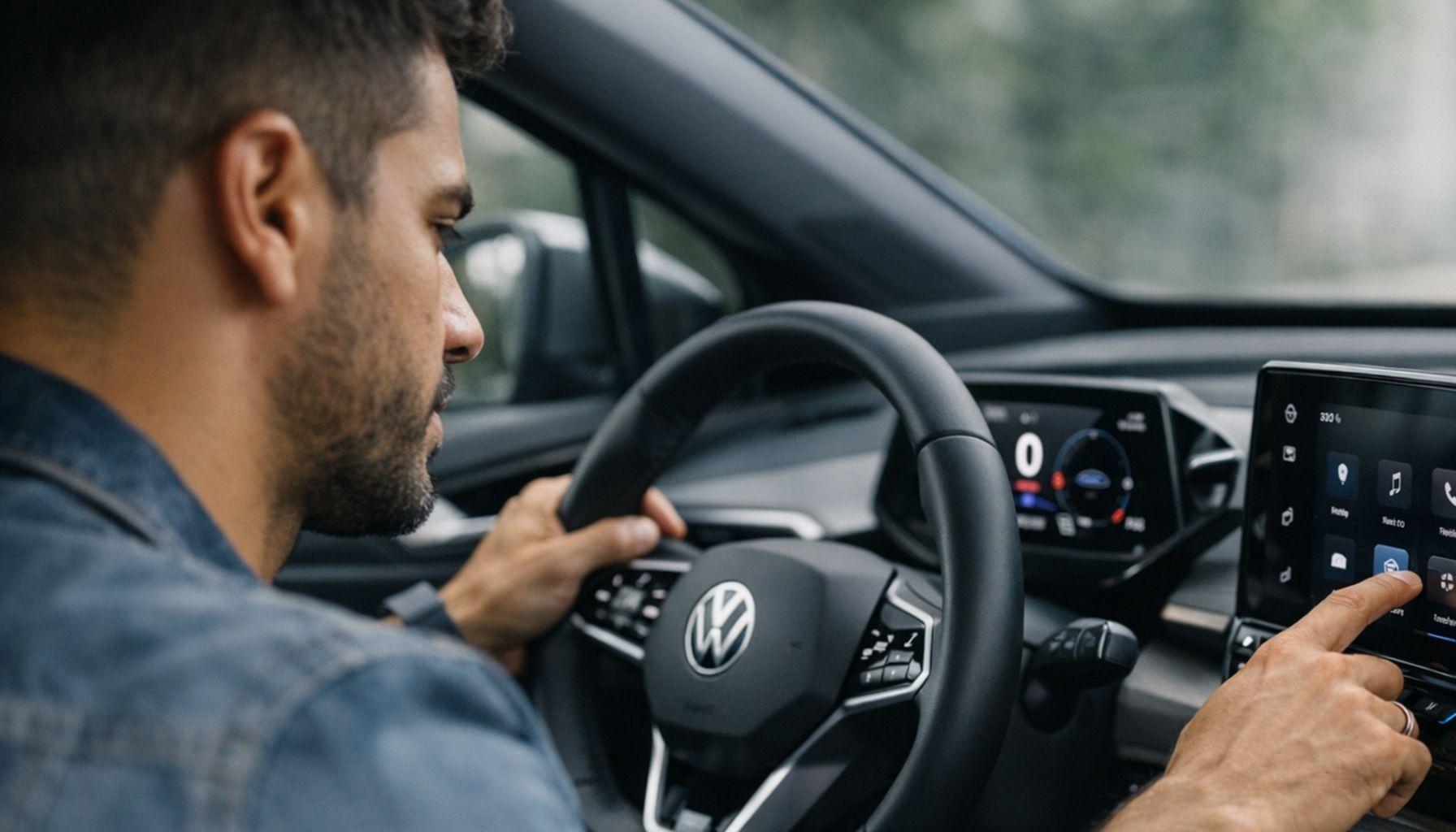
Car usability is no longer just about what works — it’s about what makes sense for the person behind the wheel.
That shift in perspective might seem subtle, but it’s redefining how one of the world’s largest automakers thinks about its products. When a company the size of Volkswagen starts repositioning its concept of quality, it’s not just an internal messaging tweak — it’s a clear signal that the automotive industry is being transformed by something that goes well beyond traditional mechanical engineering.
As Andreas Krepp, group head of quality at Volkswagen, puts it: quality is a variable — it evolves, and anyone who wants to deliver on that promise of quality needs to evolve with it. That line sums up the mindset shift happening inside the group pretty well, and gives us a solid clue about where the brand is headed 👇
When Usability Becomes a Quality Problem
A car can work exactly as designed and still feel broken to the person using it. That distinction sits right at the center of Volkswagen’s new definition of quality. And while it’s a simple idea to state, it has massive implications for the entire industry.
Andreas Krepp, chief quality officer of the Volkswagen Group, often cites a phrase he heard a lot in the United States: if it is not easy, it is broken. The message is less flippant than it sounds at first. If a customer can’t figure out a feature or has to work too hard to use it, that becomes a quality problem — even when the system behind it is technically performing exactly as intended.
That’s why UX and UI are moving closer and closer to the core of Volkswagen’s quality thinking. The brand no longer defines quality solely by assembly, reliability, and technical safety. According to Krepp, user experience, software, and intuitiveness are becoming just as important as those classic factors when a customer judges a vehicle.
Quality as a Hierarchy
For decades, quality in the automotive sector was measured by very objective indicators: defect rates per vehicle, recalls, component durability, and resistance to extreme conditions. Those metrics still exist and remain fundamental, but they no longer tell the full story.
As Krepp first explained on an automotiveIT podcast, he sees quality as a hierarchy. At the base of that pyramid is safety — the non-negotiable foundation of any vehicle. Higher up, UX, UI, and additional comfort features gain prominence. This layered view helps clarify that it’s not about replacing traditional engineering with digital experience, but about combining both under the same standard of excellence.
The reasoning behind this transformation is pretty straightforward: the modern car is, increasingly, a connected device. The infotainment interface, the navigation system, the digital climate controls, voice assistants, and fully digital dashboards are constant touchpoints between the driver and the vehicle. If those systems are confusing, slow, or require too many steps for simple tasks, the perception of quality for the entire car plummets — even if the engine is exceptional. It’s what UX professionals call friction, and it carries a real cost in customer satisfaction and brand reputation.
The Role of Software in Volkswagen’s New Strategy
Software has become the heart of the modern vehicle, and that creates enormous challenges for a company built on mechanical engineering excellence. Volkswagen isn’t alone in this transition, but it’s being remarkably transparent about how it plans to tackle the obstacles that have popped up along the way.
What’s changing in practice is how quality teams relate to software development. Before, software was almost a finishing touch — something that entered the process near the end. Now, the idea is for usability and user experience criteria to be defined from the very beginning of the development cycle, influencing architecture, interface, and interaction decisions well before the vehicle reaches the testing phase. This brings Volkswagen closer to a mindset that’s familiar to tech companies but still relatively new for traditional automakers.
Models like the ID. Polo GTI, with increasingly digital interiors and screens taking over functions that used to be physical, showcase this new territory well. In this context, software quality stops being a technical detail and becomes something the driver feels every single time they start the car.
Usability as a Business Metric
One of the most relevant aspects of Krepp’s approach is treating usability as a business metric — not just a design concern. When the user experience of an embedded system is poor, the consequences are measurable: customer support calls go up, negative reviews on public platforms increase, post-launch fix costs rise, and consumer brand loyalty drops.
On the flip side, when usability is high, customers perceive value, recommend the product, and build a trust-based relationship that goes far beyond the initial purchase. This connection between UX and business results is something tech companies internalized a long time ago. The difference is that many of them were born in an environment where software is the main product.
For Volkswagen, making that transition while maintaining all the complexity of large-scale physical vehicle production is a challenge of an entirely different magnitude. It’s like renovating a house while you’re still living in it, with all the furniture in place and life happening all around you. You can’t just stop everything and start from scratch.


A Cultural Shift, Not Just a Technical One
What makes Volkswagen’s stance so interesting is that the company isn’t trying to become a tech company. It’s trying to incorporate a user-centered quality mindset within its own identity as an automaker. That means UX criteria need to coexist with the safety, durability, regulatory, and cost criteria that have always been central to the industry.
Finding that balance is the real work in progress. And that’s exactly why Krepp’s line about quality being a constantly evolving variable makes so much sense. He’s not promising immediate perfection — he’s describing a continuous process of adaptation. Bringing professionals with backgrounds in interaction design, UX research, and software engineering into quality operations is part of this cultural change, one that affects how teams collaborate and which criteria determine whether a product is truly ready.
At the end of the day, what Volkswagen is signaling is that software quality and user experience quality are no longer differentiators — they’re requirements. And companies that still treat UX as an extra are going to feel it in their reviews, their sales, and their brand perception.
The conversation Krepp is opening up within the group is exactly the kind of debate the automotive market needed to have — and the fact that it’s coming from a chief quality officer says a lot about where the industry is heading. If this vision holds, the future of cars will be judged as much by the solidity of the body panels as by the ease of tapping a screen and watching the thing just work. 🚗💡