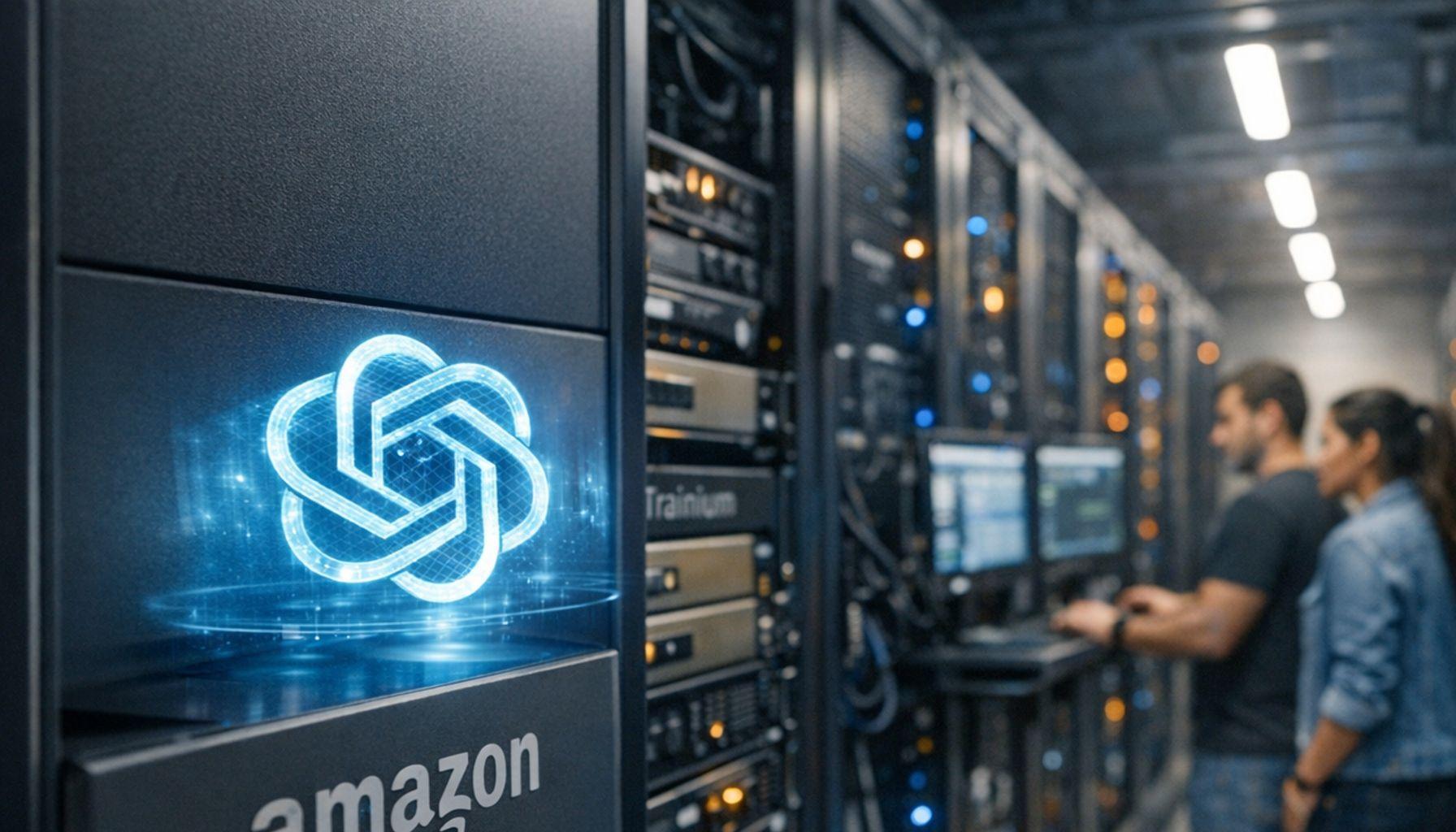
Tech companies are cutting jobs and going all in on AI, but the payoff is far from guaranteed
Hundreds of thousands of tech workers are facing a harsh reality. Their well-paying jobs are no longer as secure as they once seemed. With the rapid rise of artificial intelligence, a future that looked bright a decade ago has lost a lot of its shine.
The numbers are staggering. Microsoft cut 15,000 workers over the past year. Amazon laid off 30,000 employees in the last six months. Block, the financial services company led by Jack Dorsey, eliminated more than 4,000 positions in February, equivalent to 40% of its entire workforce. Meta let go of more than a thousand people during the same period and, according to a Reuters report, could cut up to 20% of all its employees soon. This week, software giant Oracle laid off thousands of workers. Smaller players like Pinterest and Atlassian also made recent cuts, trimming roughly 15% and 10% of their teams, respectively. All told, estimates point to more than 165,000 layoffs in the tech sector in the past year alone, according to the tracker Layoffs.fyi.
And in virtually every single one of these cases, artificial intelligence shows up as the central character in the narrative. But is AI really to blame for all of this? Or are tech companies using it as a convenient excuse to justify decisions driven by entirely different motivations? That is the big question at the heart of a debate that reaches far beyond Silicon Valley 👀
At no point in my career have I been this pessimistic about the future of tech careers, said one industry worker who has been at major tech companies for decades and asked to remain anonymous for fear of retaliation. And that is really sad, because I love technology.
The anxiety reaches far beyond Silicon Valley
When the big tech companies set the tone, the rest of the market tends to follow. Tech firms are seen as the innovators of the corporate world, and when they shrink their headcounts, whether in anticipation of AI-driven efficiency gains or to prioritize investments in artificial intelligence, those moves can set a dangerous precedent for other industries to make similar cuts.
But even though AI has helped speed up code writing, analyze large volumes of data, and assist with research, many experts say we are still a long way from artificial intelligence being able to replace large portions of the workforce, if it ever can at all. So what is really going on?
In interviews conducted over the past month, AI researchers, economists, and tech professionals said that, essentially, we are all living through an experiment. Over the next few years, tech companies experimenting with AI will likely lead to critical outcomes: more job cuts across industries, unforeseen consequences of over-relying on AI, and a fundamentally different model of work from what we know today.
The peak hype right now, that AI is replacing people, is not true, said Ethan Mollick, associate professor at the Wharton School at the University of Pennsylvania who studies artificial intelligence. But it is also not true that AI will never threaten jobs. It is going to be complicated.
How AI is reshaping jobs in practice
OpenAI, Anthropic, and Google have promised that their generative AI tools, like ChatGPT, Claude, and Gemini, will change the way people work by automating time-consuming tasks and directing humans toward more complex work. So-called agentic AI, or bots that complete tasks without human intervention, takes that promise even further, with the potential to automate entire roles or business functions.
On the digital shop floor, tech workers are facing the first phase of this experiment, being pushed to use the technology with increasing frequency. But the results do not always match what leadership expects.
For technical workers, using AI has become a baseline expectation from employers across the industry, according to a former engineering supervisor at Block who was laid off in February. AI helps generate code faster, but that makes code review harder, he said. Human reviews are critical for thinking through potential conflicts the code might have with other parts of the system and for spotting bugs that AI makes look legitimate.
Now there is three times as much code because production is faster, he said. We were falling behind on reviews.
A senior user experience designer recently laid off from Amazon Web Services, who asked to remain anonymous for fear of retaliation, said his team had been experimenting with two internal generative AI tools central to their work, both in early testing phases. Neither was fully functional or useful for workers’ day-to-day tasks, he said. So when the cuts hit his team, he was surprised and confused.
The feeling was: none of this is ready yet, he said. How is all this work going to get done?
Amazon employees felt a veiled threat that if they did not use AI, their jobs could be next, he said, echoing earlier reports that the company pressures its employees to use AI even when it slows them down. Amazon has stated in prior comments that AI use was not mandatory.
The feeling of surveillance in tech offices
As more tech workplaces center AI and encourage employees to adopt it, that push sometimes comes with surveillance and pressure.
A former Microsoft employee said that when it came to AI use by him and his colleagues, there was a feeling of being watched and pressure to adopt the technology whether you liked it or not. He also asked to remain anonymous for fear of retaliation. He felt he could raise concerns about AI at work when it helped protect the company from a bad outcome, but broader societal concerns were not welcome.
I cannot raise environmental or employment concerns, the worker said. You do not want to be known as the person who is against AI.
Microsoft stated that it maintains system-level oversight of AI use for security and risk management but does not use individual usage as a performance metric. The company also said it offers multiple channels for employees to anonymously raise concerns about how the technology is used.
The real power of AI and its concrete limitations
Some companies are already touting the gains they have achieved with AI. Google, for example, credited artificial intelligence with writing 50% of its code in its latest earnings report. Block‘s head of engineering, during the company’s investor day in November, said 90% of the company’s code submissions were written partially or entirely with AI support.
However, in its current form, AI is not as capable as the hype suggests, according to Stephan Rabanser, a postdoctoral researcher at Princeton University who co-authored an academic paper on the reliability of AI agents. While the quality of responses from generative tools has improved over the years, the technology still struggles to consistently produce the same correct answer, even when the same prompt is used. This becomes especially problematic when there are different users or conditions, Rabanser said.
That is the barrier to job transformation, he said. Reliability will be a fundamental limiting factor.
More companies will likely experience failed AI deployments or problematic outcomes, according to Rabanser.
AI systems need enormous amounts of data to become even minimally good at a task, said Stuart Russell, professor at the University of California, Berkeley and AI researcher, and high-quality training data is becoming scarce. Often, even when a chatbot does not have the data it needs, it responds confidently anyway, producing incorrect answers that can lead to faulty transactions and deleted databases.
AI also struggles to learn continuously and remember what it has done before, according to Mollick at Wharton. Even so, some companies are already embracing advanced use cases, trusting AI to write all the code and then shipping those products without human review, despite the risks posed by the technology’s limitations. Mollick called these operations dark factories, because they run with virtually no human oversight.
Betting on AI this way is risky. It creates exposure to financial losses, reputational damage, and negative outcomes for customers, according to AI and business experts.
In some cases, over-relying on AI can cause critical consequences far beyond the corporate world. We do not want to move fast and break things in high-stakes situations, like healthcare or the legal system, Rabanser said. There are high risks involved, which in some cases can mean life or death.
The truth behind the cuts: AI-washing and other motivations
While the corporate talking point that AI will allow companies to do more with less keeps getting louder, it is not clear whether artificial intelligence is actually driving the cuts. Some companies may be engaging in so-called AI-washing of layoffs, using the technology as a convenient cover story for a slowing job market, declining consumer demand, or rising costs, according to researchers and AI experts.
This week, prominent venture capitalist Marc Andreessen, a self-declared AI enthusiast who has written that artificial intelligence will save the world, said on a podcast that big tech companies were cutting workers because they were bloated, and now everyone has the perfect excuse: oh, it is AI.
It is easy to confuse the effects of something like generative AI with a weakening labor market, said Ryan Nunn, research director at the Budget Lab at Yale University, who researches the impact of AI on jobs. We really do not see anything happening differently in the AI-exposed labor market.
If a company is struggling financially, saying AI motivated the cuts definitely makes for a better story, said Thomas Malone, professor of information technology at the MIT Sloan School of Management.
There is also a long track record of exaggerated predictions about the impact and speed of adoption of new technologies, he said. It happened during the dot-com era and with self-driving cars.
I think a lot of people are overestimating how fast jobs will change, Malone said about AI-related projections.
The Pinterest case and the corporate narrative
When Pinterest announced a cut of nearly 15% of its workforce in January, it cited reasons like reallocating resources to AI-focused teams and prioritizing AI-powered products and capabilities. But a Pinterest employee, who asked to remain anonymous because she was not authorized to speak with the press, said she believed the layoffs had more to do with fixing the company’s business than anything else.
While I know AI was one of the reasons cited, I do not think it was the real reason, she said, adding that the cuts were related to streamlining operations. They did a thorough review of the entire business, and what you see now is a leaner, more aggressive version of Pinterest.
Pinterest characterized that assessment as a misrepresentation of the facts.


Wall Street is paying attention, but not everything is a guaranteed profit
The potential cost savings and competitive advantages of AI are attractive to Wall Street investors. Headcount reductions can imply greater productivity per employee, which leads to bigger profits, according to Joseph Feldman, analyst at the Telsey Advisory Group.
After Jack Dorsey, CEO of Block, directly linked his company’s layoffs to AI-driven productivity gains, the company’s stock price jumped 20%. But cuts alone do not always satisfy the market, which also looks for signs of sustainability, several analysts said. Two weeks after the initial surge, Block’s shares had dropped 6%, signaling that the market recognized the execution risk, said Matthew Coad, analyst at Truist Securities.
A lot of it is the uncertainty over whether Dorsey cut to the bone, Coad said, referring to the engineering team.
The day after Oracle‘s layoff news, the company’s stock rose 7.5%. But the bump was short-lived: days later, the stock had retreated to levels close to where it was before the cuts. Amazon experienced a similar uptick after its latest cuts in January, though shares fell in the following months as the market questioned its AI spending plans.
Even the financial markets are trying to make sense of the hype surrounding artificial intelligence. For anyone looking for a clear answer on exactly how this technology will transform work and the economy, that answer is still being written.
What is clear and what is still uncertain
The reality is that we are all in the middle of a massive experiment, with no instruction manual and no guaranteed outcome. Artificial intelligence is genuinely changing some jobs. Programming is not the same anymore, and Mollick acknowledges that the changes in that field are visible. But the bigger impact will take years to materialize.
We will see changes over the next few years as a result of AI, Mollick said, referring to expected improvements in the technology. It is already transforming programming. So it will change jobs and transform them, but we simply do not yet know the consequences for employment.
What the numbers hide behind the layoffs is a complex mix of factors. Pandemic-era hiring bloat, rising interest rates, shareholder pressure for efficiency, and the accelerating arrival of automation in processes that previously relied entirely on people created a perfect storm. Using AI as the sole justification oversimplifies a reality that is far messier.
For anyone working in the industry, the landscape calls for an honest read. The cuts are not just a temporary market correction. They signal a structural shift in how tech companies view human capital. The professional who was once valued for the ability to execute complex tasks now needs to demonstrate something different: the ability to work alongside artificial intelligence systems, getting the most out of them, identifying their limitations, and making decisions that still depend on human judgment.
At the same time, automation is creating demand for new professional profiles in areas like AI governance, model evaluation, data engineering, intelligent systems security, and the design of experiences involving artificial intelligence. These fields are still taking shape, which means the rules of the game are still being written.
What is clear is that the relationship between productivity, automation, and employment will continue to be one of the hottest topics in the years ahead. Tech companies will keep betting on AI, layoff numbers will keep making headlines, and the debate over who actually benefits from this transformation will only grow louder. Understanding what is happening right now, with clarity and without alarmism, is essential. And keeping an eye on what the big tech companies are doing, not just what they are saying, remains the best compass available 🤙