The rise of Nscale in the global AI infrastructure market
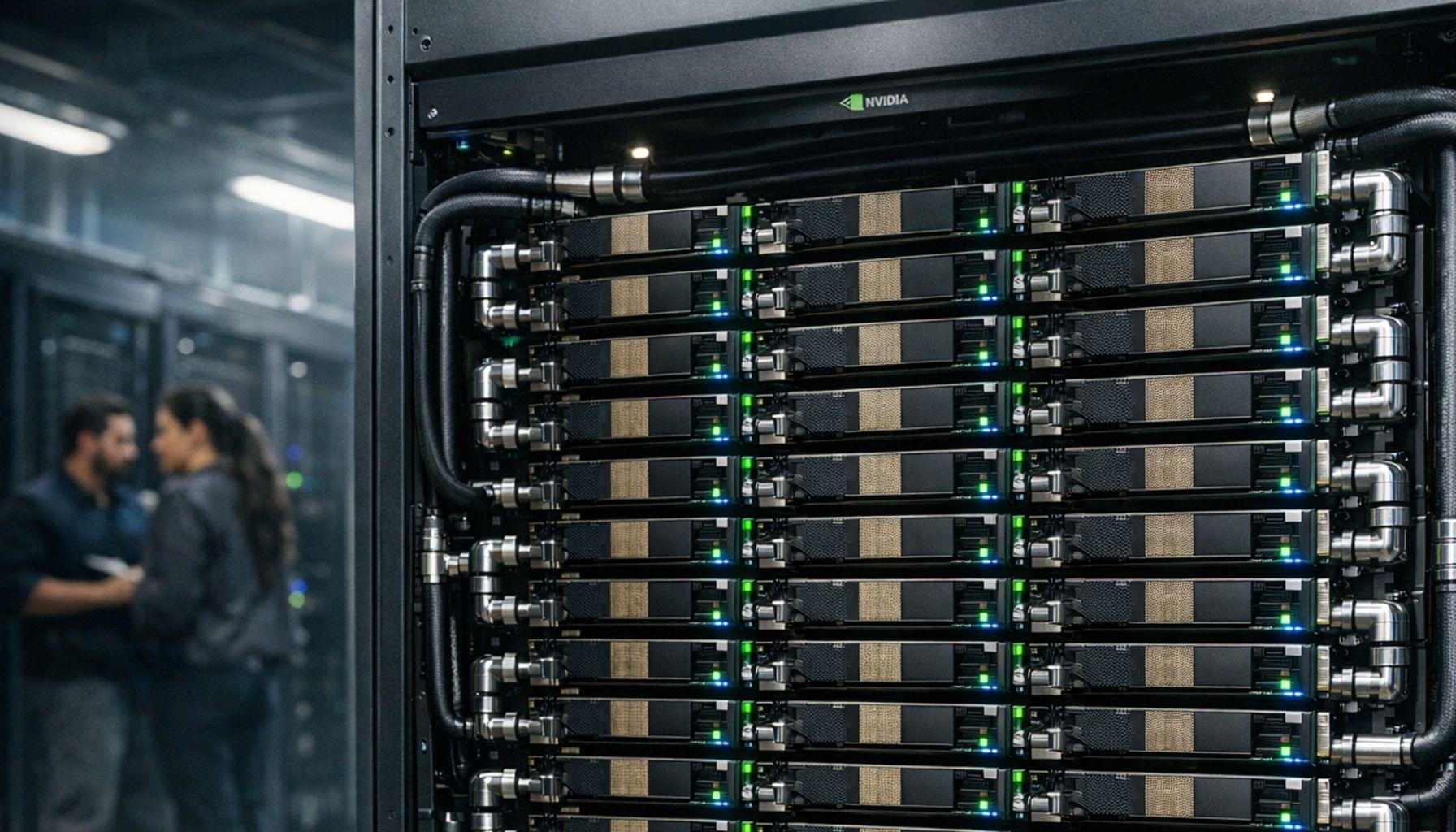
Artificial intelligence continues to move astronomical sums around the world, and the latest case involves a company that probably hasn’t shown up on your radar yet. Nscale, a British company specializing in data centers and founded in 2024, just raised no less than 2 billion dollars in an investment round led by Nvidia. With this new funding, the company jumped to a market valuation of 14.6 billion dollars — a number that’s impressive on its own, but carries even more weight once you understand the context behind this deal.
What stands out about this story goes well beyond the numbers. Josh Payne, CEO of Nscale, has a background that reads like a TV series script. He dropped out of school and started his career working in coal mines in Australia for three years. He then moved on to online businesses — selling protein supplements and electronics — built a recruitment platform for Australian construction workers, got into the renewable energy market, and even dabbled in cryptocurrency mining before finding his place in the computational infrastructure market for artificial intelligence. That diverse background seems to have given him a unique perspective on how to build a company capable of meeting the growing demand for processing power that the AI sector requires today.
Nscale‘s client roster is already a clear indicator that the company is playing in the big leagues. Microsoft, the Redmond giant, is currently the company’s largest commercial partner. On top of that, names like OpenAI and ByteDance — the company behind TikTok — are also among the clients served. Jensen Huang, CEO of Nvidia, even gifted Payne a bottle of Johnny Walker after closing a contract with Nscale last year. When three of the biggest forces in the global AI ecosystem choose the same infrastructure provider, it’s hard to ignore what’s happening there.
From coal miner to billionaire CEO: Josh Payne’s journey
Josh Payne’s story deserves its own chapter because it’s a perfect snapshot of how the AI boom is creating opportunities for profiles completely outside the Silicon Valley mold. Payne says his interest in entrepreneurship was born during his breaks at the coal mine, when he’d read books like The 4-Hour Work Week. That restlessness led him to try various online businesses until, about five years ago, he became fascinated by the data center world while working with investors who funded renewable energy projects in Australia.
That’s when Payne discovered that the Arctic regions of northern Norway had access to one of the cheapest renewable energy sources in Europe — hydroelectric power that costs about 3 cents per kilowatt-hour, compared to an average of roughly 20 cents across the rest of the continent. In 2022, he boarded a flight lasting more than 24 hours from Sydney to Oslo and, two weeks later, walked away with a letter of intent to acquire a project that, at the time, was a Bitcoin mining operation.
When ChatGPT launched in late 2022, interest in data centers exploded globally. But Payne’s real turning point came last year, when he landed a meeting with Microsoft. That conversation turned into Nscale‘s largest commercial partnership, involving joint projects in Norway, Portugal, the United Kingdom, and Texas. Going from a coal mine in Australia to leading a company valued at nearly 15 billion dollars in just a few years — that’s the kind of story that only seems possible during moments of deep technological transformation like the one we’re living through right now.
Microsoft’s role and the billions pouring into data centers
The relationship between Microsoft and Nscale deserves a closer look because it reveals a lot about how major tech companies are structuring their artificial intelligence operations. The deal, estimated by Bloomberg at around 23 billion dollars, isn’t just a service contract — it’s a strategic bet by Microsoft to diversify its infrastructure base. Satya Nadella’s company already invests heavily in its own data centers around the world, but the demand for computational capacity to train and run AI models is growing at a pace that not even big tech can keep up with on their own.
That’s the gap companies like Nscale are filling. They’re part of a new generation of data center providers known as neoclouds, which take on the financial risk of building the massive infrastructure AI demands while big tech companies can assess how demand evolves before committing to their own extremely expensive projects. Other companies in this same space include CoreWeave, based in New Jersey, Nebius in Amsterdam, and IREN in Sydney.
The model works roughly like this: Microsoft and other tech giants sign contracts with neoclouds like Nscale to acquire computing power quickly, transferring some of their liabilities to these partners. It’s a strategy that lets big tech get immediate access to the capacity they need without shouldering the entire upfront investment in construction and equipment alone. For Nscale, that means revenue guaranteed by contract. For Microsoft, it means operational flexibility.
However, the deal also carries significant risks. If Microsoft decides it no longer needs Nscale when the contract expires, Payne will have to find another massive client to absorb all that infrastructure, including 200,000 Nvidia AI chips. The average term of Nscale‘s contracts is about five and a half years, according to the CEO himself, although he hasn’t disclosed the specific terms of the Microsoft agreement.
A heavyweight board: Sheryl Sandberg and other elite executives
Another move that reinforces Nscale‘s credibility is the addition of Sheryl Sandberg to the company’s board. The former COO of Meta is one of the most respected executives in the global tech industry, and her presence brings not just experience in managing global operations, but also a network of contacts that could open important doors for the British company. Sandberg was introduced to Payne by a headhunter late last year and said she conducted a thorough analysis of Nscale‘s business before accepting the invitation.
In an interview, Sandberg compared the young CEO’s vision and ambition to those of her former boss, Mark Zuckerberg. She acknowledged that there are risks involved but said her role on the board is precisely to use the experience she’s accumulated to help Payne navigate those challenges. The choice of Sandberg doesn’t seem accidental — she built her reputation by scaling complex operations at one of the largest digital platforms on the planet, which connects directly to the moment Nscale is facing right now.
Beyond Sandberg, the company also brought Nick Clegg, another former Meta executive, and Sue Decker, a former Yahoo executive, onto the board. Oyvind Eriksen, CEO of Aker — one of Norway’s largest industrial companies — also sits on the board after being contacted by Payne via LinkedIn. Eriksen said he believes Nscale can survive potential market turbulence thanks to its access to capital, cheap and reliable energy, and contracts that help cover construction costs and semiconductor acquisitions. He went even further, suggesting the company could acquire struggling competitors when an eventual market correction happens.
The risks and challenges behind rapid growth
As exciting as this scenario looks, it’s important to put a few things on the table. Nscale‘s rapid growth is happening in a market being inflated by enormous expectations around artificial intelligence, and not all of those expectations will necessarily materialize in the short term. The company itself has already taken on considerable financial obligations. Last month, Nscale assumed 1.4 billion dollars in debt, including loans from Blue Owl, a Wall Street firm that has faced scrutiny for lending practices considered risky. Before that, in September, the company had already raised another 1.1 billion dollars from investors.
Over the next five years, Nscale estimates it will need more than 45 billion dollars for its data center projects around the world. These include ventures underway in the United Kingdom, Iceland, Norway, Portugal, Texas, and a yet-to-be-announced location in Southeast Asia. The total planned energy capacity sits at around 5.5 gigawatts, roughly equivalent to the consumption of about five million homes in the United States. These are impressive numbers, but they also show the scale of commitments the company is taking on.
More cautious global investors are already seeing signs of a potential AI market bubble. The argument is that, even if artificial intelligence is a transformative long-term technology, young companies are spending billions without a clear path to generating returns. They build facilities designed to last more than 15 years, but often have contracts covering only about five years. The Man Group hedge fund warned in a recent report that the question isn’t whether the AI bubble will burst, but when it will happen.
Payne pushes back on these concerns by saying that Nscale only builds data centers in locations where it already has confirmed clients. He’s also betting on diversifying the client base as a protection strategy, noting that European governments are seeking non-American technology partners to collaborate on AI projects — a geopolitical scenario that could favor a company headquartered in London.
The energy question and data center sustainability
Data centers built for artificial intelligence workloads consume massive amounts of electricity, and that consumption is set to grow exponentially as models become larger and more complex. Governments around the world are already beginning to worry about the environmental impact of this expansion, and stricter regulations could emerge in the coming years.


For Nscale, Josh Payne’s prior experience with renewable energy could be a meaningful competitive advantage. The company’s strategy of prioritizing locations with access to cheap hydroelectric power, like northern Norway and Iceland, shows there’s a focus on integrating sustainable solutions into operations from the start. It’s not just a matter of environmental responsibility — it’s also a long-term strategic advantage that could influence decisions by partners like Microsoft, which has ambitious sustainability goals and needs to demonstrate concrete progress on that front.
Every megawatt of electricity consumed by an Nscale data center represents a construction cost of approximately 9 million dollars, according to the CEO himself. Multiply that by the total planned capacity, and it’s easy to understand why the company is exploring every available source of capital, including the possibility of launching an initial public offering later this year.
What to expect from the neocloud market in the coming years
The Nscale story is a great illustration of where the tech market stands right now. Billion-dollar investments in artificial intelligence infrastructure are reshaping the industry at a staggering pace, creating opportunities for companies that manage to position themselves in the right place at the right time. The partnership with Microsoft, Nvidia’s backing, contracts with OpenAI and ByteDance, and the presence of figures like Sheryl Sandberg on the board form a powerful combination.
But like any high-stakes bet, success depends on execution. The neocloud model is relatively new, and the ability of these companies to honor massive financial commitments while delivering cutting-edge infrastructure still needs to be proven over time. CoreWeave, Nebius, IREN, and Nscale itself are all betting that demand for AI-focused computing power will keep growing at a sustained pace. If that demand holds, these companies could become fundamental pillars of global tech infrastructure. If demand slows down or contracts aren’t renewed, some of them could face serious financial trouble.
Payne seems confident. In his words, Nscale is experiencing insatiable demand. And he believes the gap between supply and demand is so large that the company will be able to fully diversify its client base within the next two to three years. The coming months will be decisive in understanding whether Nscale can turn all that capital into real, operational infrastructure — and whether the AI data center market will sustain the breakneck growth we’re seeing right now. 🚀